Russia's Supreme Court Bars Yabloko From September 2026 Parliamentary Elections
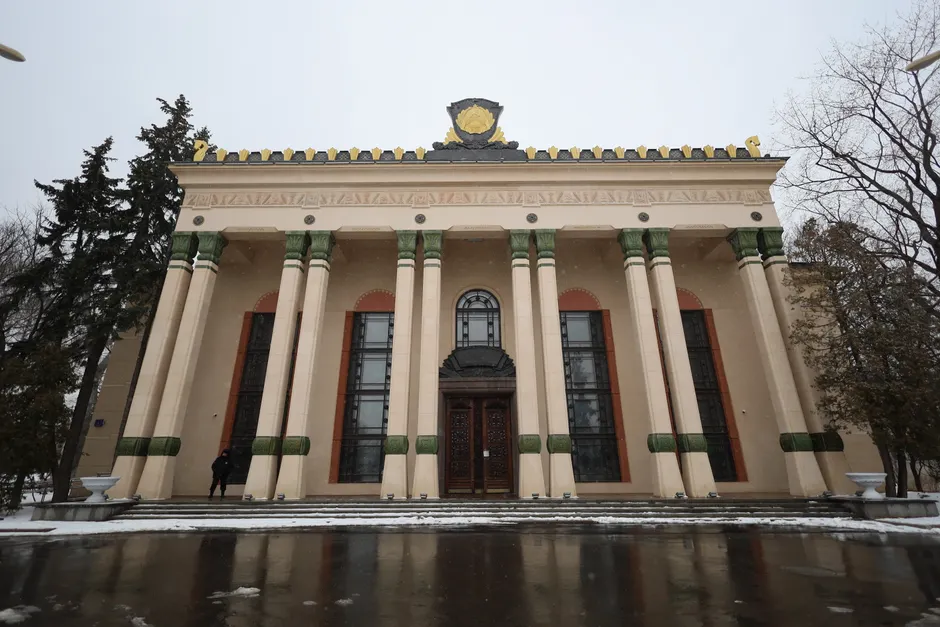
Russia's Supreme Court barred the Yabloko party from contesting the country's September 2026 parliamentary elections, removing the last openly anti-war party from the ballot. The ruling, issued on Monday, August 10, 2026, annulled Yabloko's registration after an appeal from a pro-Kremlin party. (Reuters; Greenwich Time)
The decision followed an eight-hour hearing at a Moscow courthouse. Hundreds of people gathered outside, chanting "Russia" and "Yabloko," with many carrying apples — a longstanding symbol of the party, whose name means "apple" in Russian. (BBC)
During the proceedings, Yabloko's Nikolai Rybakov argued before the Supreme Court that the cancellation of an electoral list's registration is an exceptional measure possible only with ironclad proof. The court was not persuaded. (Yabloko)
The ruling eliminates Russia's only remaining liberal political group from the parliamentary race. All ten other parties participating in the election either support the war in Ukraine or do not openly criticize it. (Kyiv Independent; BBC)
Yabloko has not won State Duma seats since 2003, taking just 1.34% of the vote in the 2021 parliamentary election. The party was once led by presidential contender Grigory Yavlinsky. It expelled Alexei Navalny in 2007 and later criticized him even after his imprisonment and death in 2024. Over the years, Yabloko opposed Russia's war on Chechnya, the 2014 annexation of Crimea, and the full-scale invasion of Ukraine. (BBC)
The legal challenge to Yabloko's registration fits a long-established pattern. In February 2007, Russia's Supreme Court refused to consider appeals from the party and St. Petersburg residents against a Central Election Commission decision. (Yabloko) In July 2024, Yabloko candidate Maxim Kruglov went to court to challenge the refusal to register him for the Moscow City Duma elections. (Yabloko) In April 2026, the Constitutional Court refused to review the constitutionality of a ban preventing parties from appealing territorial election commission decisions regarding candidates; courts declined to accept the applications because the Code of Administrative Court Procedure allows only candidates themselves to challenge such TIK decisions. (Yabloko) Yabloko has published a list of typical violations leading to refusals to certify and register candidates, noting that unjustified refusals to accept applications occur and lead citizens to appeal to the courts. (Yabloko)
Independent election watchdogs in Russia have been deprived of much of their ability to monitor and challenge the election process. (BBC) Russia has suppressed public dissent with wartime censorship laws since its full-scale invasion of Ukraine in February 2022, measures that can trigger hefty fines or long prison sentences. (BBC)
The ruling arrives against a backdrop of visible strain on the governing party. United Russia's ratings were down to 33% amid inflation, internet blackouts, and drone strikes. (BBC)
The broader context here is one of structural narrowing. Yabloko's electoral performance has been marginal for two decades, and its exclusion will not, by itself, alter the composition of the next Duma. What it removes is not a seat-count threat but a legal venue for anti-war sentiment to appear on a ballot. With all remaining parties either supporting the war or declining to oppose it, the September vote will offer no institutional channel for the portion of the Russian electorate that opposes the invasion. The wartime censorship framework, combined with the disabling of independent election monitoring, means that even the street-level dissent visible outside the courthouse carries considerable personal risk for participants.
For observers of Russian electoral politics, the Supreme Court's decision also confirms the durability of a legal mechanism that has been refined over years. The April 2026 Constitutional Court ruling closed off party-level appeals of territorial commission decisions, and the August Supreme Court ruling deployed a separate mechanism — annulment of an already-registered list — to achieve the same effective outcome. The cumulative effect is a procedural architecture in which registration can be blocked, challenged, and overturned at multiple stages, with each stage narrowing the avenues for redress.
Yabloko has contested every election since 2003 despite never regaining Duma representation. Whether the party continues that pattern under the current constraints, or whether its exclusion becomes permanent, will depend on legal and political developments that the September vote itself will not resolve.