Iran-Linked Threat Prompted Secret Trump Plane Switch During NATO Summit Exit

An Iranian assassination threat prompted US President Donald Trump to secretly switch aircraft during his departure from Turkiye in July 2026, leaving the NATO summit in Ankara on a small military plane while Air Force One served as a decoy. Al Jazeera, reporting on August 11, 2026, detailed the operation citing findings from The Washington Post and The New York Times.
Trump had flown into Turkiye on the new Boeing 747-8 Air Force One gifted to the United States by Qatar. The Secret Service urged Trump to depart on an older version of Air Force One after officials judged an Iranian threat to be credible. Several US media outlets indicated the threat originated from Iran-aligned armed groups. Al Jazeera
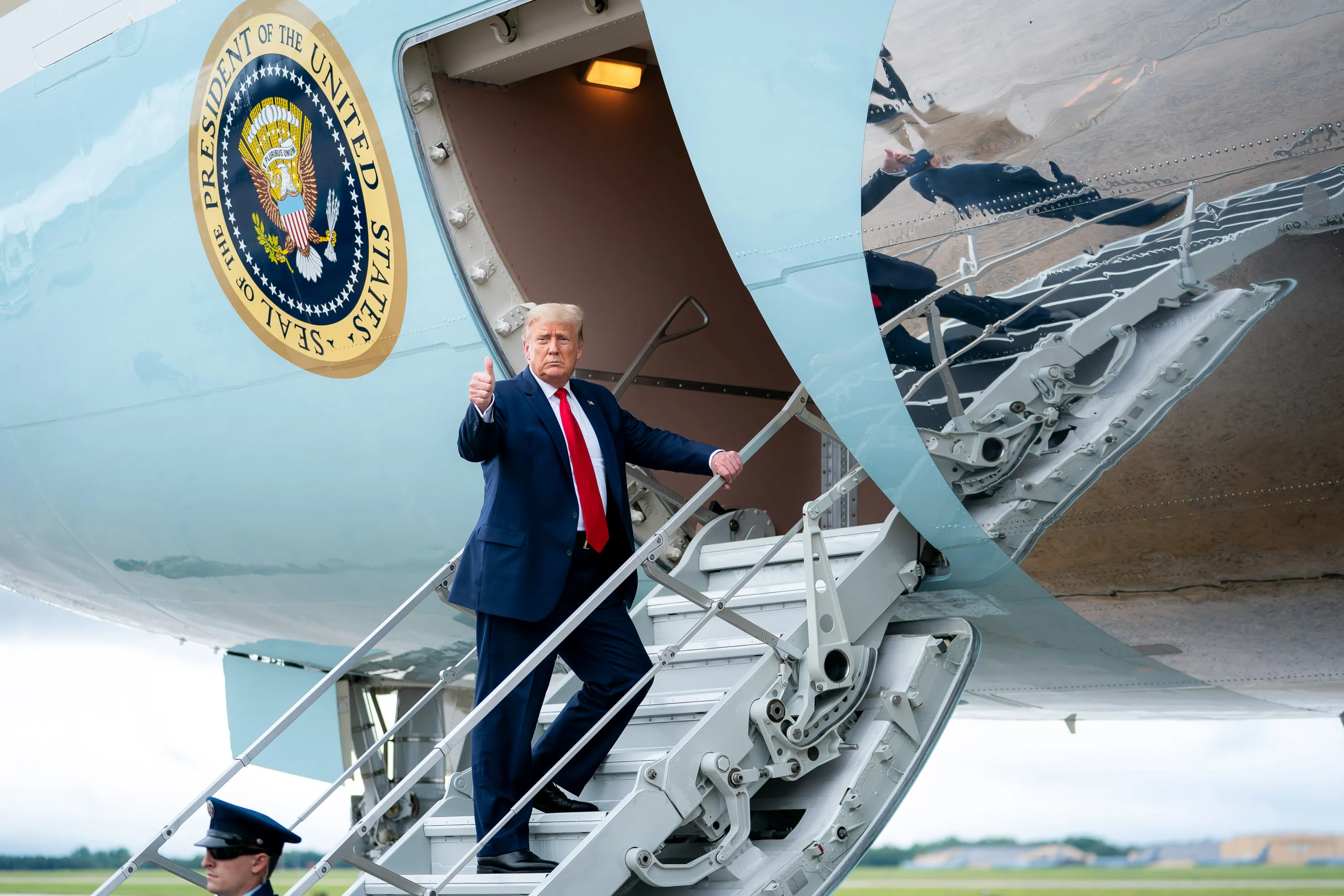
Trump publicly stated he would depart the NATO summit on July 8, 2026, on the older Boeing 747 "for old time's sake." This public framing concealed the actual extraction. According to The Washington Post and The New York Times, Trump was secretly moved via a catering container to a small C-32A aircraft, which flew him to the United Kingdom. Al Jazeera
The deception operation extended to those traveling with the president. Journalists on the older Air Force One, used as a decoy, were advised to keep their press cabin window shades closed. Some White House staff also believed the president was on board. Al Jazeera
Upon arrival in the UK, the ruse required Trump to reunite with the decoy aircraft. The traveling press pool reported that Trump climbed down the stairs of the older Air Force One at 10:56 p.m. UK local time. Reuters. The Washington Post noted it remains unclear how he moved from the C-32A to that aircraft. Al Jazeera
Trump then flew to Washington, DC, on the new Qatari-gifted Boeing 747-8 Air Force One. White House Communications Director Steve Cheung defended the aircraft and said the US uses "every tool" to counter foreign threats, citing state-of-the-art security protocols on the new Air Force One. Al Jazeera
The broader context here involves the intersection of a specific kinetic threat and the ongoing integration of the Qatar-gifted Boeing 747-8 into the executive fleet. The reliance on a catering container for the physical transfer between aircraft indicates a high-confidence intelligence assessment regarding surface-to-air or tarmac-level threats. Using the older Air Force One as a decoy, complete with window shades drawn to restrict visual confirmation, aligns with traditional counter-surveillance protocols. It compartmentalized knowledge of the president's location even within his own staff.
The sequence of aircraft movements also warrants attention for fleet logistics and executive protection specialists. Arriving in Ankara on the new Qatari-gifted 747-8, switching to the older 747 for the public departure narrative, and then utilizing the C-32A for the actual transit to the UK created a multi-layered routing complexity. The subsequent transfer to the new 747-8 for the transatlantic flight to Washington suggests the Secret Service deemed the Qatari jet's defensive capabilities sufficient for the return leg once clear of the immediate regional threat environment. Cheung's defense of the gifted jet places the aircraft's security systems at the center of the administration's public posture, linking the new platform directly to threat mitigation.