Honor Launches Robot Phone: A Titanium Gimbal, Dual 200MP Sensors, and an SDK

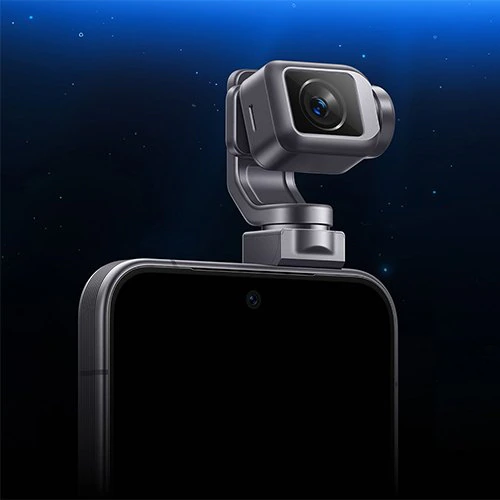
Honor has opened preorders for its Robot Phone in China, with shipments and official sales beginning August 18. The device, first previewed at MWC 2026 in March, centers on a motorized pop-up camera gimbal made of titanium that rotates a full 360 degrees across four degrees of freedom (4DoF) Engadget.
The gimbal is the defining hardware feature. It supports cinematic movement modes including tilt lock, FPV view, and spinshot. An integrated AI algorithm handles subject tracking, automatically panning and tilting the camera to follow a person within the frame. Honor says the tracking was trained on millions of scene simulations Honor. Users can also deploy the camera arm and trigger capture through hands-free gesture control, and the gimbal's "AI zone audio" technology synchronizes sound with camera movement Honor.
The rear camera array pairs two 200MP sensors: a main lens and a telephoto. Honor partnered with cinema camera manufacturer Arri on AI-assisted noise reduction and expanded dynamic range. Footage can be previewed in real time and exported as RAW files Engadget.
On the software side, the phone runs MagicOS and introduces "YOYO Robot Mode," which combines multimodal perception, contextual understanding, gesture recognition, and physical movement. Honor is also opening the platform to third-party developers, offering access to the gimbal, perception, and embodied-interaction capabilities for building custom experiences Engadget.
The specifications are flagship-tier across the board. Power comes from a Snapdragon Elite Gen 5 chip paired with a custom cooling system and a 7,060mAh battery. Charging is rated at 120W Memeburn. The display is a 6.3-inch OLED panel with adaptive refresh rates and a peak brightness of 6,800 nits. Two configurations are available: 12GB RAM with 512GB storage at roughly $1,480, and 16GB RAM with 1TB storage at approximately $2,075 Engadget.
Honor describes the device as the world's first robotic smartphone with a fully integrated 4-DoF mechanical gimbal Honor. The phone passed two final Chinese certifications ahead of its August 2026 launch Memeburn. Availability is limited to China at launch, with no announced international rollout date.
The broader context here is a smartphone market where camera differentiation has largely converged on computational photography tricks applied to conventional sensor and lens stacks. Honor's approach is distinctly mechanical: rather than relying on sensor-shift OIS or software stabilization alone, the Robot Phone physically moves the camera. The Arri partnership lends cinema-grade credibility to the image pipeline, and the RAW output capability positions the device as a tool for serious content creation rather than casual capture.
The developer SDK is the element worth watching most closely. A motorized gimbal combined with multimodal perception and gesture recognition is, effectively, a small robotic actuator platform that happens to make phone calls. If third-party developers build genuinely useful experiences on top of it, the Robot Phone could establish a new interaction category. If they do not, the gimbal risks becoming an expensive novelty.
The price points place this firmly in premium territory, and the China-only launch limits near-term reach. But the underlying engineering question is whether a phone with a moving mechanical camera assembly can achieve the durability and reliability that consumers expect from a daily-use device. Titanium construction helps on rigidity; the long-term test is sustained mechanical cycling of the gimbal over a typical two-to-three-year ownership period.
For now, Honor has built something that is genuinely different in a category that has struggled to differentiate on hardware alone. Whether the market rewards that difference will depend on execution, developer adoption, and durability under real-world conditions.