Ford's Fathom Electric Pickup: Louisville Plant Retooled, Production-Intent Prototypes Targeted for Q1 2027
Ford will begin building production-qualified prototype units of its next-generation electric pickup, the Fathom, at the Louisville Assembly Plant in the first quarter of 2027, with pre-orders opening in early 2027 (The Verge, Ford).
The Fathom is an electric pickup truck and the first vehicle built on Ford's Universal Electric Vehicle Platform (The Verge). Ford's Louisville team is already in the production-level pre-tooling phase, and factory workers are hand-building Fathom prototypes alongside teams at Ford's New Model Product Development Center in Dearborn, Michigan (The Verge).
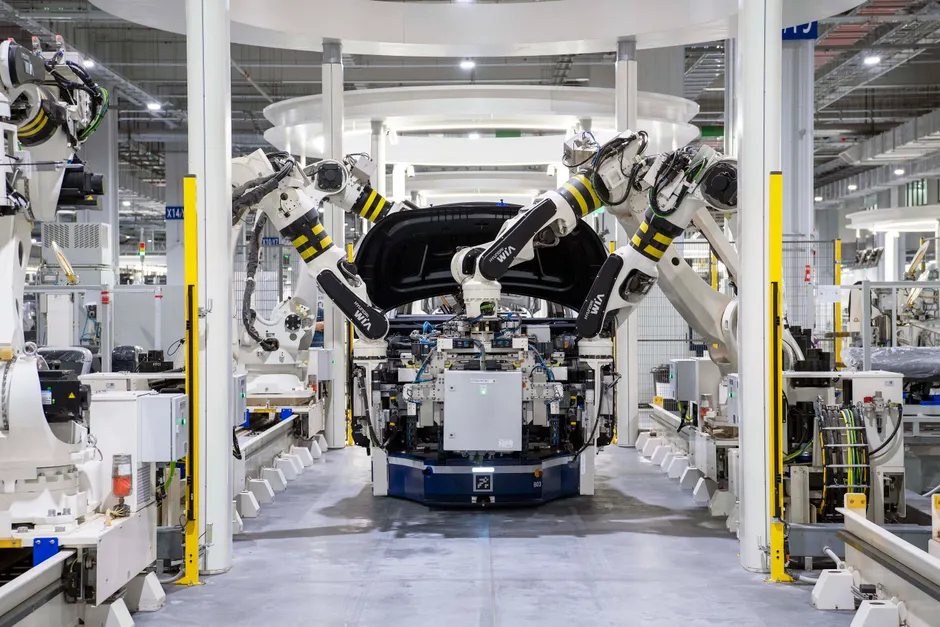
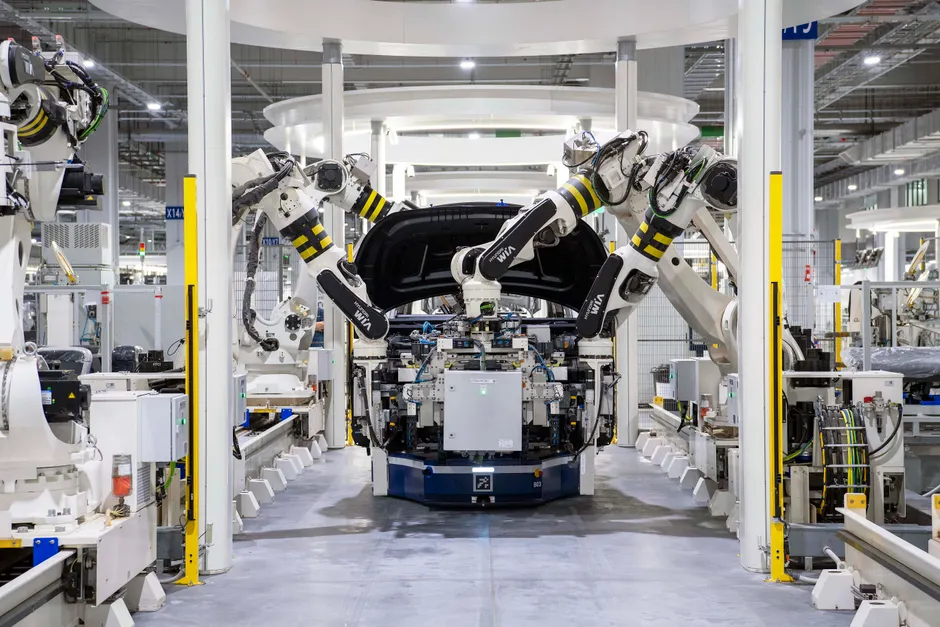
The Louisville Assembly Plant is over 70 years old and spans roughly 3 million square feet. Ford powered the facility down this past winter and began a full retooling, physically unbolted and hauled out heavy machinery over several weeks, and left only an empty shell by February (The Verge, Work Truck). The plant had previously built internal-combustion vehicles including the Escape and Lincoln Corsair. Ford completed the conversion from gas-car production to an EV-only facility in under a year (The Verge).
The Louisville overhaul is part of a $2 billion investment in the plant for Fathom production (Work Truck, Fox Business). More broadly, Ford is spending $5 billion to create 4,000 new jobs across the Louisville factory and its BlueOval Battery Park in Michigan (The Verge).
Central to the Fathom's production is Ford's "assembly tree" process, which splits the vehicle into three sections: front clip, rear clip, and battery deck. Ford will use large unicasting for the front and rear sections, replacing dozens of stamped and welded parts. The company says this approach can speed up production by up to 15 percent (The Verge).
The Louisville plant also introduces a software module flash station, a first for a Ford assembly line. The station uses private 5G to run quality tests as the vehicle moves down the assembly tree (The Verge).
These manufacturing investments arrive against significant EV losses. Ford lost over $5 billion on EVs and software in 2024 and another $4.8 billion in 2025 (The Verge).
The unicasting strategy echoes the approach Tesla took with the Model Y's rear underbody, where dozens of stamped parts were consolidated into a single cast piece. The question that proved difficult for Tesla was whether the throughput and defect-rate gains at scale offset the retooling cost and reduced flexibility for design changes. Ford's assembly tree, which modularizes the vehicle into three major sections, may mitigate that rigidity by allowing the front and rear clips to be developed and sourced somewhat independently of the battery deck. Whether that architectural choice pays off will depend on how many vehicle variants Ford ultimately builds on the Universal Electric Vehicle Platform.
The private 5G flash station is worth noting beyond the factory floor. Running software provisioning and quality validation over a dedicated wireless network as the vehicle is still in motion on the assembly line compresses a step that has traditionally been a stationary bottleneck at end-of-line. If the approach works at production volume, it also creates the infrastructure for over-the-air update staging and pre-shipment firmware verification, tying the manufacturing process directly into Ford's broader software-defined vehicle strategy.
The financial context is unavoidable. Nearly $10 billion in EV and software losses across two years places enormous pressure on the Fathom program to demonstrate a path toward unit economics that Ford's earlier EV efforts, including the Mustang Mach-E and F-150 Lightning, have not yet achieved. The $5 billion capital deployment across Louisville and BlueOval Battery Park, combined with the 4,000 new jobs, signals a commitment to vertical integration in battery and vehicle assembly that Ford is betting will close the cost gap with both Tesla and the Chinese OEMs that have aggressively captured EV market share. The Fathom's Q1 2027 prototype builds will be the first concrete indication of whether the Universal EV Production System can deliver on its 15 percent throughput claim under real factory conditions.