Israeli Troops Clash With Settlers in Qusra as Army Moves to End Siege of Palestinian Homes

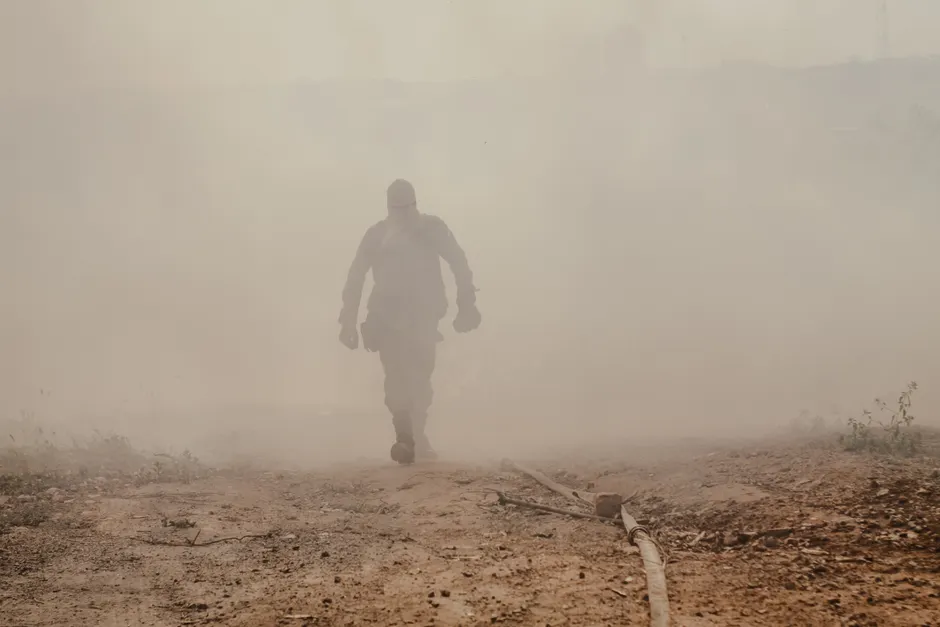
Israeli troops clashed with Jewish settlers on August 12, 2026, in the West Bank village of Qusra, where the army was attempting to disperse settlers who had besieged two Palestinian families inside their homes Reuters. The confrontation marked a rare instance of Israeli security forces deploying against settlers rather than Palestinians, and it followed a siege that began on August 10, when settlers surrounded a Palestinian family's home in what was then described as an ongoing day-long operation, with the family trapped inside and threatened by what sources characterized as a violent and armed settler militia Times of Israel.
The two Palestinian families at the center of the siege had been handed eviction orders and refused to leave. The army, according to reporting from August 13, had planned a three-day operation to resolve the standoff The National. During the operation, Israeli security forces demolished the structures of two illegal settler outposts in Qusra and another West Bank village, an action aimed at ending the siege Times of Israel. On August 13, Israeli troops ordered several Palestinian families to evacuate their homes during the operation to end the settler siege Haaretz.
The dynamics on the ground were layered. The army moved against settler outposts, yet also ordered Palestinian evacuations in the course of the same operation. Settlers, for their part, continued to maintain positions near the besieged homes even as the security operation unfolded. The siege in Qusra was not an isolated event but part of a sustained pattern of settler pressure on Palestinian residents in the West Bank.
A Palestinian man named Yusuf, as of August 12, remained trapped in his home with his wife and young daughters, having been besieged by settlers for months Haaretz. His case illustrates a broader displacement trend: over the three years from January 2023 through April 2026, approximately 5,900 people in the West Bank were displaced from their homes due to settler activity Times of Israel. The BBC, reporting on August 12, confirmed that settlers had besieged two Palestinian families in their homes in the occupied West Bank, with the siege having begun on a Sunday BBC.
The broader context here is one of escalating settler-Palestinian friction in Area C of the West Bank, where Israeli military law applies and where the Israeli Defense Forces hold security responsibility for both Israeli settlers and Palestinian residents. The Qusra episode exposed a structural tension within that responsibility: the IDF was tasked with dismantling settler outposts that it classifies as illegal while simultaneously managing the safety of Palestinian civilians under siege, and in doing so ordered some of those same civilians to leave their homes. The fact that troops clashed physically with settlers, rather than simply issuing dispersal orders, indicates the degree to which elements of the settler movement have operated outside the framework of Israeli military authority on the ground.
The displacement figure of 5,900 over roughly three years provides a quantitative backdrop against which individual sieges like the one in Qusra should be measured. These are not intermittent incidents but, according to the data, a sustained campaign of pressure that has produced consistent population movement out of Palestinian communities. The Qusra case differs in that it prompted direct military intervention against settler infrastructure, including outpost demolitions, rather than the more typical pattern of passive military presence or non-intervention.
Several questions remain unresolved in the immediate aftermath. Whether the three-day operation achieves its stated objective of fully lifting the siege, whether the evacuated Palestinian families are permitted to return, and whether the demolished outposts are reestablished will all shape the trajectory of settler-Palestinian dynamics in the area. The continued presence of settlers near the besieged homes, even as the operation was underway, suggests that the standoff may not resolve cleanly.
For the IDF, the Qusra operation presents a test of enforcement credibility. Israeli security forces have faced recurring criticism, including from within Israel, for what critics describe as uneven application of law enforcement between settlers and Palestinians in the West Bank. The decision to demolish settler outpost structures and physically confront settlers is a departure from the lower-profile approaches that have characterized many prior incidents. Whether it represents a policy shift or a tactical response to a specific set of circumstances on the ground is not yet determinable from available information.