Robot Brain Builders Push Past the GPT-2 Era — Money, Doubt, and a Lot of Data
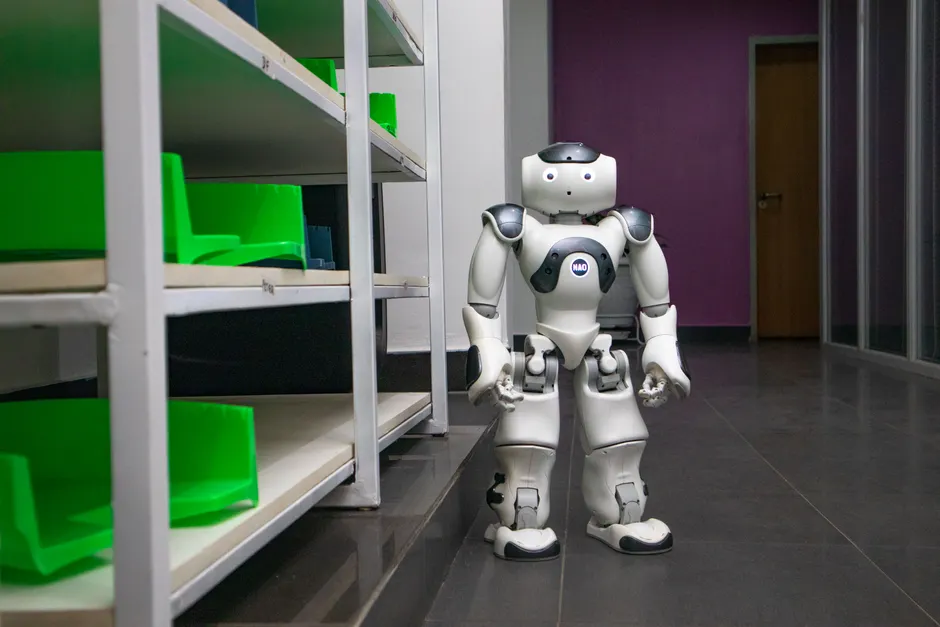
Developers building AI "brains" for robots are advancing beyond what Harry Mellsop, founder of the simulation startup Antioch, calls the "GPT 2 era" of physical AI capability. The assessment, delivered at the Actuate conference and reported by TechCrunch on August 26, 2026, frames a field that is simultaneously attracting surging capital, producing more capable foundation models, and weathering a sharp public-market correction for its highest-profile hardware company.
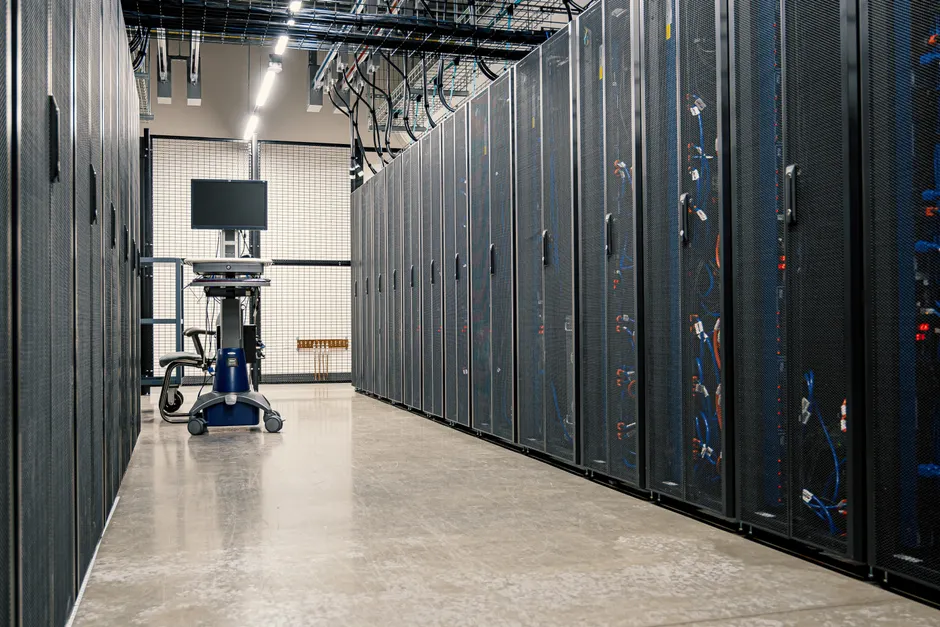
The Actuate conference, organized by Foxglove, drew 1,500 attendees in 2026 and has tripled in size since its 2023 launch. Foxglove, founded by former employees of Cruise (General Motors' self-driving unit), builds data management and visualization tooling for physical AI model builders. Conference floor messaging pointed to infrastructure as the gating constraint: Avala, a physical AI infrastructure company, displayed a booth sign promising to solve "the robotics data crisis." Antioch, separately, builds simulation tools for the same developer population.
That constraint framing is consistent with the pipeline of foundation models now emerging. Physical Intelligence announced π0.7 on April 16, 2026, describing it as a steerable robotic foundation model exhibiting a step-change in generalization; it can perform dexterous tasks including folding laundry. Skild AI is pursuing a different architecture: an "omni-bodied" foundation model, branded Skild Brain, designed to operate across quadrupeds, humanoids, table-top robots, and mobile manipulators. Pudu Robotics announced PuduFM, an embodied intelligence foundation model comprising a physical VLM module, a Physics Intuition Model (PIM), and action-expert modules, alongside the launch of its Pudu D7 industrial semi-humanoid robot at WAIC 2026.
The capital flowing into these efforts is substantial. Genesis AI, a vertically-integrated humanoid robotics company led by CEO Théophile Gervet, raised a $105 million seed round in 2026. On the public-market side, Unitree, described as China's leading robot maker, was valued at $66 billion after its IPO on China's equivalent of the NASDAQ — then lost nearly half its value in the following week.
Established autonomy and mobility companies are also entering the space. Wayve, an autonomous-vehicle company, launched a robotics lab focused on humanoid form factors as an R&D effort. Uber launched a parallel humanoid robotics R&D lab. Tesla is attempting to use its machine-learning tooling investment to compete with dedicated humanoid robot makers through its Optimus robot. Alex Kendall, CEO of Wayve, draws an explicit parallel: manipulation robotics is "like self-driving five years ago," and data infrastructure, simulation, and ML ops infrastructure will likely be shared across embodiments.
Academic and standards work is running in parallel. A 2026 paper by Y Liang, "From World Action Models to Embodied Brains," proposes a co-evolution roadmap for scalable physical intelligence centered on the "embodied brain" as a long-term model target. A 2026 systematic review by M Lisondra, published in MDPI's Robotics journal, is described as the first systematic review of foundation models in mobile service robotics. CVPR 2026 will host the 1st Workshop on Deployment of Foundation Models for Embodied AI (WDFM-EAI), focused on efficient, scalable, and safe deployment. World model technology, which enables robots to learn by simulating and predicting outcomes, emerged as a key breakthrough topic at WAIC 2026.
The ACE Robotics chairman has predicted that embodied intelligence will reach a "ChatGPT moment" by the end of 2027, driven by world models and environmental data.
The breadth of activity here is notable: simulation vendors, data-infrastructure startups, foundation-model labs, vertically-integrated hardware companies, and adjacent autonomy players all converging on the same thesis. The reference point that keeps surfacing is language modeling circa 2019, when GPT-2 demonstrated capability and GPT-3 demonstrated scale. The implied trajectory is toward a comparable capability jump in manipulation and locomotion.
Worth flagging: the distance between that trajectory and commercial durability is visible in Unitree's IPO week. A $66 billion valuation halving in five days is a market statement about the gap between demonstration-grade robotics and revenue-grade robotics. The foundation-model progress is real, but the infrastructure debt — the "robotics data crisis" that Avala's booth sign targeted — is a genuine bottleneck that language modeling did not face at the same developmental stage. Language models train on text that already exists in staggering quantity. Physical AI models need embodied data that must be collected, simulated, or teleoperated into existence, and the tooling for that pipeline is still being built.
The companies that solve that data problem may matter more in the long run than the companies with the most impressive demo videos. Whether 2027 delivers the predicted "ChatGPT moment" or not, the pipeline of models, tooling, and capital now in motion suggests the field will not be short of attempts.