OpenAI to Terminate Cursor Model Access Following SpaceXAI Acquisition
OpenAI will cut off Cursor's access to its models on November 12, 2026, following the AI coding assistant's acquisition by SpaceXAI. Cursor may choose an earlier termination date. The decision was announced through OpenAI's own explanatory post and confirmed by reporting from Engadget (Engadget).
OpenAI stated it cannot be confident that SpaceXAI will comply with its terms of service, citing prior experience with Elon Musk's companies violating contractual agreements. The company specifically referenced Musk's admission during a lawsuit cross-examination that xAI used OpenAI's output to train its own models through distillation — a process where a smaller or competing model learns from the outputs of a more capable one (Forbes). OpenAI presented that admission as a concrete example of the kinds of ToS violations it expects to recur under SpaceXAI ownership.
OpenAI also pointed to its upcoming model Astra and what it described as a new level of accountability for the model's use as part of its reasoning. The implication is that Astra's capabilities and deployment constraints require tighter control over downstream partners than OpenAI's prior model-access arrangements have enforced.
The corporate history between the parties is long and adversarial. Musk was one of OpenAI's earliest investors and allegedly departed in 2018 when OpenAI refused to implement a board structure he proposed that would have given him control of the company (Engadget). In 2024, Musk filed a lawsuit to stop OpenAI from transitioning from a nonprofit to a for-profit entity. In May 2026, a jury ruled against Musk, and the judge dismissed his claims of breach of charitable trust and unjust enrichment.
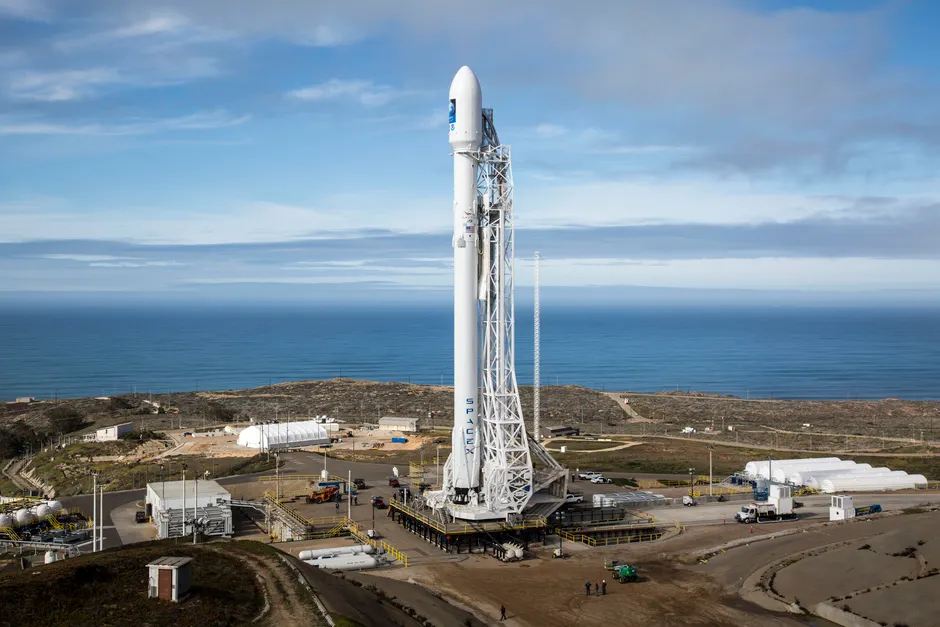
The acquisition at the center of this dispute was announced on June 16, 2026, when SpaceX disclosed a $60 billion all-stock deal for Cursor (CNBC; The Neuron Daily). Developers using Cursor with OpenAI models now face a hard deadline: access ends no later than November 12, 2026 (Indian Express; Dev Discourse).
Cursor co-founder and CEO Michael Truell addressed the situation on X, stating that OpenAI serves five percent of Cursor's customers and that his team was in active discussions with OpenAI in hopes of reaching a resolution (Engadget). The five-percent figure suggests the immediate user impact is contained, though the precedent for third-party API access deals is less reassuring. If OpenAI is willing to terminate a paying partner relationship over concerns about an acquirer's compliance posture, other companies building on OpenAI models through similar arrangements will reasonably re-examine their own dependency exposure.
The distillation concern is not abstract. Model distillation through API access is technically straightforward: an entity with sufficient query volume can generate large synthetic datasets from a frontier model's outputs and use them to train a competing model at a fraction of the original training cost. OpenAI's terms of service prohibit using model outputs to train competing systems. Musk's acknowledged use of this technique by xAI gives OpenAI a documented basis for distrust, and the Cursor acquisition would place OpenAI's models inside a company controlled by the same individual.
Looking at what this means for the broader AI tooling ecosystem, the decision tightens the link between model providers and downstream applications. OpenAI is signaling that it will evaluate not just the direct partner but the partner's ownership structure when deciding whether to maintain API access. For coding assistants, IDE integrations, and other tools that depend on third-party frontier models, this adds a new category of risk: an acquirer's conduct can sever a core dependency regardless of the tool's own compliance record.
For Cursor's user base, the practical question is model migration. Cursor already supports multiple model providers, and Truell's disclosure that OpenAI accounts for only five percent of customers suggests the product's architecture is not single-provider. The disruption is real but bounded. The larger question is whether other model providers will follow OpenAI's lead in scrutinizing ownership chains, or whether this remains a decision specific to the OpenAI-Musk dynamic.
The competitive stakes around Astra add another dimension. If OpenAI genuinely intends to impose stricter accountability terms for its next-generation model, the Cursor termination may be an early instance of a broader policy: partners will need to demonstrate not just technical compliance but organizational alignment. Whether that standard can be applied consistently across hundreds of API customers without chilling the developer ecosystem is a question the company has not yet had to answer.