S&P Rebounds About 1% as Chips Climb and Yields Ease
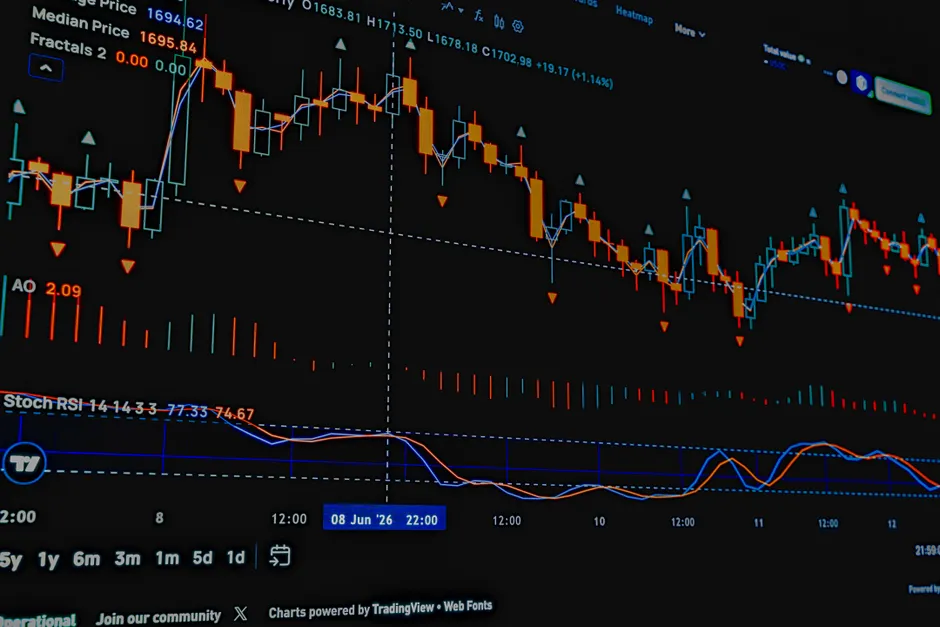
The S&P 500 rose about 1% on Sept. 16 in a rebound for stocks and bonds after a Fed-day drop as oil fell. A closely watched gauge of chipmakers climbed 3% in the same move. Treasury 10-year yields declined. The session was described as 'Stocks, Bonds Rise After Fed-Day Drop as Oil Falls' Bloomberg.
The chip gain exceeded the broad-market gain that day. Stocks and bonds advanced together.
Two earlier readings provide context for that combination. On June 30, the S&P 500 Index closed 0.8% higher in New York while the Nasdaq 100 Index jumped 1.7% Bloomberg. The Nasdaq 100 gain was larger than the S&P 500 gain on that close.
On Aug. 26, the Nasdaq 100 rose 1.4% and the tech rally lifted the S&P 500 even as most of its shares fell Bloomberg. The headline index advanced. Breadth did not.
The broader context here is correlation and concentration. Equities and duration moved in the same favorable direction on Sept. 16. That joint move compresses realized cross-asset volatility for the session. It also tightens the mechanical link between discount rates and equity multiples. When long-end yields fall while equities rise, duration-sensitive growth exposure receives support from both legs. The effect is amplified in high-beta cohorts. For trading desks, joint advances simplify intraday hedging. They complicate inference. One session does not define persistence.
In my view, the sequence across the three dates carries more information than any single print. June 30 paired an S&P 500 advance with a larger Nasdaq 100 advance. Aug. 26 paired a Nasdaq 100 advance with a rising S&P 500 alongside declining breadth underneath. Sept. 16 paired an S&P 500 advance with an even larger chipmaker advance. Leadership narrowed in steps. First technology outpaced the broad index. Then a narrower set carried the broad index while most constituents lagged. Then semiconductors outpaced the broad index itself. Cap-weighted construction allows that pattern. A small weight with a large move can dominate the headline. The median stock can diverge. That structure increases sensitivity to rotation within technology. It also increases the signal value of semiconductor price action as a proxy for near-term risk appetite.
Looking at what this means for risk management, the headline level deserves less weight than participation and rates. An index advance with weak breadth changes tracking error. It changes factor exposure. It changes liquidity demand on up days and down days. A decline in 10-year yields eases financial conditions at the margin. It leaves term premium and supply dynamics unresolved. For portfolios carrying both equity beta and duration, the Sept. 16 combination flatters marks. The operational question is follow-through. Professionals will monitor whether chip strength broadens to the rest of technology and then to the broad market, or whether the index remains dependent on a concentrated, high-beta sleeve. Dependence is fragile. Breadth is stabilizing.