Galaxy S26 FE at $700: Samsung's Calculated Flagship Cut
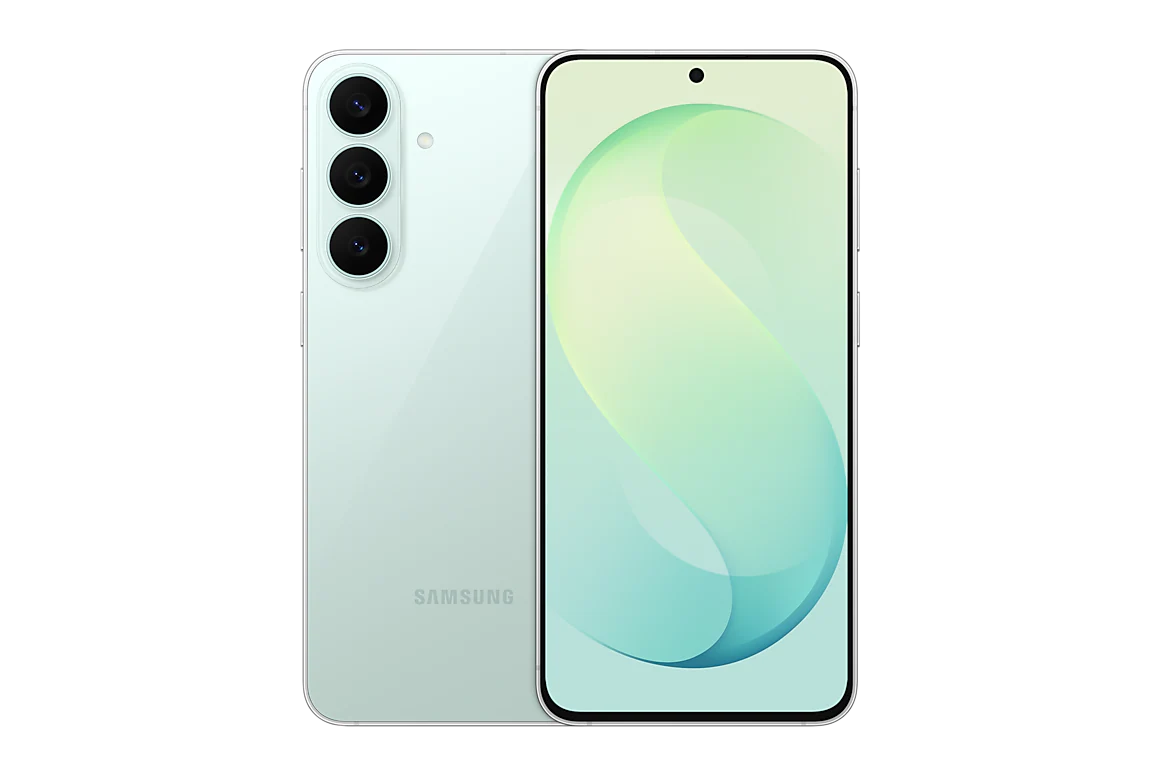
Samsung's Galaxy S26 FE costs $700.
That is $50 more than the Galaxy S25 FE and $200 less than the base Galaxy S26, according to the review published on Sept. 18, 2026 Engadget. Samsung positions the device as a more affordable version of the Galaxy S26+ with slightly reduced specs Engadget.
The pricing ladder is now explicit in the U.S. store. The unlocked 256GB S26 FE is listed at $799.99, while the Galaxy S26 is listed at $899.99 and the Galaxy S26+ at $1,099.99. An earlier European leak put the S26 FE at €799 recommended retail Mashable.
Display and chassis
The FE carries a 6.7-inch OLED panel with FHD+ Dynamic AMOLED 2x branding. It supports 120Hz refresh, with 60Hz and 120Hz options exposed in software Samsung Newsroom. Peak brightness is rated at 1,900 nits. The rest of the S26 series reaches up to 2,600 nits.
Screen specifications are identical between the S26 FE and S25 FE. For engineers who track panel binning and supply reuse, that continuity matters. Same size. Same resolution class. Same refresh ceiling.
The chassis tells a similar story of iteration. Thickness holds at 7.4mm. Weight is up 3 grams over the S25 FE. The back finish moves from matte to glossy. The rear camera treatment moves from separate protruding lenses to a connected camera island. The rear system remains a trio of cameras. Color options include pistachio and Blueberry. The device is rated IP68 for water and dust resistance.
Silicon, memory and power
The S26 FE is powered by an Exynos 2500. That is the same chip used in the Z Flip 7. The base configuration pairs it with 8GB of RAM and 128GB of storage. A 256GB version is also available. Samsung documentation also lists a 512GB storage option.
The battery is 4,900mAh. That capacity matches the Galaxy S26+ and last year's FE phone. In Engadget's video rundown test, the S26 FE achieved just over 21 hours of playback. Wired charging is rated at 45W. Wireless charging is rated at 15W.
For a tech-literate buyer, the trade is legible. Last-generation flagship silicon class, mid-tier RAM allocation, large display, large battery. No exotic packaging. No new cell chemistry to validate.
Cameras and software stack
Samsung lists a 50 MP Wide camera with OIS for the S26 FE. Galaxy AI features are included across the device. The company promises up to 7 OS upgrades for the model.
That update commitment is now the more important software spec. Seven generations covers the practical service life for enterprise fleets and for secondary-market owners. It also reduces fragmentation risk for developers targeting Galaxy AI APIs and on-device inference paths.
The broader context here is familiar to anyone who watched the FE line mature. Samsung is not trying to reset the flagship curve. It is holding display size, battery capacity, refresh rate and IP rating steady while absorbing a $50 increase and a silicon swap.
In my view, the increase is defensible only if sustained performance and battery efficiency under Exynos 2500 match the prior FE in real workloads. The 21-hour rundown result is encouraging, but video playback is a low-power, fixed-function path. Worth flagging for technical readers: thermal behavior under sustained CPU, GPU and NPU load, modem efficiency on 5G, and storage throughput on the 128GB base SKU will decide whether this feels like a $700 flagship or a $700 compromise.
Looking at what this means for purchase decisions, the $200 gap to the base S26 buys higher peak brightness and a step up the mainline spec sheet. The $100 gap from the $799.99 256GB FE to the $899.99 base S26 is narrower. Professionals who provision phones should model total cost against display outdoor readability needs, storage headroom, and update horizon rather than launch silicon alone.
I have watched my own children treat phones as interchangeable glass slabs until battery life or storage forces attention. The FE strategy understands that behavior. Keep the 6.7-inch canvas. Keep all-day power. Keep the camera good enough for computational photography to do the heavy lifting. Offer Galaxy AI as table stakes. That formula will not excite silicon enthusiasts, but it enables a large cohort to stay current without paying for nits and millimeters they will never notice.