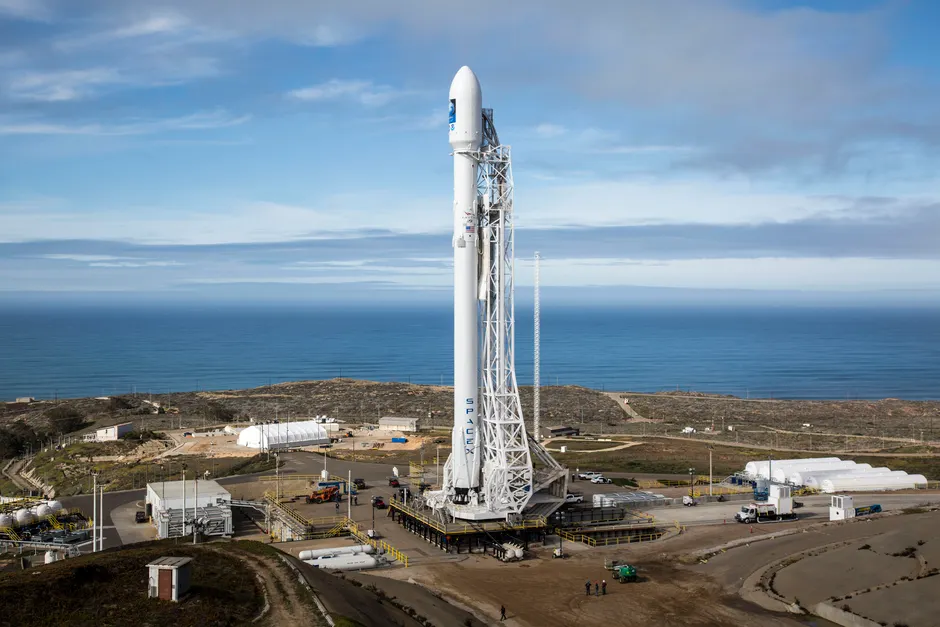
Starship Flight 14 Targets September 28 for First Orbital Mission

SpaceX is targeting September 28 for Starship's 14th flight, the vehicle's first orbital flight. The launch window runs 75 minutes and opens at 8:15 a.m. Eastern Time on that date. The attempt remains pending regulatory approval, according to Engadget.
The September 28 date is a short slip. SpaceX had originally worked toward September 22 before updating the target. On its official X account, the company described September 28 as the earliest possible date, phrasing it as launch as early as Monday, September 28.
All previous Starship flight tests were suborbital. Flight 14 changes the profile. The vehicle will fly 171 miles above Earth and complete six orbits over the course of 10 hours.
The payload is operational, not a mass simulator. The upper stage will insert 26 Starlink V3 satellites into the Starlink constellation to serve customers. It will be the first time V3 spacecraft are added to the constellation for service.
For network engineers, the V3 numbers matter. Each V3 satellite supports 1 Tbps of downlink, 10 times more than V2 satellites. Uplink capacity is 160 Gbps per spacecraft, 22 times more than V2.
Recovery plans are conservative for an orbital debut. SpaceX will not attempt to catch the booster with the launch tower's arms on this flight. The Super Heavy booster will splash down in the Gulf of Mexico a few minutes after launch. The upper stage will splash down in the Pacific Ocean near Chile after completing its objectives.
That sequence builds on work already flown. During Starship's eleventh flight test, the vehicle deployed eight Starlink simulators and executed its third in-space relight of a Raptor engine. SpaceX maintains an official page for the coming mission at its Starship Flight 14 launch site.
The broader context here is a shift from flight-test demonstrations to orbital utility. Suborbital arcs validate ascent, staging, reentry heating and controlled water landings. They do not validate multi-hour coast, repeated state-vector management across orbits, or a large batch deployment at altitude. A 10-hour, six-orbit mission with 26 production satellites exercises power, thermal, attitude control and communications over durations that short hops cannot.
In my view, the payload choice is the signal. Flying simulators proved the dispenser mechanism. Flying 26 V3 spacecraft that then enter service ties Starship directly to Starlink capacity growth. A 10x increase in downlink and 22x increase in uplink per satellite only matters if launch cadence and per-launch mass can deliver those spacecraft in volume. SpaceX states that starting with Flight 14, Starship will begin flying orbital missions enabling delivery of Starlink V3 satellites and other payloads to space.
Worth flagging for operators watching reuse, the decision to forgo a tower catch on this flight is consistent with prioritizing the orbital objectives. Booster recovery is deferred in favor of upper-stage endurance and deployment accuracy. Gulf and Pacific splashdowns keep both stages expendable in the near term while data is collected on the longer mission profile.
If the September 28 window holds and approval arrives, Starship moves from proving it can fly to proving it can work on orbit. That is the threshold that makes high-throughput constellations, co-manifested payloads and sustained orbital operations practical.