Ray-Ban Meta Gen 3 Adds Battery Life, Dolby Atmos and New Frames at $449

Meta has introduced the third-generation Ray-Ban Meta Glasses, starting at $449. Engadget
The announcement centers on iteration rather than a new form factor. The core package remains familiar for anyone who has used the current Ray-Ban Meta hardware: built-in Meta AI, a camera and open-ear audio. What changes is endurance, input flexibility, capture options and fit.
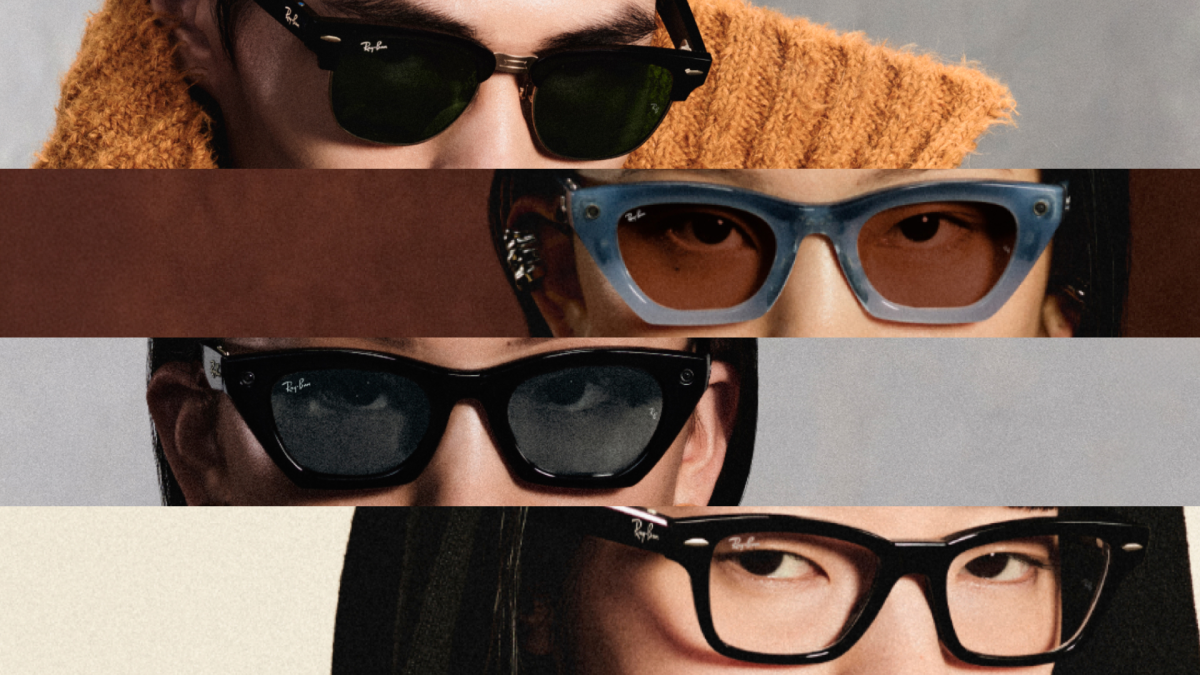
The Gen 3 lineup ships in three frame families. Wayfarer carries over. Aviator is new to the smart line. Zena, an angular frame, is also new. Ray-Ban now maintains a dedicated Gen 3 Zena page on its India store, which indicates how the company expects the new shapes to sit alongside the existing catalog that already includes Blayzer and Scriber frames.
Meta states the Gen 3 glasses offer up to 9 hours of battery life. Engadget A fully charged pair of Ray-Ban Meta Gen 2 glasses can last up to eight hours with typical use. Meta The delta is one hour on paper. For all-day wearables, that hour matters more than the number suggests. It reduces midday charging and keeps the charging case as a top-up accessory rather than a required midday stop.
Fit gets a mechanical tweak. The Gen 3 frames feature adjustable temple tips. That is a small change with outsized consequences for smart glasses. Camera alignment, microphone distance and open-ear driver positioning all depend on stable placement. Adjustable tips should improve retention across head shapes and make prescription use more predictable. Ray-Ban USA lists the Ray-Ban Meta Gen 2 as made for prescription at $499.00, a reminder that optical compatibility is now a baseline requirement, not an accessory.
On input and audio capture, Meta added an extra microphone for a total of six in the frames. The frames also add a programmable action button that can be customized to trigger a Meta AI command or capture mode. Voice remains the primary interface for Meta AI on glasses, but a physical, remappable control gives users a deterministic path for the two operations they perform most often under time pressure. Six-microphone arrays also give beamforming and wind-noise algorithms more channels to work with, which is relevant for calls and voice queries in street environments.
Capture is where Meta is widening the creative envelope. The Gen 3 line will add support for capturing photos and videos in landscape orientation. It will be the first in the line to support recording video with Dolby Atmos. Users will also be able to capture spatial sound alongside videos.
Landscape support addresses a persistent friction for first-person cameras. Portrait is native to phones and to head-mounted capture, but much of the downstream viewing surface for video remains horizontal. Native landscape capture avoids cropping and preserves resolution for that surface. Dolby Atmos recording and spatial sound point in the same direction. Meta is treating audio as part of the image pipeline, not as a mono afterthought.
The broader portfolio is expanding in parallel. Meta says it will offer more than 100 frame styles and color variations across its Ray-Ban, Oakley and Meta-branded glasses by the end of the year. Meta separately offers three AI glasses styles starting at $299, with its Meta Glasses listing citing built-in Meta AI, 3K video and a 12MP camera. At the other end of the range, Meta Ray-Ban Display AI glasses are priced at $799, which includes the Meta Neural Band. Simpler Ray-Ban Meta models without a visual display sell for $300 to $400, according to late-2025 reporting. Reuters
The broader context here is scale through familiarity. EssilorLuxottica shares rose 14% to hit an all-time high on investor enthusiasm over Meta AI glasses, adding nearly $20 billion in market value. Reuters That rally dates to October 2025, but it explains the strategy visible in Gen 3. Meta is not asking mainstream buyers to adopt a visor. It is asking them to pick between Wayfarer, Aviator and Zena.
In my view, the most telling details are the least spectacular. Battery life, adjustable tips, an extra microphone and a programmable button do not photograph well. They determine whether people keep wearing the device after week two. My own children cycled through several wearables that impressed on day one and sat in a drawer by day ten, usually for reasons of comfort, charging or social friction. Glasses live or die on those same constraints.
Worth flagging for practitioners is the audio direction. Six microphones plus spatial capture plus Dolby Atmos encoding suggests Meta sees differentiated audio as a near-term moat for head-worn devices, where camera sensors are thermally and physically constrained but microphone arrays can still scale. If developers and creators can rely on consistent landscape framing and richer soundstages, POV content from glasses becomes easier to cut into conventional timelines.
Gen 3 does not reset the category. It extends the useful window per charge, gives users more control over input, and aligns capture output with how video is actually watched and heard. For a product class still proving daily utility, that is the right kind of progress.