Razer Kiyo V2 Pro Brings 4K60 to Streamers for $300
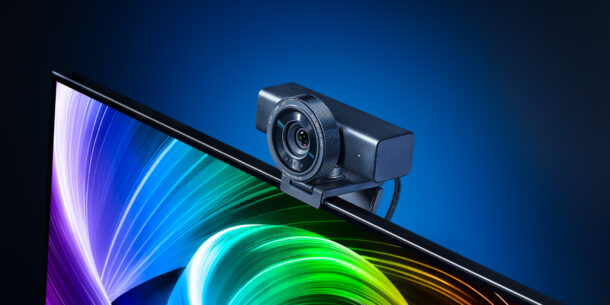
Razer has introduced the Kiyo V2 Pro, an upgraded pro version of its Kiyo V2 webcam that can capture 4K video at 60 fps. The camera is priced at $300 and is on sale now at Razer.com and other retailers. Engadget
The imaging chain centers on Sony's 8.3-megapixel STARVIS 2 sensor paired with a lens with aperture as low as f/1.9. The field of view is 86 degrees, narrowed from 93 degrees on the Kiyo V2. That combination defines the core trade. More light per pixel and a slightly tighter crop. Less room distortion at the edges, less background in frame.
On the software side, the Kiyo V2 Pro includes AI auto-framing with intelligent pan, tilt and zoom. It supports Razer Synapse for software-based controls including ISO and shutter speed. Physically, it ships with a clamp for monitor and laptop edges and a universal mount for tripod use.
Razer describes the Kiyo V2 Pro as a professional 4K webcam engineered for gamers. Razer The company positions it as delivering video and intelligent features for streams, setups and creative sessions without the need for a DSLR camera.
The launch slots into an already segmented Kiyo lineup. The standard Kiyo V2 captures 4K video at 30 fps and features AI auto-framing, face retouching and a privacy shutter. Razer describes that model as a 4K webcam for streaming, video conferencing and content creation. The Kiyo V2 X streams in 1440p at 60 fps, with fast autofocus, a wide-angle lens and a built-in mic, and is available in Black, White and Quartz colors. Razer announced two new colorways for its Kiyo V2 and Kiyo V2 X webcams in February 2026. TechPowerUp Further up the history, the Kiyo Pro Ultra delivered uncompressed 4K footage at 24 fps and was also priced at $300. The Verge
The broader context here is bandwidth and control. For a tech-literate buyer, 4K60 over a webcam pipeline means heavy throughput and aggressive compression unless the ISP, encoder path and host link are tuned for it. Razer is betting that frame rate matters more to its target users than uncompressed stills-style fidelity at 24 fps. That is a rational call for live interaction. Smooth motion reads as quality on stream and in conference, even when the per-frame bit budget is constrained.
Looking at what this means for streamers and creators, the manual controls may matter as much as the sensor. Auto exposure routinely hunts under mixed LED and key-light setups. Direct access to ISO and shutter speed in Synapse lets operators lock exposure, kill flicker and hold skin tones stable across a long session. AI pan, tilt and zoom extends that logic. It is digital crop, not optical movement, so resolution headroom from the 8.3-megapixel sensor is what makes it usable at 4K output. The narrower 86-degree field of view helps. It starts tighter, so tracking crops discard less.
In my view, the no-DSLR pitch is the right frame, with limits worth flagging. A mirrorless body with clean HDMI still wins on optics, depth control and low-light latitude. It also adds complexity, cost, capture hardware and setup time that many solo creators will not sustain. If a $300 USB camera gets close enough in good light while staying clipped to a monitor and remembering exposure settings, most streams will take the simpler path. That is good for output volume, and over time it raises baseline production quality without raising the skill floor.