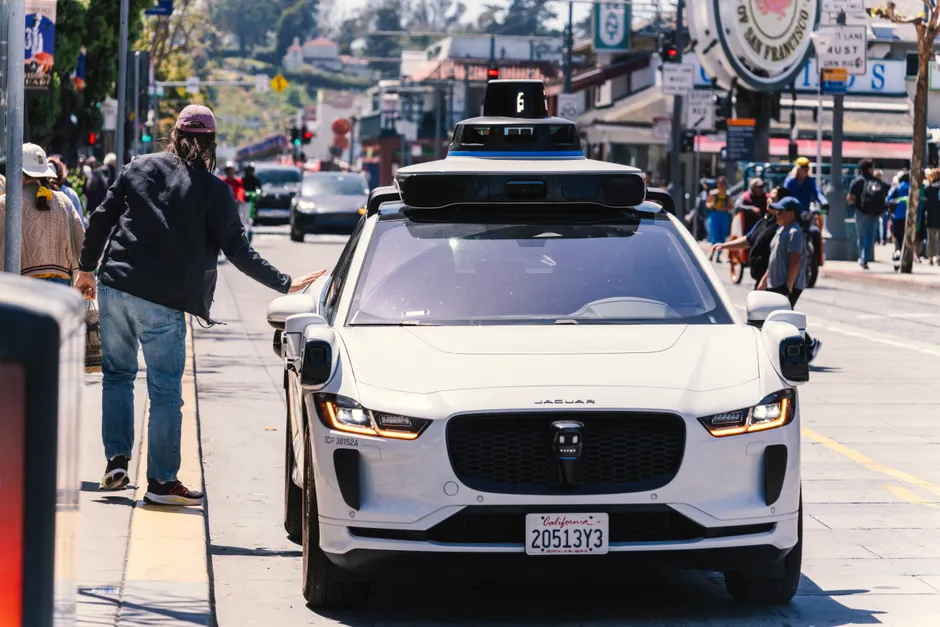
Waymo's Fleet Data Points to Paid Robotaxis at Scale

Waymo is averaging 500,000 paid robotaxi rides per week across 15 U.S. cities as of September 24, 2026, with a fleet of roughly 4,000 vehicles in service. The figures, reported by TechCrunch, describe an operation that has moved well beyond limited pilots into continuous commercial service at national scale.
Two years earlier, in September 2024, the network covered three cities: Phoenix, Los Angeles and San Francisco. The current footprint is five times that city count. Scale is now the story.
Geography remains concentrated. About 80% of the fleet sits in California and Texas, leaving about 800 vehicles for the rest of the country, including Arizona and Florida. That split points to a deployment model that goes deep in a small number of regulatory and operational environments before broadening coverage.
Texas is the accelerant. Waymo had 1,102 autonomous vehicles registered in Texas as of September 24, 2026, after increasing its Texas fleet by 49% in the prior three weeks. TechCrunch based its Texas counts on state vehicle registrations and data from the Texas Autonomous Vehicle Fleet Tracker, which makes Texas one of the few states where independent fleet sizing is possible from public records.
The Texas trajectory has been steady, then sharp. The fleet stood at about 600 vehicles in June 2026 and grew to more than 700 by the end of August 2026, before surging in September. The September jump accounts for a large share of net national fleet growth implied by the current 4,000-vehicle total.
Commercial service in Texas began in Austin in March 2025 through a partnership with Uber, which lets riders hail Waymo robotaxis through the Uber app. After Austin, Waymo expanded to Dallas, Houston and San Antonio. The Dallas move had been telegraphed well in advance. On July 28, 2025, Waymo said it would roll out autonomous ride-hailing in Dallas in 2026, according to Reuters, a timeline consistent with the multi-city Texas presence now reported.
Vehicle mix is changing alongside geography. About one-third of the Texas fleet now consists of Ojai minivans. The Ojai is a modified Zeekr RT minivan built on Zeekr's SEA-M platform, with Zeekr owned by China's Geely Holding Group. It carries Waymo's sixth-generation self-driving system.
The supply chain arrangement is structured to separate vehicle manufacturing from automated driving integration. Base Zeekr vehicles are shipped to the U.S. without Chinese connected-car technology and are outfitted with Waymo's self-driving system at Waymo's Arizona factory. Waymo itself spun out of Google and counts Alphabet as its majority owner.
Earlier snapshots help put the September figures in context. As of January 31, 2026, Waymo had a fleet of more than 2,500 vehicles, at a time when it was aiming to raise about $16 billion in a financing round valuing it at nearly $110 billion, according to Reuters. By May 28, 2026, the company had 577 automated vehicles registered in Texas, more than 13 times Tesla's Texas total at that point, according to Bloomberg. Tesla had registered 42 automated vehicles in its driverless Robotaxi service in Texas in May 2026, according to CNBC.
The broader context here is operational rather than experimental. Weekly paid rides, registered fleet size and state-level additions are infrastructure metrics. They measure availability, maintenance throughput, charging and cleaning, mapping and validation, and the ability to keep cars in revenue service. For a tech-literate reader, the relevant constraints are no longer whether point-to-point driverless travel works in bounded urban domains. They are dispatch efficiency, vehicle utilization, incident response, and unit economics per mile.
In my view, three details deserve more attention than the headline ride count. First is the Uber channel in Austin. Third-party distribution lowers customer acquisition cost and tests whether robotaxis can slot into existing demand aggregation rather than requiring a separate app habit. Second is the Arizona integration step for the Ojai. Final assembly of the self-driving system in the U.S., using glider vehicles without connected-car technology from the base supplier, is a practical answer to supply-chain and data-governance questions that will only grow as fleets scale. Third is concentration itself. Keeping most vehicles in California and Texas simplifies operations, staffing and regulatory engagement, but it also means performance in those states will determine public perception nationally.
Worth flagging is what scale enables next. A fleet running half a million paid rides per week generates a continuous stream of edge cases, roadwork encounters, weather variation and passenger interactions. That volume supports iterative improvement in routing, pickup and drop-off behavior, rider support and fleet management software, the unglamorous systems that decide whether a service feels reliable. My kids learned to trust new technology not when demos impressed them but when it worked the same way twice in a row. Robotaxis face the same test. The Texas surge suggests Waymo is now optimizing for repetition.