Anand Tells UN Canada Must Cut Single-Partner Reliance

Foreign Affairs Minister Anita Anand told the United Nations General Assembly on Saturday that Canada can no longer afford to be overly reliant on any one partner. The Globe and Mail
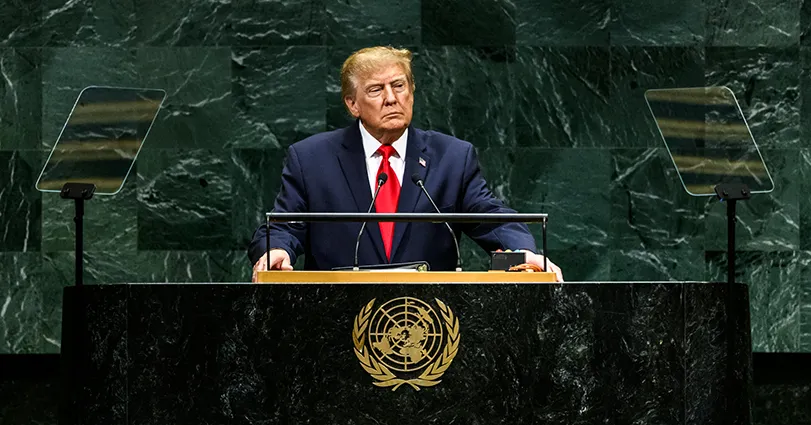
She delivered Canada's national statement to close High-Level Week of the 81st session on September 26. Global Affairs Canada The address set out diversification as doctrine, not preference.
Anand said Canada is diversifying its ties and building stronger relationships with new and old partners alike. She described the approach as values-based realism, paired with a deliberate reduction of economic reliance on the United States. The Globe and Mail
In French, she said Canadian exports to markets outside North America have significantly increased. The government aims to double its non-U.S. trade within a decade. ABC News
The critique of the trading order was blunt. Anand said great powers are walking away from global economic co-operation and dismantling economic integration. She added: "Great powers want the rest of us to accept what we are offered".
She did not name the United States when criticizing great-power behaviour. That omission was deliberate in tone. It left the criticism general while the policy point on U.S. reliance stood separately.
Anand also welcomed U.S. Secretary of State Marco Rubio convening the Arctic Seven earlier that week. The nod kept a line open to Washington on Arctic governance even as she argued for wider options elsewhere.
In an interview during General Assembly week, Anand said Canada sees its "middle power strategy" bearing fruit. AP News She spoke at the General Debate of the 81st session for Canada, as listed in the official debate archive. UN General Assembly
The speech capped a week of parallel Canadian activity in New York. Anand reiterated Canada's commitment to supporting Haiti's security, stability and recovery. Global Affairs Canada Secretary of State Sarai participated in the 81st General Assembly and announced international assistance funding. Global Affairs Canada
Beyond New York, Anand announced the adoption of the 2026 to 2030 Plan of Action to implement the ASEAN-Canada Strategic Partnership. Canada, Ukraine and Norway will host a conference in Toronto on September 28-29, 2026. Earlier, Anand addressed the resumed High-Level Conference on the Two-State Solution, noting that member states' collective presence reflected strong international support.
The broader context here is how Ottawa wants the diversification push to be read in domestic policy circles. For ministers and officials, trade diversification is intergovernmental work. It touches provincial export interests, regulatory co-operation and procurement. It also touches supply chains that cross the border daily. Anand's language gives departments and missions a clear instruction. Build depth elsewhere without breaking function with Washington.
In my view, the careful calibration matters more than any single line. The speech criticizes concentration of economic power without assigning that criticism to a named capital. It pairs reduced reliance on the United States with public co-operation on the Arctic. And it links values language to commercial objectives, from ASEAN to Haiti to Ukraine. Practitioners will watch whether statements of this kind translate into negotiating mandates, mission resourcing and follow-through after the Toronto meeting.