UK Red Heat Warning and 20 Deaths in France as Europe's June 2026 Heatwave Peaks
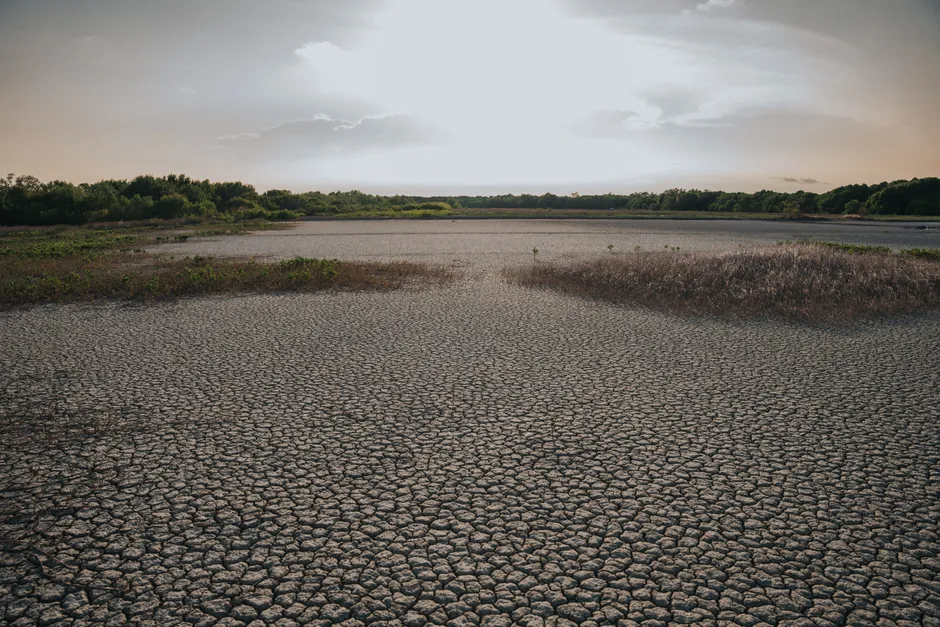
The Met Office escalated its warnings to Red Extreme Heat level for Wednesday 25 and Thursday 26 June 2026, forecasting temperatures up to 34°C across southern England — conditions that, if realised, would break June temperature records. The escalation followed a sequence of Amber warnings issued from 19 June covering southern England and southeastern Wales, expanded on 20 June to include eastern Wales, before the Red warning was issued on 22 June. Cardiff is among areas covered, with the Met Office flagging an exceptional spell of hot and humid weather and highly likely impacts on the general population.
Hospitals, schools, and rail operators across England and Wales were already preparing for operational disruption before the Red warning landed, according to Reuters. A Red warning — the Met Office's highest tier — is reserved for events posing a risk to life, where the general population, not just the vulnerable, faces danger. It carries a different operational weight than Amber: emergency services move to heightened readiness, and public health agencies issue direct behavioural guidance.
A Continent Under Pressure
The UK's escalation is part of a broader European heat event. Temperatures across the continent approached 40°C in the week to 22 June, triggering nationwide warnings in multiple countries, transport disruptions, and early signs of stress on wildlife and tourism-dependent economies. France recorded its hottest day ever in June during this period.
The human cost in France has been direct. Around 20 people drowned over several days as residents sought relief in rivers, lakes, and reservoirs. Most victims were swimming in unsupervised locations. France's Civil Safety service responded by urging the public to use only supervised bathing sites — a standard protocol during heat events, but one that points to a recurring enforcement gap: in extreme heat, informal water access becomes a mass-casualty risk.
The Structural Problem Behind the Warning
The heatwave arrives as the UK's independent climate advisory body has set out a blunt institutional diagnosis. In a May 2026 report titled A Well-Adapted UK, the Climate Change Committee stated that the country was built for a climate that no longer exists. That framing is relevant to every Red warning issued in a month that historically saw peak temperatures well below 30°C in most of England.
On 24 June 2026 — the day this heatwave is at or near its peak — the CCC also published its 2026 Progress in Reducing Emissions report to Parliament, assessing whether the UK remains on track for Net Zero. The 2025 edition of the same report concluded that the UK could hit its near-term targets only with further policy action. The 2026 assessment lands at a moment when the gap between the physical pace of warming and the institutional pace of adaptation is unusually visible.
What the Escalation Signals
Red warnings in June are rare. The UK's most consequential recent heat event — the July 2022 episode when temperatures exceeded 40°C for the first time on record — also carried a Red warning, and excess death estimates from that event ran into the hundreds. Epidemiological research since 2022 has reinforced that UK building stock, hospital infrastructure, and public transport are poorly suited to sustained high heat, a point the CCC's adaptation report formalises.
The pattern that emerges across the verified facts here is one of incremental escalation — Amber to updated Amber to Red — over roughly three days, which tracks with how synoptic-scale heat events evolve and how forecast confidence builds. For operators of critical infrastructure, the practical window between a Red warning and peak temperatures is narrow. Schools, rail networks, and NHS trusts have had days, not weeks, to adjust scheduling, staffing, and cooling capacity.
France's drowning toll is a reminder that heat mortality extends well beyond direct hyperthermia. Risk displaces into secondary behaviours — unsupervised swimming, overexertion, medication interactions — that are harder to plan for than a hospital surge. Public health systems across Europe are managing both vectors simultaneously.
The CCC's parallel publication of its emissions-progress assessment is not a coincidence of timing so much as a structural feature of how climate governance now works: the physical consequences of past emissions and the policy trajectory for future ones are increasingly assessed in the same institutional calendar.


