Meta Brings Muse to Small Business With Ads Access and Deep Integrations
Meta is rolling out Muse for Small Business, a version of its Muse AI agent built for small business owners. Engadget reported the release on Sept. 29, 2026.
The agent connects to owners' professional accounts on Meta's platform. It can access analytics tied to business and creator accounts on Facebook and Instagram, and it can access advertising accounts to provide insights and carry out tasks related to ad campaigns.
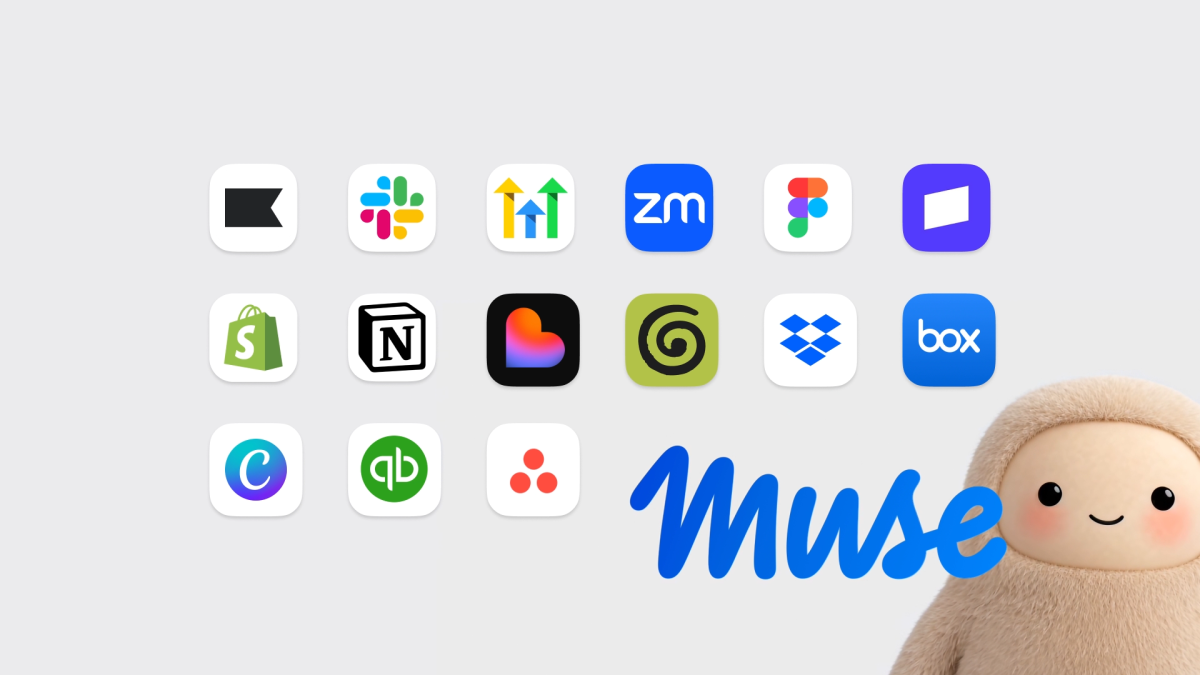
Meta also tied the small-business version into the existing work stack. Supported third-party services include Asana, Box, Canva, Dropbox, Figma, Granola, HighLevel, Intuit QuickBooks, Klaviyo, Lovable, Notion, Shopify, Slack, Stripe and Zoom. The scope covers design assets, file storage, project tracking, storefronts, bookkeeping, team messaging and video meetings.
Pricing is freemium. The product is free for most of what people need, with heavier or more intensive use potentially requiring a subscription.
The release extends Muse, which Meta launched as a personal AI agent on Sept. 8, 2026. The consumer version debuted in the United States via a dedicated app and WhatsApp to help with everyday tasks and projects. Users can connect it to apps including email, calendar, payments and health, and it interacts across a user's devices and digital accounts. Reuters documented that cross-app access at launch.
Muse is powered by Muse Spark. Meta introduced Muse Spark in April as its most powerful model yet for a smarter and faster Meta AI assistant, with rollout planned across WhatsApp, Instagram, Facebook and Messenger. Meta describes Muse as a secure, private personal AI agent that proactively helps people meet their goals and suggests ideas. Meta
Distribution followed quickly. Meta rolled out house ads promoting Muse on Sept. 9, 2026, a day after launch. TechCrunch reported the promotional push. Muse has since topped U.S. app download charts. Reuters
For business users, Meta has framed the value as closed-loop analysis of owned channels. Its Meta AI for Business materials say the system analyzes Facebook and Instagram content and engagement patterns to provide actionable recommendations for refining strategy. Meta
The broader context here is the shift from assistants that answer to agents that act. Reading analytics is now routine. Permission to work inside ad accounts, reconcile spend against QuickBooks or Stripe data, and pull creative from Canva or Figma puts the agent inside the operating loop where small teams spend their time.
Looking at what this means for operators, the integration list is the tell. Shopify and Klaviyo cover storefront and lifecycle messaging. Slack and Zoom cover coordination. Notion, Asana and Granola cover institutional memory. None of this removes the need for human judgment on budgets, targeting or brand voice. It compresses the distance between insight and execution, which is where lean teams feel constraint most acutely.
In my view, adoption will turn less on model quality than on permissioning and auditability. Small businesses will grant broad access only if they can see what the agent touched, reverse it, and set limits. That is familiar ground from cloud admin consoles and mobile device management. Agents raise the stakes because they act across systems, but the design problem is the same.
That is also why the freemium structure matters. If routine summaries and first-draft campaign actions cost little to try, experimentation becomes normal. Intensive, cross-app automation becomes the paid tier. For owners who already manage demand inside Instagram, Shopify and QuickBooks, the promise is less time stitching tools together and more time on customers and product.