Technics EAH-A1000 Brings Magnetic Fluid Drivers to ANC Flagship

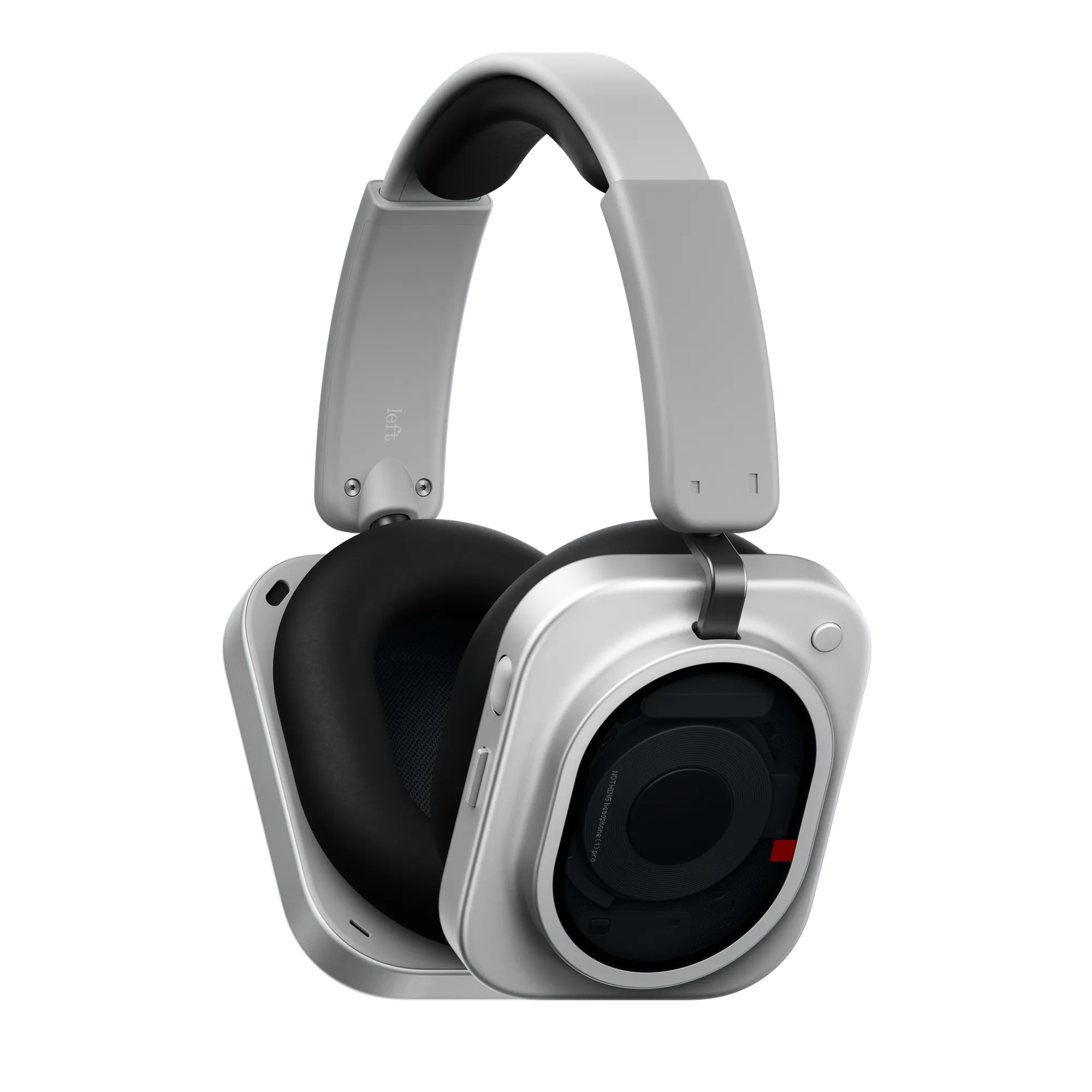
Technics has unveiled the EAH-A1000, a flagship over-ear adaptive noise-cancelling headphone built around 40 mm magnetic fluid drivers. Engadget
The EAH-A1000 is Technics' first over-ear model to use magnetic fluid driver technology. The drivers are designed to reduce vibrations and audio distortion at the transducer level, before any digital processing is applied.
The driver uses a carbon fiber diaphragm with an SST edge to minimize distortion, similar to edges used in some Technics speakers. MakeUseOf Distortion compounds quickly. Keeping it low in the mechanical domain simplifies everything downstream.
Noise cancellation is handled by an eight-microphone array, with three feed-forward microphones and one feedback microphone on each side. The feed-forward path addresses external noise, while the feedback path monitors the signal near the ear for correction.
For signal transport, the EAH-A1000 supports the LDAC codec for Bluetooth listening and lossless listening via USB Audio for a wired digital connection. Multipoint connectivity extends across up to three devices at once, allowing the headphones to stay attached to multiple sources without manual re-pairing.
Technics states continuous playback battery life of up to 45 hours. The headphones are available directly from Technics for $449.99. MakeUseOf
The broader context here is the order of operations in headphone design. Most discussion of wireless flagships centers on ANC algorithms, codecs and app features. Technics is starting earlier in the chain, at diaphragm behavior and surround control. In principle, lower mechanical distortion gives equalization and cancellation less error to correct, which should preserve detail at higher volumes and under heavy ANC load.
In my view, the microphone topology is worth reading carefully. Three feed-forward microphones per side is a dense array for an over-ear. That choice matters. It provides more spatial sampling of ambient sound, which can help adaptive processing distinguish steady low-frequency energy from transient, directional interference. The single feedback microphone per side keeps the closed-loop correction anchored to what is actually audible, rather than what the external array predicts.
Looking at what this means for daily use, the connectivity decisions are pragmatic. Three-device multipoint fits how many technology professionals now work, with a laptop, phone and tablet in rotation. USB Audio provides a clean, repeatable wired path for evaluation and for critical listening without codec variables. LDAC support keeps high-bitrate Bluetooth available where source devices permit it. None of these replace careful tuning, but together they reduce friction in mixed work and listening workflows.
Worth flagging is what Technics has chosen not to chase in this announcement. The emphasis is on transducer control and transport options, not on adding another layer of processing. For listeners who keep headphones for years, that is a durable proposition. Drivers and wired digital input do not age out the way app features do. If the magnetic fluid implementation delivers the claimed reduction in vibration and distortion in normal use, it gives owners a stable acoustic foundation to build on.