Senate Report Alleges Tether's USDT Powers Iran's Shadow Banking Network
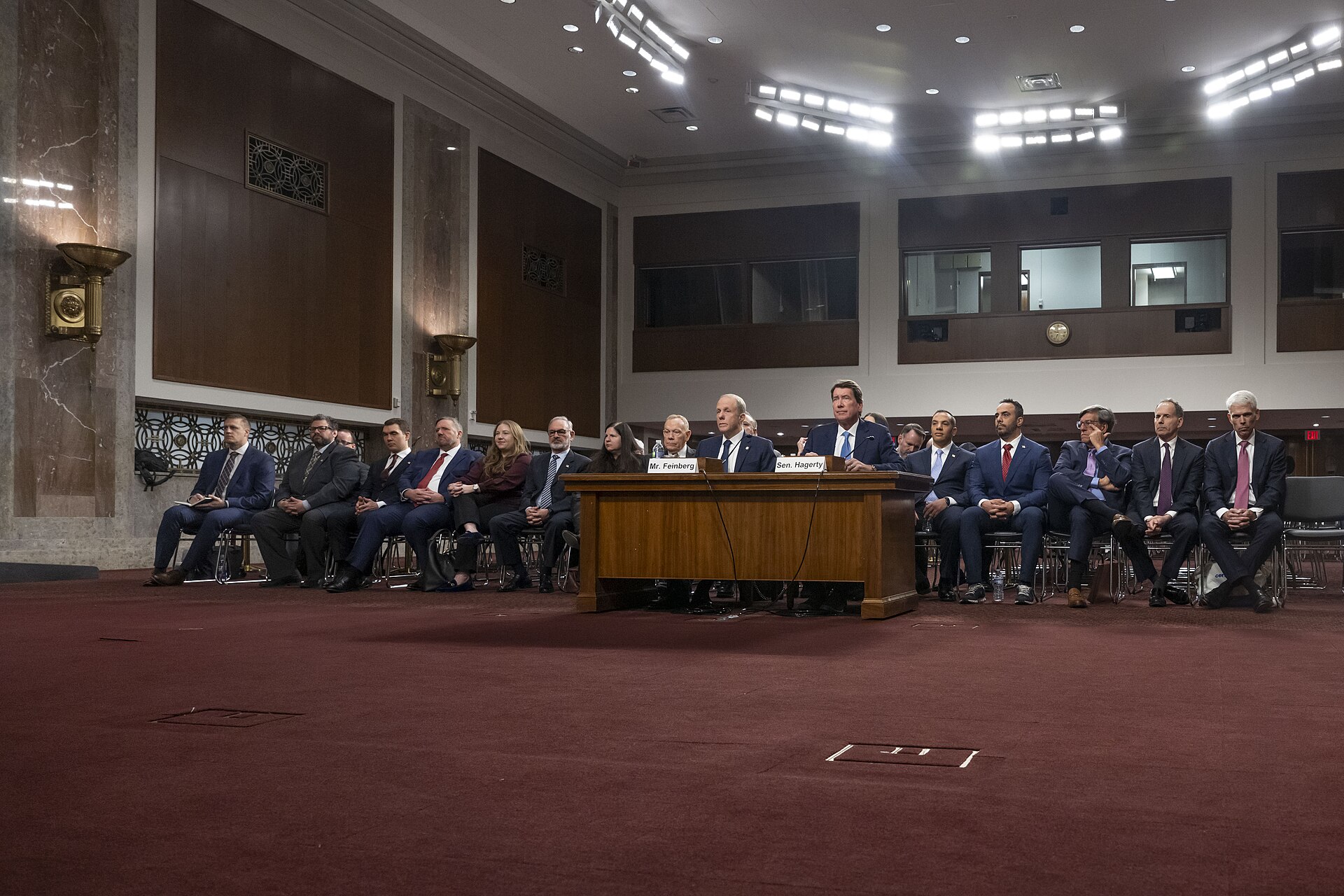
A U.S. Senate Permanent Subcommittee on Investigations report released on Sept. 28, 2026, alleges that Iran relies on Tether's USDT stablecoin to evade U.S. sanctions. The report, led by Ranking Member Richard Blumenthal, frames the dollar-pegged token as core payment infrastructure for Tehran rather than an incidental tool. Engadget
The report is titled 'Tethered to Terrorism.' It describes USDT as a "significant financial lifeline" within Iran's "shadow banking network," the informal set of intermediaries and accounts Tehran allegedly uses when its banks are cut off from correspondent banking and dollar clearing. Senate PSI report
Investigators examined 846 sanctioned cryptocurrency wallets linked to Iran and regional proxies. Of those wallets, 84 percent used USDT exclusively or almost exclusively to move money, according to the report. That concentration is the central empirical claim. For an expert reader, the implication is narrow and specific. The issue is not general crypto adoption in Iran. It is dependence on a single, centrally issued stablecoin with an issuer-level freeze capability.
The report states that Iran uses Tether as an international payment system to circumvent sanctions on its banks and to fund terrorist proxy organizations. It further claims the shadow banking network is used to buy and sell drones and other military equipment. A Senate investigation summary also identifies Hezbollah as a recipient of USDT-denominated funding. The Wall Street Journal
What the investigation documents
The compliance criticism has two parts, divided by time. The report claims Tether failed before 2024 to comprehensively and consistently freeze crypto wallets flagged by counter-terrorism agencies. It then claims Tether continues to fail to proactively block clearly illicit wallets. The distinction matters. The first allegation concerns reactive freezing after designation. The second concerns proactive screening and blocking before a formal action.
Tether's stated counterpoint is volume of recent cooperation. The company said it helped freeze almost $550 million in Iran-linked USDT so far this year. That figure does not rebut the report's historical claim on its own, but it establishes that issuer freezes are technically feasible and have been applied at scale in 2026.
Enforcement is now the open question. Blumenthal called on the U.S. Justice and Treasury departments to immediately investigate Tether over potential sanctions violations. Blumenthal press release On Sept. 28, 2026, Blumenthal sent a letter to Secretary Bessent regarding the PSI findings, including documentation of Iran's use of Tether to fund regional proxies and potentially acquire drone components.
Where enforcement breaks down
The Sept. 28 action followed a longer investigative trail. On June 4, 2026, Blumenthal sent a letter to Tether CEO Paolo Ardoino probing Tether's role in Iranian shadow banking. That letter sought an accounting of controls, freezes and exposure. Blumenthal has separately raised concerns about the recurring role of Tether's stablecoin in Russian money laundering schemes in addition to Iranian schemes. His office describes Tether in its release as a Lutnick-linked crypto firm.
Two earlier data points frame the timeline. In February 2026, U.S. investigators were examining whether specific crypto platforms had facilitated sanctions evasion by Iranian officials. In April 2026, the United States imposed new sanctions targeting 14 people and companies that help Iran obtain weapons.
The broader context here is the structural tension in centralized stablecoins. They settle like bearer instruments on public networks, yet they retain an administrative control point at the issuer. Sanctions investigators tend to view that control point as the place where compliance must happen. Issuers tend to view their role as responsive to designations and law enforcement requests, not as continuous transaction monitors across secondary markets, OTC desks and nested exchange flows. The PSI report is effectively arguing for the first interpretation, that failure to proactively block clearly illicit wallets is itself a compliance failure.
Looking at what this means for infrastructure operators, the wallet statistics will get the attention. An 84 percent concentration in 846 sanctioned wallets suggests path dependence, not experimentation. Dollar liquidity, deep order books on offshore venues, and ease of handoff between intermediaries make a single stablecoin sticky for cross-border settlement outside banking rails. That stickiness cuts both ways. It simplifies tracing and targeted freezing, because value moves in a uniform denomination with centralized intervention possible. It also means delayed action leaves a durable channel intact.
In this author's view, the constructive outcome worth watching is not whether USDT is used illicitly. Any liquid dollar proxy will be. It is whether issuer controls, exchange compliance, and Treasury designation can operate on the same timeline as the transfers themselves. Freezing almost $550 million in Iran-linked USDT this year indicates the mechanism works when triggered. The Senate allegation is that triggering remains too slow and too narrow for the stated threat, which includes drone procurement and proxy funding.