Amazon Consolidates Fire TV Around USB-Powered 4K Stick and New Remote

Amazon has introduced a new Fire TV Stick 4K priced at $59.99 that runs on its refreshed TV OS and draws power directly from a television USB port with no wall adapter required The Verge.
The change removes a longstanding installation friction. No wall wart. No spare outlet hunt behind a wall-mounted panel. The stick negotiates its power budget within what a standard TV USB port can supply while sustaining 4K decode, network I/O and Bluetooth radio operation concurrently.
On radios, the stick ships with Wi-Fi 6, Bluetooth 5.3 and Bluetooth Low Energy. For a tech-literate buyer that combination is table stakes in 2026, but it matters for throughput stability on congested home WLANs and for concurrent peripheral links to remotes, game controllers and audio devices. BLE in particular lowers idle power for always-paired accessories and simplifies provisioning flows.
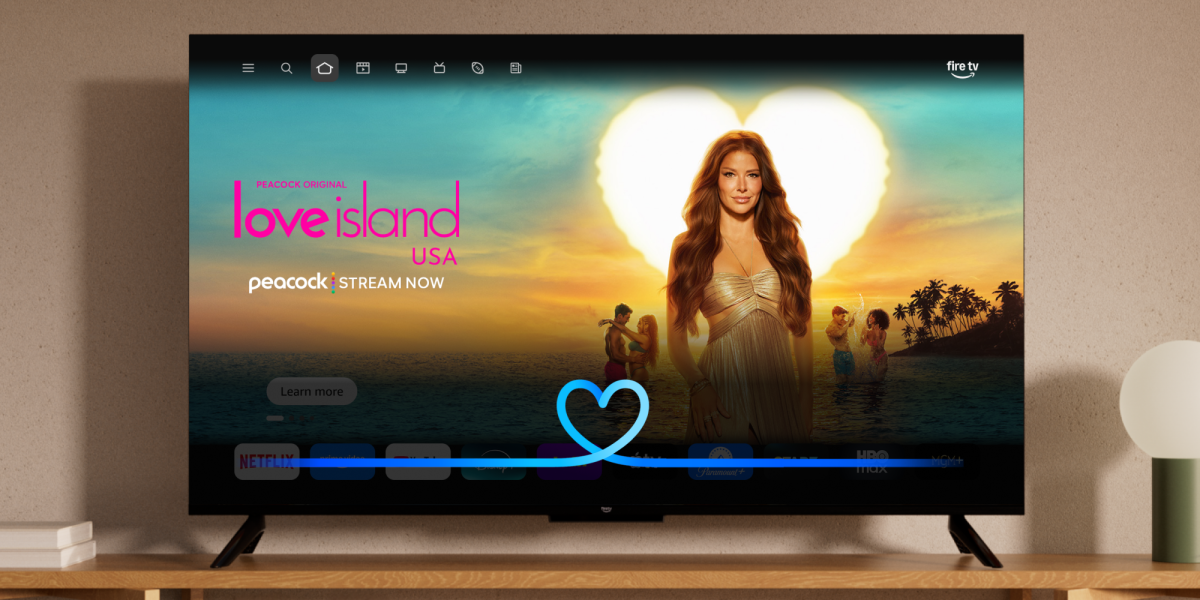
The operating system is Amazon's refreshed TV OS. Amazon has not detailed kernel, runtime or app-framework deltas in the materials reported so far, and the practical questions for developers will be API continuity, WebView and media pipeline behavior, and how existing Fire TV applications validate against the new build. Platform consolidation tends to reduce test matrices over time if Amazon holds one OS baseline across sticks, Cube and Ember sets.
Lineup simplification is part of the story. The streaming range now comprises four devices: Fire TV Stick HD, Fire TV Stick 4K, Fire TV Stick 4K Max and Fire TV Cube. The new 4K stick replaces the earlier Select and Plus 4K sticks, collapsing two adjacent midrange SKUs into a single $59.99 product.
Alongside the stick, Amazon launched a redesigned Fire TV Remote with an asymmetrical shape and more tactile controls. Input ergonomics have been a quiet differentiator in streaming hardware. Button travel, grouping and blind-findability determine far more daily satisfaction than spec sheets suggest, particularly in low-light living rooms where users navigate by feel.
Compatibility is broad. The redesigned remote works with Ember TVs and Fire TV streaming devices from 2019 onward. It will also be sold standalone for $14.99 and starts shipping in late October, which makes it an inexpensive retrofit for installed-base hardware rather than a new-stick exclusive.
Amazon plans a Plus version of the new remote early next year with an aluminum design, backlit buttons and Find My Remote. That tiers the accessory line in a familiar way. Backlighting addresses dark-room usability. Metal chassis and device-finding target households where the remote migrates between cushions and rooms.
The USB-power approach follows work Amazon did earlier this year on the low end. Amazon said in April that its newest Fire TV Stick HD is about 30 percent slimmer, can be powered through a TV USB port without a wall adapter, and described it as its most portable streaming device Amazon. Extending the same power architecture upward to a 4K product suggests the power and thermal envelope has matured enough to cover higher-bitrate HEVC and AV1 workloads without auxiliary power. Amazon's devices newsroom lists the current launch under the title 'Fire TV launches all-new, faster 4K stick and new remote design'.
The broader context here is less about any single radio or remote curve and more about reducing points of failure in setup and support. In my view, sticks that disappear behind the TV, power on with the panel and stay paired to one remote create fewer helpdesk calls and higher sustained usage than sticks with marginally faster app launches. I watched my own children adopt streaming hardware not because of codec checklists but because the device that needed no extra cables and no second remote was the one that stayed plugged in. Developers and IT-adjacent readers managing fleets of displays in offices, rentals or signage should weigh the same operational logic. Fewer power supplies means fewer truck rolls.
Worth flagging for what comes next is how Amazon uses the refreshed TV OS baseline to manage feature velocity across four hardware tiers. If HD, 4K, Max and Cube track a common OS with capability gating, iteration gets cleaner for everyone building on top.