Shure Updates MV6 USB Microphone With Deeper Mix and Denoising Control

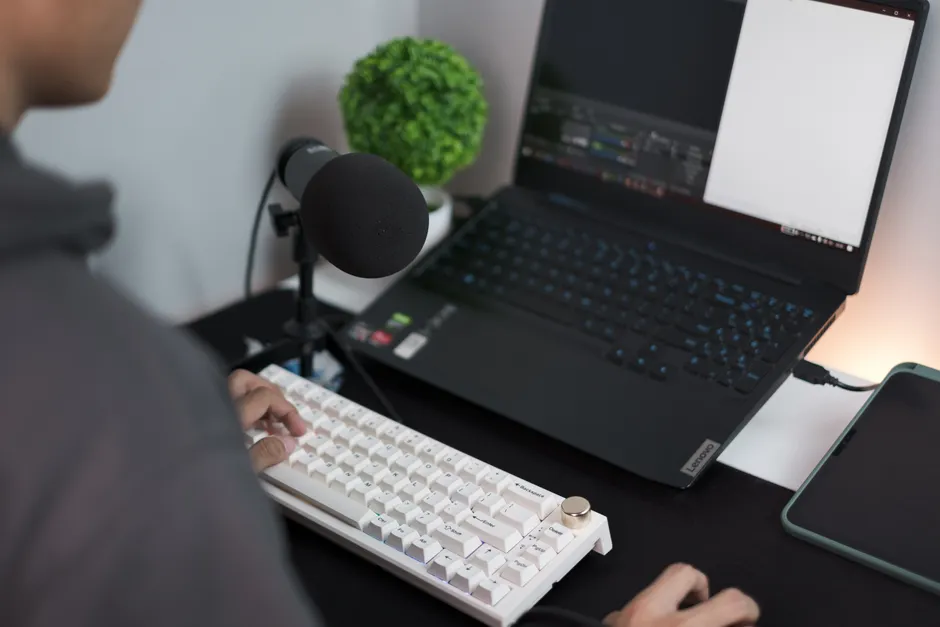
Shure has launched the MV6 USB Gaming Microphone Gen 2, an update to its MV6 microphone for gamers and creators. The microphone is available September 30 for $169 from Shure and authorized retailers, according to Engadget.
The Gen 2 adds an all-white color option. It ships with a longer 2-meter USB-C cable. The hardware retains a desktop base designed to minimize vibrations, with support for boom-arm mounting. A 3.5mm headphone jack provides direct monitoring, alongside a dedicated mute button.
Control over level and dynamics is the focus of the revision. Users can set how loud their voice sits in the audio mix and how quickly the microphone reacts to volume changes. That pairs with an adjustable real-time denoiser, controlled by a slider that sets how much background noise pickup is suppressed. Customizable EQ and presets for speech, singing and instruments are handled in Shure's free Motiv app.
Compatibility is broad across desktop and mobile. The microphone connects to Mac, PC and Android over its USB-C cable, and to iPhone and iPad via Apple MFI certification. Operation is plug-and-play over USB-C. Shure also lists compatibility with Microsoft Teams and mainstream video conferencing software, per Shure. The MV6 line works with the Motiv Mix desktop app and Motiv Video and Audio mobile apps for configuration and capture.
The update follows the original MV6 USB Gaming Microphone, a dynamic microphone designed for PC gamers and priced at $149 at its 2024 introduction. Shure more recently described the MV6 as an award-winning, top-rated streaming microphone.
The broader context here is the shift of production value from the DAW to the microphone itself. On-device DSP for level management, denoising and EQ reduces dependence on host software, OBS filters or post-processing. For streamers and solo creators running a single-machine setup, that consolidation lowers CPU load and setup complexity while keeping the signal chain portable across machines.
In this author's view, the most telling choices are the least flashy ones. A vibration-damped base, boom compatibility, wired zero-latency monitoring and MFI-certified iOS support address persistent failure points in creator audio: desk rumble, latency in performance monitoring, and inconsistent mobile connectivity. Worth flagging for technical buyers is the trade-off inherent in that approach. Presets and sliders make broadcast-ready audio accessible, but engineers who want full manual control over compression behavior, high-pass filtering or noise-reduction artifacts will still want to evaluate how transparent those processes remain under poor room conditions.