September Seasonality Bites Again as S&P 500 Sheds 1.75%
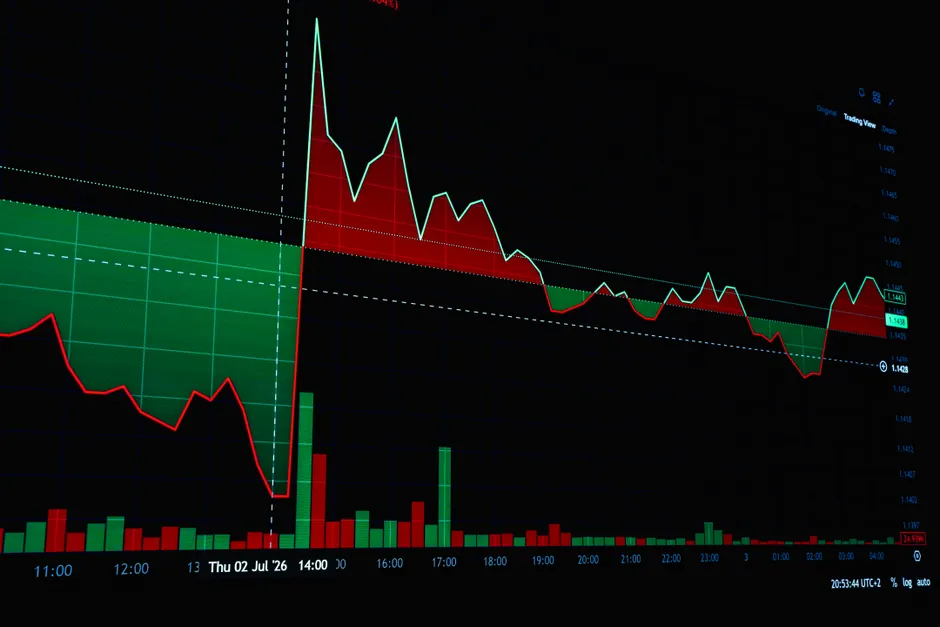
The S&P 500 was down 1.75% for September and the Nasdaq Composite was down 1.5% for the month at the time of reporting on Sept. 20, 2026. Yahoo Finance
That left the seasonal pattern intact. September is the calendar's worst-performing month for the stock market, and the S&P 500 has averaged a 1.1% decline in September based on data going back to 1928. MarketWatch Seasonality held.
The drawdown came after a strong run. The S&P 500 had risen 12.3% year-to-date in 2026, putting it on track for a fourth straight yearly gain. Morningstar That base matters for positioning. A mid-single-digit monthly pullback trims gains. It does not erase the year.
Intra-month price action was choppy rather than one-directional. On September 18, 2026, the S&P 500 rose 0.17%. Reuters The move a year earlier was softer. On September 2, 2025, the S&P 500 fell 44.72 points, or 0.7%, to close at 6,415.54.
Index mechanics added a separate flow to watch. S&P Dow Jones Indices announced that Bloom Energy, Illumina and Everpure would join the S&P 500 effective prior to the open of trading on Monday, September 21, 2026. S&P Global Additions of that type force benchmarked portfolios to adjust. Reconstitution creates turnover around the effective date.
August dispersion was already wide heading into the weak seasonal stretch. Palantir and Salesforce ranked among the best-performing stocks in August 2026, while AppLovin and Honeywell were among the worst-performing stocks in August 2026.
The broader context here is how to read a seasonal base rate against a trending year. A 1.1% average September loss since 1928 is a useful prior, not a forecast. It describes the distribution, including years when September was positive. With the index up 12.3% into September and targeting a fourth consecutive annual gain, the question for portfolio construction was whether to fade seasonality, hedge calendar weakness, or accept tracking error from being underweight beta.
Looking at what this means for implementation, the combination of negative index-level seasonality, single-day rebounds, and wide August dispersion points to stock selection and rebalancing risk rather than uniform selling. Index additions effective September 21 concentrated forced buying and selling in a small set of names. When leaders and laggards diverge that sharply into a seasonally soft month, benchmark-relative performance can move more than the index level suggests. Risk management turns on liquidity around reconstitution, factor exposure carried into September, and tolerance for short-term underperformance if seasonality fails to repeat.