Treasury Yields Hit 19-Year High as AI Bond Supply Meets $100 Oil
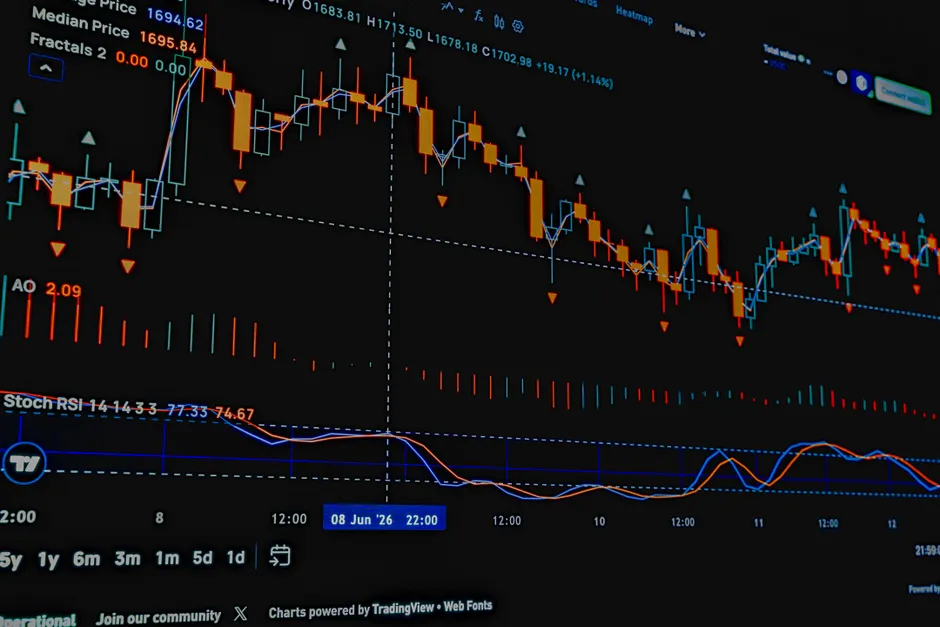
The benchmark 10-year Treasury note hit another 19-year high on Sept. 29, while the 30-year Treasury yield rose to 5.594%. WSJ U.S. stocks fell that session as oil prices and Treasury yields increased amid investor uncertainty over the prospects for an Iran war. Reuters
The Sept. 29 levels followed a rapid climb through September. Oil prices were choppy near $100 a barrel on Sept. 22 while the benchmark 10-year Treasury yield hovered around 4.94%. Reuters By Sept. 25, the 10-year had hit a fresh 19-year high, last up 3.4 basis points at 5.196%. Reuters
Equities buckled as the selloff deepened. U.S. stocks declined, with the Nasdaq falling while oil prices climbed and inflation concerns built. WSJ
That weakness followed AI-led strength. The Nasdaq had surged to a record-high close, lifted by gains in Advanced Micro Devices and other AI heavyweights. Reuters
Corporate supply added a separate test for duration demand. Six tech hyperscalers issued around $244 billion in bonds globally this year, up from $108 billion in all of last year. WSJ
The rate sensitivity is familiar. In January 2026, U.S. stocks erased their year-to-date gains amid worries over a full-blown trade war with Europe. Bloomberg In 2023, the 10-year climbing above 4.5% was already framed as pressure on tech stocks. WSJ
The broader context here is a collision between discount rates and issuance. Higher long-end yields compress equity risk premia arithmetically, with the effect concentrated in long-duration growth cash flows. That repricing is now occurring alongside heavy investment-grade supply from the same mega-cap names driving index earnings expectations. Supply matters. When net duration supply rises, clearing requires either higher term premium or wider credit spreads, or rotation out of competing duration exposure. For desks, the question is absorption capacity across pensions, insurers, foreign buyers and total-return accounts, and how concession evolves through successive tranches.
Looking at what this means for cross-asset transmission, oil near $100 adds a second tightening channel. Crude feeds directly into headline inflation and breakevens, limiting scope for real yields to fall even if growth expectations soften. Nominal yields can then rise from both components at once. That combination tightens financial conditions through mortgage rates, corporate borrowing costs and equity multiples simultaneously. Duration cuts both ways. AI capital expenditure funded in the bond market increases future cash flow potential while increasing leverage and interest burden in the present, leaving credit curves and equity multiples to negotiate the tradeoff in real time.
In my view, the separation worth keeping is between what printed and what is priced. What printed is higher yields, higher oil, lower equities into Sept. 29, with record AI-led closes still visible in the immediate tape. What is priced is harder. Geopolitical risk around Iran, pass-through from energy to inflation expectations, and digestion of hyperscaler paper all embed forward assumptions that can reverse quickly. For professionals, the useful discipline is to track concession, bid-to-cover dispersion, secondary performance of new AI issues, and correlation between real yields and growth multiples, rather than extrapolating a single session into a regime call.


