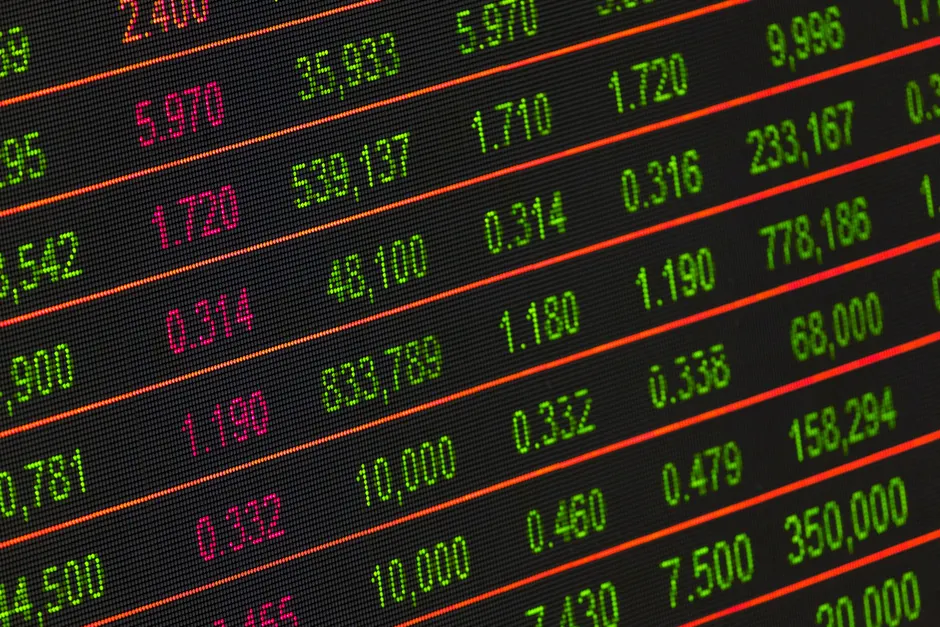
Magnificent Seven Enter Correction as AI Spending Thesis Cracks

US AI-themed equities sold off sharply in the week of 23 June 2026, with the Magnificent Seven collectively entering correction territory as investors reassessed the durability of the capex cycle underpinning the trade, according to The Guardian. The declines spread overnight into Asian markets, extending the drawdown across geographies.
The immediate catalyst was a rotation in conviction around AI infrastructure spending. For roughly two years, the Magnificent Seven — Apple, Microsoft, Alphabet, Amazon, Meta, Nvidia, and Tesla — traded as a coherent factor: large-cap US tech with direct or leveraged exposure to AI buildout. That internal coherence is now fragmenting. Most of the seven are underperforming the broader S&P 500 on a trailing basis, a structural shift that matters beyond the headline index moves.
What the Unwind Actually Reflects
The spending sustainability question is not new, but it has reached a point where the market is pricing doubt rather than deferring to management guidance. Hyperscaler capex — the hundreds of billions committed annually by Microsoft Azure, Google Cloud, Amazon AWS, and Meta's infrastructure division — was the demand signal that justified Nvidia's multiple expansion and lifted adjacent hardware and data-centre names. The bull case always rested on a two-part assumption: that AI workloads would scale into monetisable revenue quickly enough to validate the investment, and that competitive pressure would not commoditise returns before that payback arrived.
Neither leg of that assumption has been cleanly validated. Revenue from AI-native products has grown, but the ratio of AI-driven incremental revenue to AI-driven incremental capex remains a source of genuine dispute among buyside analysts. When that ratio narrows or stalls, the trade that priced perfection is the first to reprice.
The contagion into Asian markets is mechanically straightforward. Taiwanese semiconductor suppliers — most notably TSMC — and South Korean memory manufacturers have seen their order visibility tied closely to US hyperscaler procurement cycles. A derating of the end-demand thesis in New York travels to Hsinchu and Suwon within a session.
The Fragmentation of the Seven
That the Magnificent Seven are now trailing the broader market as a group is arguably the more consequential data point. The cohesion of the trade was itself a source of momentum: passive and systematic flows into large-cap US equity indices amplified moves in the same names, creating a self-reinforcing bid. When that correlation breaks — when some members hold and others slide — the factor unwinds non-linearly. Managers who built overweights on the assumption of continued group beta now face a stock-picking problem in names that were priced for a macro thesis, not on individual fundamentals.
Nvidia's trajectory is the cleanest example of the leverage embedded in the trade. Its valuation absorbed the entire AI capex supercycle as a given. Any compression in that cycle's duration or magnitude hits Nvidia harder, proportionally, than it hits a Microsoft whose revenue base is more diversified across enterprise SaaS and cloud services.
The divergence also reflects genuine differentiation in execution. Meta's returns on AI investment have been more directly visible in advertising yield improvements. Apple's AI integration is still, at this point, largely a feature story rather than a revenue story. Alphabet faces the dual pressure of defending search revenue from AI-native alternatives while simultaneously spending to remain competitive in model development. Treating all seven as interchangeable components of a single trade was always an analytical shortcut; the market appears to be correcting for it.
Whether this is a correction within a structurally intact bull case, or the beginning of a more protracted derating, depends on data points that are not yet available: Q2 earnings guidance from the hyperscalers, any signals from Nvidia's next order cycle, and — critically — whether enterprise customers are converting AI pilots into committed, margin-accretive workloads at scale. Until those numbers arrive, the repricing is a function of changed sentiment, not changed fundamentals. That gap between sentiment and fundamentals is where the most significant mispricing risk lives, in either direction.