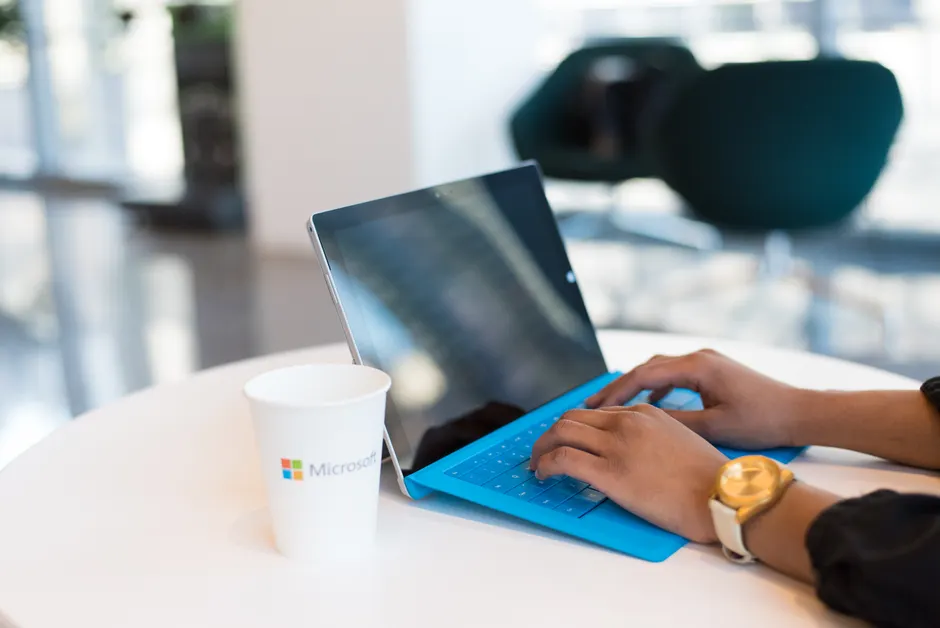
Microsoft, Nvidia CEOs to Unveil AI Laptop in San Francisco

Microsoft and Nvidia's chief executives will unveil a new AI laptop at a Windows and Surface event in San Francisco on the morning of October 7, 2026. Reuters
The keynote is scheduled for 10AM PT / 1PM ET on Wednesday, October 7. The stream is on YouTube. The Verge
The program is expected to run about one hour. CNET That timetable points to a tight briefing rather than a broad developer conference, with hardware and runtime discussion prioritized over a long product parade.
The listed participants are Microsoft CEO Satya Nadella, Nvidia CEO Jensen Huang and Windows and Surface chief Pavan Davuluri. The agenda centers on a conversation about how local AI will shape the next chapter of the PC. The Verge
For readers who manage fleets or ship client software, the framing matters. Local AI here means inference executed on the device, using its NPU, GPU and CPU resources, rather than inference sent to a datacenter endpoint. The practical questions are familiar. Memory footprint. Power envelope. Driver and runtime stability. Which models stay resident and which fall back to cloud.
Looking at what this means for the PC stack, the joint appearance is the detail to note. An OS platform owner and a GPU vendor on stage together suggests attention to the layers between silicon and application. Runtime selection, quantization paths, memory management, scheduling across heterogeneous compute, and ISV tooling all determine whether on-device inference is usable or merely present. Developers target what they can test reliably.
In my view, the laptop itself is less important than the contract it establishes with software. A reference system from Microsoft and Nvidia gives ISVs a fixed target for optimization and validation. It defines what context lengths, token throughput, and concurrent background tasks are reasonable without draining battery or stalling the UI. It also clarifies distribution. Whether models ship inbox, download on first use, or update through the store affects enterprise imaging, patching and compliance workflows.
The broader context here is procurement and lifecycle planning. IT teams already evaluate NPU capability, unified versus discrete memory, and manageability hooks when refreshing notebooks. A first-party AI laptop co-introduced by the OS vendor and the GPU supplier provides a baseline for those evaluations. It does not settle them. Third-party OEM designs, price bands, serviceability and security certifications will shape adoption in managed environments.
Worth flagging for builders is the shift in debugging surface. Cloud inference failures show up as API errors and tail latency. Local inference failures show up as thermal throttling, out-of-memory kills, version skew between runtime and model, and inconsistent behavior across seemingly identical machines. Observability, logging and deterministic fallback become client problems again, in a way PC engineers will recognize from earlier transitions in graphics and media acceleration.
What this enables, if executed well, is straightforward. Offline-capable assistants, search over local content without round trips, transcription and summarization inside regulated workflows, and creative tools that keep large working sets on the machine. None of that requires abandoning cloud models. It requires making the local tier predictable enough that developers use it by default.