Meta Releases Muse Wonder and Wonder Full, Its First Frontier Models

Meta's Superintelligence Lab released Muse Wonder and Muse Wonder Full on Monday, Oct. 12, 2026. The two systems are Meta's first frontier model attempt. TechCrunch
Muse Spark was a lightweight model designed to perform at low latency. The Wonder models are larger and more capable than Muse Spark, with higher benchmark scores and better results on complex tasks like coding.
Muse Spark 1.1 is the latest release in the Muse Spark family of models developed by Meta Superintelligence Labs. Meta
According to Meta's testing, Wonder and Wonder Full achieve benchmark scores comparable to Fable 5.1 and GPT-6 Astra.
Accessed through the Meta Model API, Wonder costs $4.00 per million input tokens and $20.00 per million output tokens. TechCrunch Wonder's cost is roughly equivalent to GPT-6 Sol or Opus 5.5.
Wonder Full will only be available to Muse Code subscribers and will not be served through the API. Both Wonder models will be used to power the Muse agent.
Meta's Muse AI agent allows users to delegate tasks such as shopping, travel booking and form-filling to an AI agent. Reuters
Meta calls the Wonder models' ability to retain and synthesize user-provided information 'active memory'. According to Meta's testing, Muse Wonder scores higher on MemoryBench than Fable, Opus or Astra.
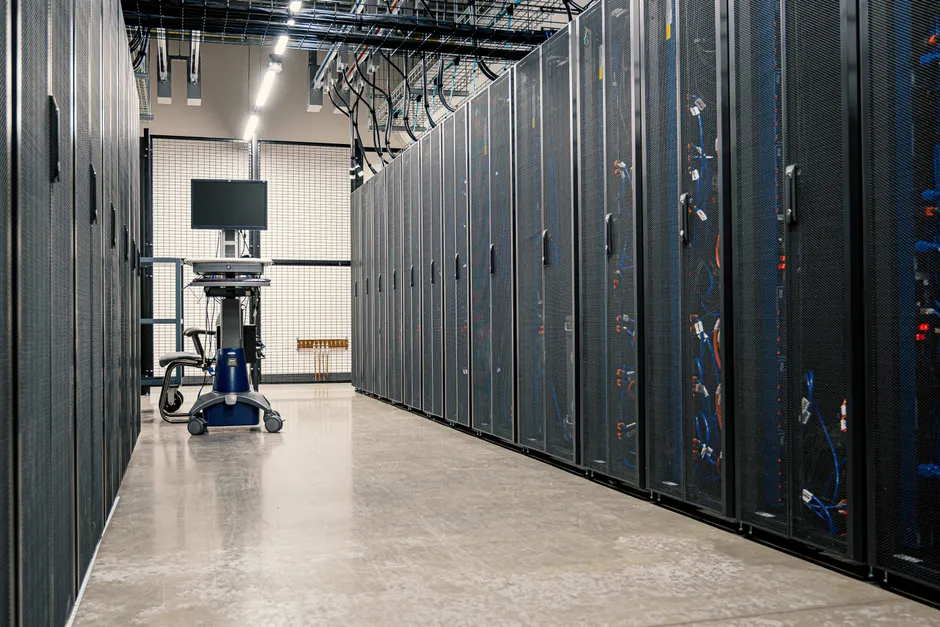
The Wonder models were trained at Meta's Prometheus data center in central Ohio.
On August 10, 2026, Meta introduced Muse Glimmer, a downloadable AI model that can run on a personal computer. Bloomberg Muse Glimmer is a 30-billion-parameter open agentic model developed by Meta Superintelligence Labs. Meta Research It is designed for agentic tasks and can run on a personal device such as a Mac.
Looking at what this means for practitioners, the packaging is as notable as the scores. One model enters the standard API market at familiar pricing. The other stays inside a coding subscription. That split matters.
In my view, Meta is segmenting by workflow rather than by capability alone. API access invites evaluation on cost per task, inference latency and tool use. Subscription-only access points toward integrated development use where retained context across files and prior edits has practical value. For agent builders, the test will be how active memory behaves across long histories that include contradictory or stale user input.
The broader context here is a tiered Muse lineup. Spark addresses low-latency operation. Glimmer addresses local, downloadable experimentation for agentic tasks. Wonder addresses frontier-class coding and complex tasks. That arrangement gives architects a straightforward routing decision. Light paths stay light. Local prototypes stay local. Heavy reasoning moves to Wonder, with budget attention focused on input and output token volume.
Worth flagging for evaluation is MemoryBench leadership. A higher score than Fable, Opus or Astra is useful signal, but production behavior will depend on retention precision and synthesis quality during extended agent runs involving shopping, booking and form work. If active memory reduces repeated prompting and re-grounding, the efficiency effect could be substantial. The direction is encouraging. Models that hold context with less friction make delegated work more usable, which is the threshold agents must cross to move from demonstration to daily reliance.