Eiliko's Unprotected Backend Exposed 13 Million Conversations

An unprotected backend exposed 13 million conversations from approximately 68,000 active Eiliko robot toys worldwide. Security researcher Sammy Azdoufal discovered that the service run by Energize Lab, the maker of Eiliko, was accessible without authentication and allowed him to read transcripts from tens of thousands of users The Verge.
The conversations are sent by the toy over Wi-Fi to China and stored on Chinese servers. The United States is the largest market, with more than 31,000 profiles belonging to children.
Energize Lab reads user conversations to build persistent profiles. Those profiles include name, age, birthday, profession, family, friends, pets and personality traits. For a device sold as a companion, that level of extraction is structural. Personalization requires memory. Memory, in this implementation, meant server-side retention of raw dialogue plus derived attributes.
The storage failure extended beyond text. Energize Lab stored photos of children unencrypted at public web addresses. It stored short user audio recordings at public web addresses in the same manner. No exploit chain was required. The objects were retrievable if the address was known.
The database also permitted full-text search across conversation snippets. A search for "suicide" returned excerpts of users asking about death. That detail matters for threat modeling. It indicates transcripts were indexed and queryable in plaintext, not merely archived as opaque blobs.
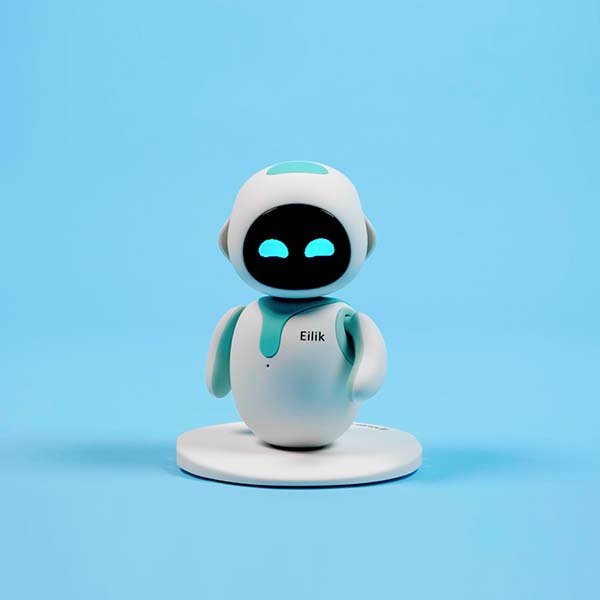
Eiliko itself is marketed as a small, robotic bag charm, described by Energize Lab as an AI Charm Bot. The company describes its Eilik and Eiliko line as combining emotional robotics with generative AI. Its earlier Eilik robot is described as an open-source desk companion and as redefining emotional hardware. The Eiliko Kickstarter campaign raised over $380,000 from more than 3,000 backers, reaching 3800% of its funding goal.
The connectivity model explains the data flow. Eiliko requires Bluetooth and Wi-Fi connectivity. Completing network setup requires a phone's Bluetooth and the Energize Lab app. Operation requires a Wi-Fi network or mobile hotspot. In other words, the toy is a microphone, speaker and actuator with inference and state held off-device.
Energize Lab publishes a Software Privacy Policy explaining how information is collected, used, disclosed, transferred, and stored. It also publishes a separate Privacy Policy describing how personal information is collected, used, and shared when visiting or purchasing from energizelab.com.
The broader context here is familiar to anyone who has built cloud-connected hardware. Off-device inference lowers bill of materials and allows rapid model iteration. It also creates a centralized corpus of intimate audio and text. Access control becomes the entire security boundary. When that boundary is missing, encryption at rest does not help, and public object URLs become a breach.
In my view, three design choices deserve scrutiny from teams building in this category. First, routine upload of continuous conversation for profiling. Second, retention of photos and voice clips at directly addressable URLs without access checks. Third, plaintext indexing of sensitive utterances for internal search. Each choice reduces latency or improves product function. Each also expands blast radius.
Worth flagging for parents and enterprise buyers alike is the data residency question. Storage on Chinese servers is not itself a vulnerability. It does determine legal jurisdiction and operational access. Combined with profiles of children that include family structure and daily routine, it raises the stakes of any access control failure well beyond a typical consumer gadget leak.
Companion robotics remains a legitimate engineering direction. Small, expressive machines that remember a name or a pet can be genuinely engaging. That future is still possible if transcript minimization, short retention windows, on-device redaction and authenticated, expiring object storage become defaults rather than options.