Lanarkshire AI Datacentre's Green Energy Pledge Was Privately Known to Be Undeliverable

Internal correspondence obtained by The Guardian via Freedom of Information requests reveals that the UK government and the developers of the £8.2bn Lanarkshire AI datacentre complex privately acknowledged a fundamental "issue" with "power provision" — even as they publicly promised the site would run entirely on on-site renewable energy. The investigation, published on 6 July 2026, exposes a gap between official narrative and operational reality at what the government designated as Scotland's first AI Growth Zone.
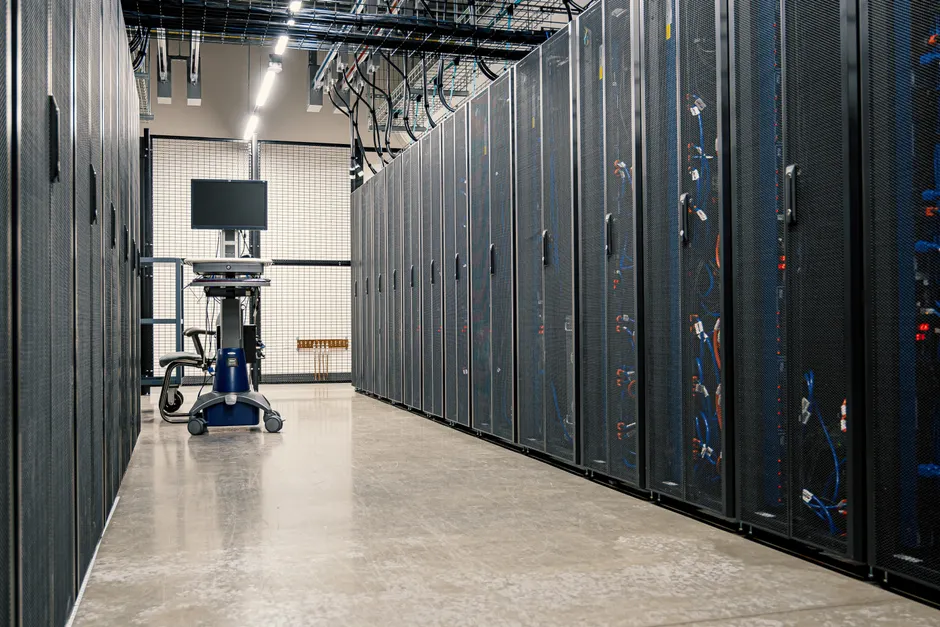
The project was announced in January 2026 as a partnership between US GPU cloud provider CoreWeave and DataVita, an arm of a Glasgow real-estate firm. The government's official press release promised more than 3,400 high-value jobs, a community fund of "up to £543m," and 1GW of new on-site renewable energy infrastructure, with completion by 2030. North Lanarkshire Council went further, projecting up to 7,000 jobs including supply chain and indirect employment, and billing the site as potentially "one of the world's most advanced AI sites."
The Power Problem
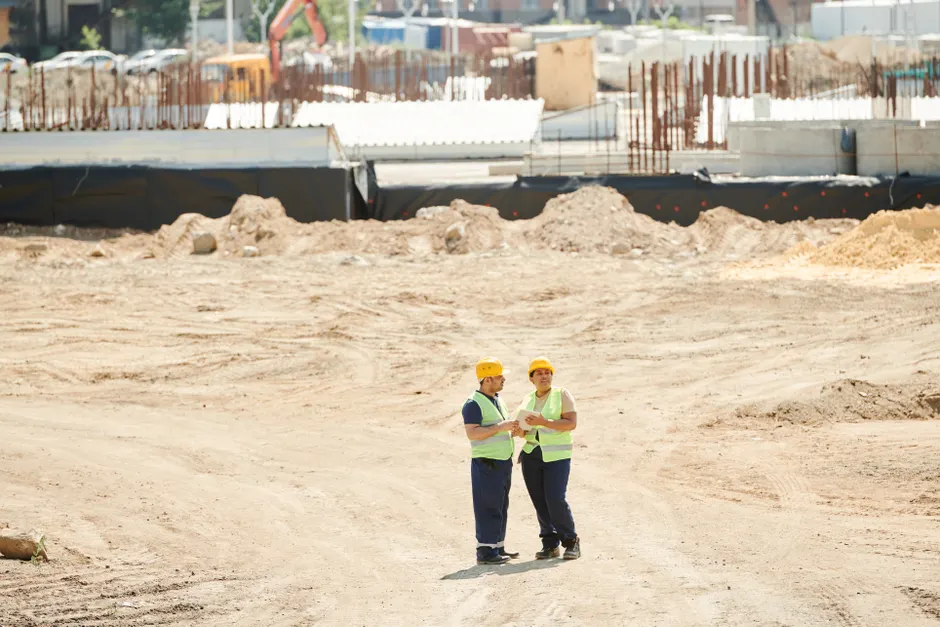
The 1GW figure was always ambitious. Conservative engineering estimates put the land requirement for that output at roughly 44 square kilometres of solar or wind capacity adjacent to the site. As of July 2026, DataVita appears to control less than a tenth of that area — a shortfall that was not publicly disclosed at the time of the announcement.
When the Guardian put its findings to the government, the official position shifted. A spokesperson confirmed the complex would connect to the national grid rather than rely on on-site generation, while maintaining that its energy needs would still be met "overwhelmingly" with renewables. That is a materially different proposition from the original commitment, and it runs straight into a structural bottleneck: new grid connections in the UK currently face an eight-to-ten-year queue, affecting hospitals, housing developments, and datacentres alike. The UK also carries the highest industrial electricity prices in Europe, a cost headwind that compounds any grid-dependent strategy.
DataVita's own blog had described the CoreWeave partnership in September 2025 as delivering AI infrastructure "powered by renewable energy" as part of a £1.5bn investment, and CoreWeave's investor relations page framed the commitment as establishing "the most advanced data centre, backed by renewable energy." The FOI documents suggest both the government and developers knew by the time of the January 2026 Growth Zone designation that on-site renewables were not viable.
Community and Scrutiny Gaps
On the ground, the picture is equally fractured. In late 2025, representatives of Oakes Energy Services canvassed the village of Newarthill, east of Glasgow, knocking on doors and sending letters inviting residents to individual meetings about solar farm plans. They offered incentives — free solar panels, tree planting, or cash payments — but resident Diane Davidson noted that none of the offers were put in writing or made legally enforceable. The Guardian found no apparent connection between Oakes Energy Services and DataVita, raising questions about coordination among the various actors surrounding the site.
A separate planning application for a solar farm adjacent to the growth zone was submitted by Locogen on behalf of a larger international energy group, adding another unconnected strand to what was presented as an integrated development. Construction was already under way beside DataVita's Chapel Hall datacentre at the time of the Guardian's investigation.
This episode sits within a pattern the Guardian first flagged in March 2026: that a series of high-profile UK datacentre announcements amount to "phantom investments," with the government making little effort to audit job-creation claims or scrutinise headline figures. Cecilia Rikap, associate professor at University College London, told the Guardian that governments worldwide, including the UK, are "making political promises that ignore the realities of building infrastructure" for AI. An analyst at a UK engineering consultancy who advised on several AI growth zone projects put it more bluntly, saying there "doesn't seem to be appropriate scrutiny" on these nationally significant schemes.
Lanarkshire is not an isolated case. The Scottish Parliament Information Centre published a spotlight briefing on data centres in June 2026, and the BBC reported community opposition to datacentre plans in Auchtertool, Fife, the same month. A Guardian investigation in May 2026 found that a Scottish government policy designed to attract datacentres could result in a significant volume of carbon emissions going unaccounted.
The deeper structural tension here is that the UK's AI industrial strategy is colliding with two hard physical limits simultaneously: the grid connection queue and the land requirements for genuine on-site renewables. Promising both a 2030 completion date and 1GW of self-supplied clean power, without securing either the land or a grid slot, produces a commitment that cannot be delivered as stated. The shift to a grid-connection model, now confirmed by government, pushes the project into the same queue already clogging the broader energy transition — and does so without updating the public-facing promises that justified the Growth Zone designation in the first place.