NATO Summit Opens in Ankara With Turkey's Stock Rising and Trump's Commitment Unclear
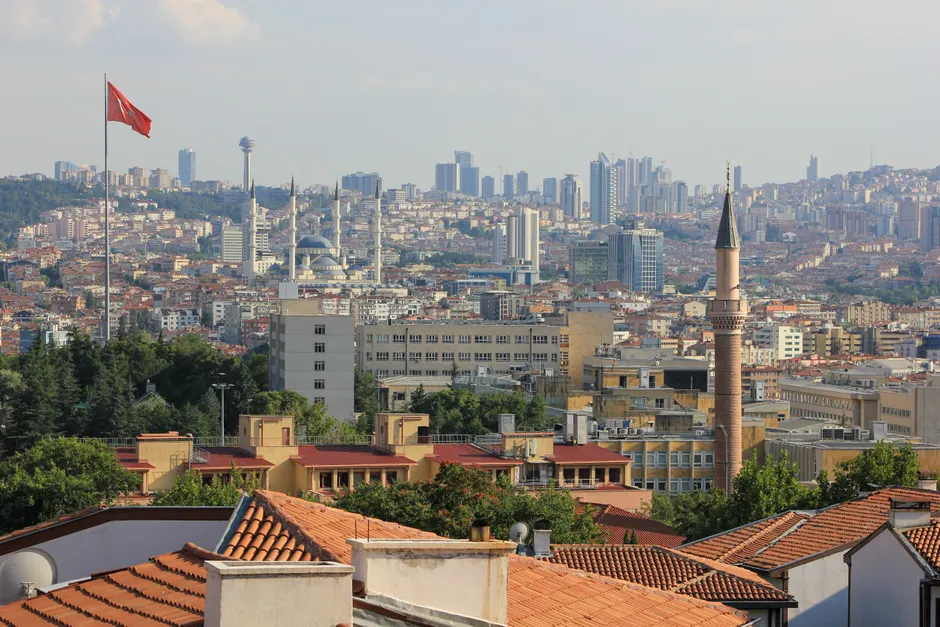
NATO's annual leaders' summit opened in Ankara on Tuesday, July 7, 2026, with Turkey occupying an unusually central position — both as host and as an alliance asset that European members are actively reassessing.
The timing is deliberate. Secretary General Mark Rutte traveled to Washington around June 24 to make the case for alliance preservation directly to President Trump, according to the New York Times, and Trump was expected to attend the Ankara summit. Whether he arrives with a constructive mandate or as a disruptive presence is the central uncertainty hanging over the gathering.
Turkey's New Leverage
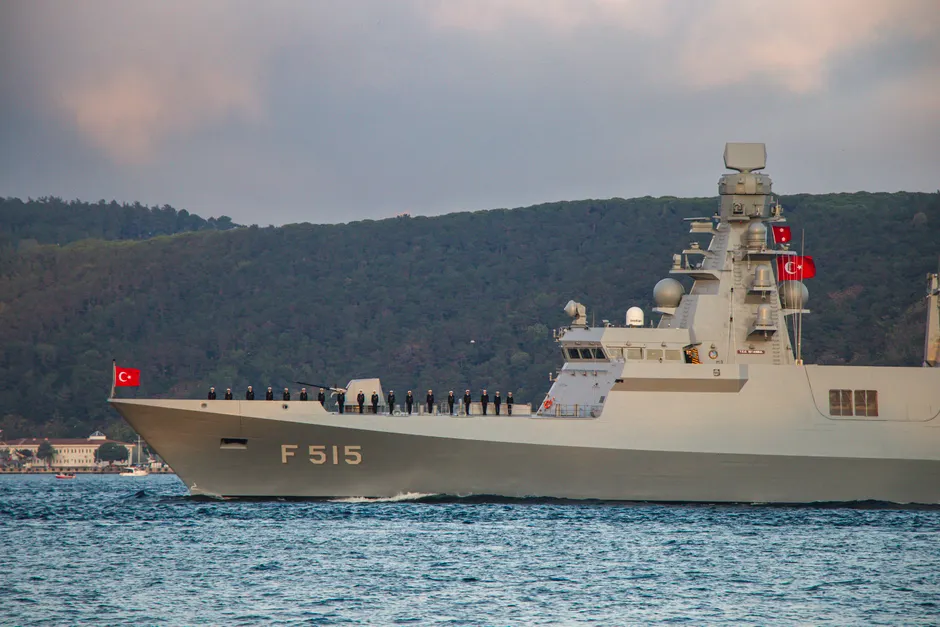
A New York Times report published July 6 frames the dynamic plainly: as Trump cools on the alliance, other NATO members have grown more attentive to Turkey's large standing military and an expanding domestic defense-industrial base. Ankara's corps of armored and infantry formations, its indigenous drone programs, and its Bosphorus and Dardanelles chokepoint control give it structural leverage that predates Erdogan — but Erdogan has proven willing to exploit it.
Turkey has long been the awkward outlier inside the alliance. It blocked Swedish and Finnish accession for extended periods, maintained energy and trade ties with Moscow after the full-scale invasion of Ukraine, and periodically threatened to purchase Russian defense systems over NATO objections. That history makes the current revaluation of Turkey noteworthy, not as a reversal, but as a recalibration driven by necessity. As early as January 2026, Turkey's foreign minister was publicly arguing that the Trump-Erdogan personal rapport could stabilize rather than fracture the alliance, per a January NYT report.
Nikkei Asia, citing NATO sources, reported on July 6 that the alliance disputed characterizations in the New York Times coverage, stating it "does not reflect the truth." The denial is notable but oblique — NATO did not specify which claims it was pushing back on, leaving ambiguity about whether the objection concerns Turkey's rising influence, the framing of Trump's detachment, or both.
The Sanctions Question
The Ankara summit arrives with a specific policy ask on the table. A July 3 opinion piece in the New York Times argued directly that the meeting should be used to close sanctions loopholes that continue to route revenue to Russia's war economy — with falling global oil prices cited as a window that makes tightening enforcement more achievable without triggering the energy-market blowback that has historically constrained Western action.
Sanctions enforcement against Russia has been an ongoing structural weakness of the Western response to the Ukraine war. Secondary sanctions on third-country entities that facilitate Russian oil sales have been applied selectively; the shadow fleet of tankers operating outside G7 insurance and flag regimes has expanded. Whether the Ankara summit produces any concrete mechanism to address these gaps — or whether the gathering's political frictions consume the agenda — is the operational question that analysts tracking the war's financing will be watching.
The European Calculus
The deeper strategic shift is European rather than Turkish. A Carnegie Endowment analysis published July 1 found that European allies had largely stopped trying to manage Trump's appetite for the alliance and were instead advancing contingency planning for a Europe-led security structure. That planning is not a rupture — no European capital has proposed formally decoupling from NATO — but it reflects a quiet consensus that Article 5 guarantees cannot be treated as unconditional when Washington's commitment is openly variable.
Turkey fits that calculus in a specific way. A Europe-led alliance without a credible eastern anchor is strategically thin. Turkey provides forward depth, ISR capacity, and — critically — the ability to constrain Russian naval movement through the Straits under the Montreux Convention. European planners may not trust Erdogan's alignment, but they cannot easily replicate what Turkish geography provides.
The Ankara summit is, structurally, a test of whether an alliance built on collective security can function when its largest member is ambivalent and its most geographically pivotal member is transactional. Those two pressures do not resolve neatly — and they will not be resolved in a single summit communiqué.