From FlexPai to iPhone Duo: Foldables Reach Platform Maturity

Apple's iPhone Duo will be available from October 23, with pre-orders having opened on October 16 and U.S. pricing starting at $1,999.
The schedule puts Apple's first foldable into retail within six weeks of its September unveiling. Pre-order timing comes from Apple's October feature, "Open up to new possibilities with iPhone Duo," while availability and pricing were reported by Reuters. The price point lands at the same threshold Samsung tested in 2019.
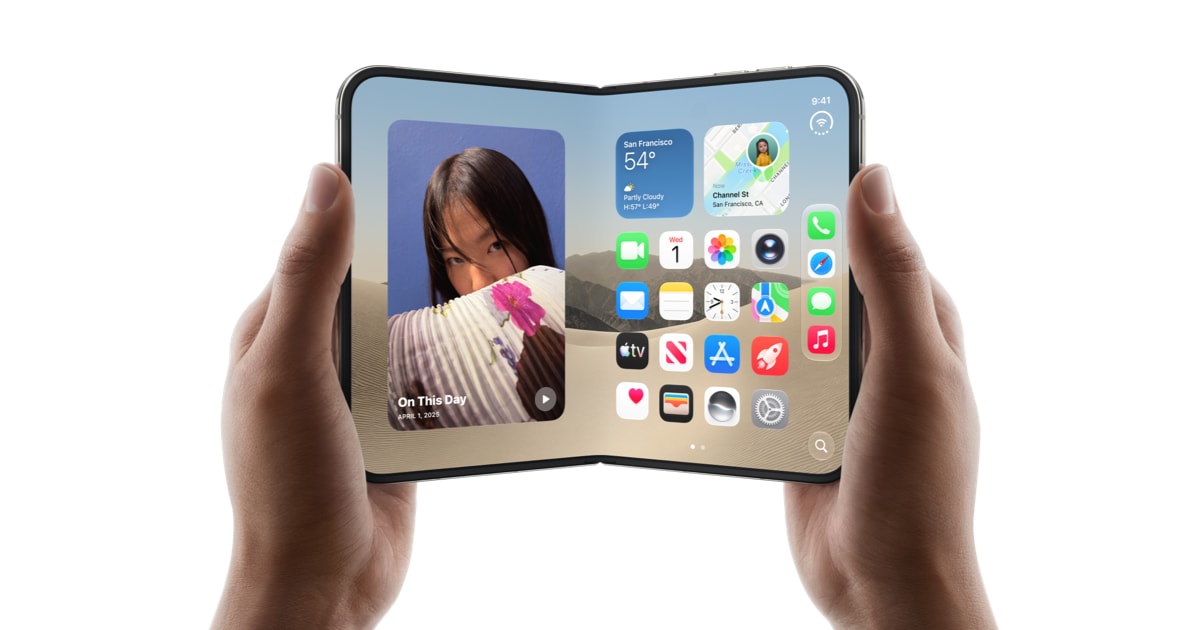
Apple describes iPhone Duo as a foldable design with dual displays, according to its Newsroom release titled "Apple unveils iPhone Duo" Apple. When opened, the device delivers Apple's largest iPhone display ever and is the thinnest iPhone ever. Apple also states the foldable dual-display design enables camera experiences not possible on any other iPhone Apple.
On silicon, iPhone Duo features the A20 Pro chip and a new C2 modem chip. Apple positioned Duo alongside the iPhone 18 Pro and iPhone 18 Pro Max, which debuted with an advanced pro camera system and improved battery life and performance.
The launch closes an arc that began in 2019. That history is traced in Engadget's feature, 'From the Royole FlexPai to the iPhone Duo: How the modern foldable phone has evolved' Engadget. Royole presented the FlexPai at CES 2019 as the world's first commercially available foldable smartphone. Samsung followed with its first Galaxy Fold in February 2019 priced at just under $2,000.
The first Galaxy Fold did not reach customers as planned. Early screens broke after reviewers peeled off a plastic layer that was acting as a screen protector. Samsung delayed the public launch and recalled units sent to reviewers to re-engineer the product.
Maturation took several hardware generations. Engadget's retrospective cites the Google Pixel 11 Pro Fold and Samsung Galaxy Z Fold 8 as models that propelled foldable technology forward. It states Apple entered the foldable market with the iPhone Duo launch, and forecasts that future uptake of foldable phones is almost a certainty following the iPhone Duo.
The broader context here is a form factor moving from mechanical risk to platform stability. Early failures were about films, seals and tolerances. Later iterations focused on display stack, hinge durability and software continuity across open and closed states. Apple's entry does not change that physics. It changes the addressable base for developers targeting dual-display layouts, multitasking and camera workflows that assume a larger canvas in the pocket.
In my view, the interesting questions for practitioners are now integration questions. A first-party modem paired with a pro-tier application processor in a thin, dual-display chassis puts pressure on power budgeting, thermal design and antenna performance. Those are solvable problems, and the fact that Duo ships as the thinnest iPhone when open suggests Apple is confident in the tradeoffs. For enterprise and pro users, the test will be whether the large display supports sustained work without compromising battery life, and whether camera pipelines built around two displays create durable use cases rather than demos.
Worth flagging for teams building for iOS: a foldable iPhone makes adaptive layout and state preservation central rather than optional. If uptake follows the path Engadget predicts, testing across folded and unfolded postures will become part of baseline quality assurance, much as tablet layouts did after larger phones normalized.