Samsung's Q2 Operating Profit Jumps 19-Fold on Memory Prices, But Shares Slide $80 Billion
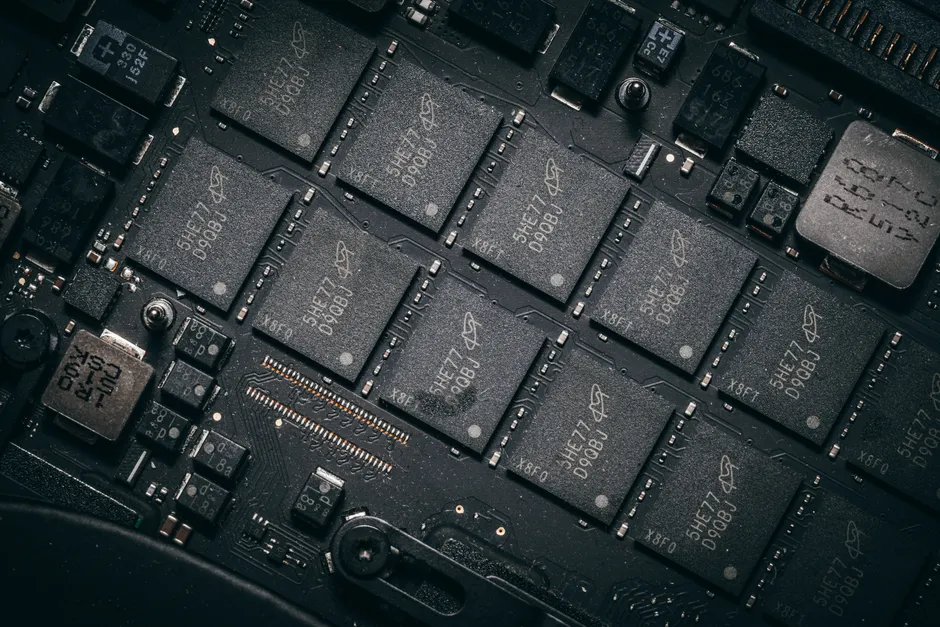
Samsung Electronics guided preliminary second-quarter 2026 operating profit of 89.4 trillion won ($58.4 billion), a 19-fold increase from the same period a year earlier, according to guidance released July 7 CNBC. The figure beat analyst expectations and marks the company's third consecutive record quarterly operating profit Reuters. Samsung's shares fell on the announcement, and investors erased more than $80 billion from the company's market capitalization Reuters.
The scale of the number is worth sitting with. Reuters notes the Q2 operating profit alone surpassed Samsung's combined operating profit over the prior three years — a stretch that spanned the memory downcycle of 2023 and the slow recovery that followed. That trajectory has been driven by AI-linked demand for DRAM and NAND, which has pushed memory chip prices higher through 2026 and lifted the Device Solutions (DS) division, Samsung's semiconductor arm, back into the position of primary earnings engine Reuters.
Context from the prior quarter helps frame the run-rate. Samsung's Q1 2026 consolidated revenue hit an all-time quarterly high of 133.9 trillion won, up 43% quarter-on-quarter, with the DS division contributing 81.7 trillion won in revenue and 53.7 trillion won in operating profit Samsung Newsroom. If DS held a similar share of the mix into Q2, the memory business would have been doing most of the heavy lifting behind the 89.4 trillion won guidance figure — though Samsung's guidance release does not break out divisional detail, leaving that confirmation for the full results due later this month Samsung Newsroom.
The share price reaction deserves scrutiny on its own terms. A beat-and-sell-off pattern is not unusual when a stock has already priced in an aggressive earnings trajectory, and Samsung's run over the past several quarters has been steep enough that a 19-fold year-on-year profit jump, however striking in isolation, may simply have been close to consensus. Markets tend to react to the delta between expectation and outcome rather than the outcome itself, and a headline beat can still disappoint if buy-side models had already baked in comparable strength from the memory cycle. The $80 billion market-cap decline suggests some combination of profit-taking, concern about the durability of AI-driven memory pricing, or repositioning ahead of the fuller disclosure at month-end.
That fuller disclosure is where the real test lies. Samsung has scheduled its Q2 2026 earnings conference call for July 30 at 10:00 a.m. KST, with a webcast for investors Samsung IR. That call should bring the divisional breakdown — DS, Mobile Experience, Visual Display, and the rest — along with management commentary on capex plans, HBM (high-bandwidth memory) allocation to AI customers, and pricing outlook for the second half. Guidance releases give the market a top-line number early; the conference call is where analysts get to interrogate margin composition and forward bookings.
For anyone tracking the memory cycle, the open question is duration rather than direction. DRAM and NAND pricing has clearly turned favorable, and AI infrastructure buildout has been the proximate cause cited across sources. Whether that demand holds through 2027 at levels sufficient to sustain sequential profit records — after three straight quarters of them — is the kind of forecast that deserves skepticism rather than extrapolation. Memory has historically been a cyclical, capital-intensive business prone to overcapacity once suppliers respond to price signals with expansion. Samsung, SK Hynix, and Micron have all been reported to be running near capacity on advanced nodes for AI memory, which is part of what has kept pricing power intact this cycle. But capacity additions take time to show up in supply, not none.
For savers and investors outside the direct semiconductor trade, the read-through is more about signal than stock-picking. Samsung's numbers function as a proxy for the health of AI infrastructure spending broadly, given its position supplying memory into the same server and accelerator ecosystem as Nvidia's GPU customers. A profit trajectory this steep, sustained across three quarters, indicates the AI capex cycle among hyperscalers has not slowed as of mid-2026. Whether that spending pace itself is sustainable is a separate and much larger question than anything in Samsung's guidance release — and one the July 30 call is unlikely to resolve on its own.


