Pascal raises $8.5M for solid-refrigerant heat pump tech
Pascal, a refrigerants startup led by co-founder and CEO Adam Slavney and co-founder and CTO Jinyoung Seo, has raised $8.5 million in a follow-on to its seed round. TechCrunch reported the round on October 21, 2026. Sazze Partners and LB Investment co-led it, with participation from KDB Silicon Valley.
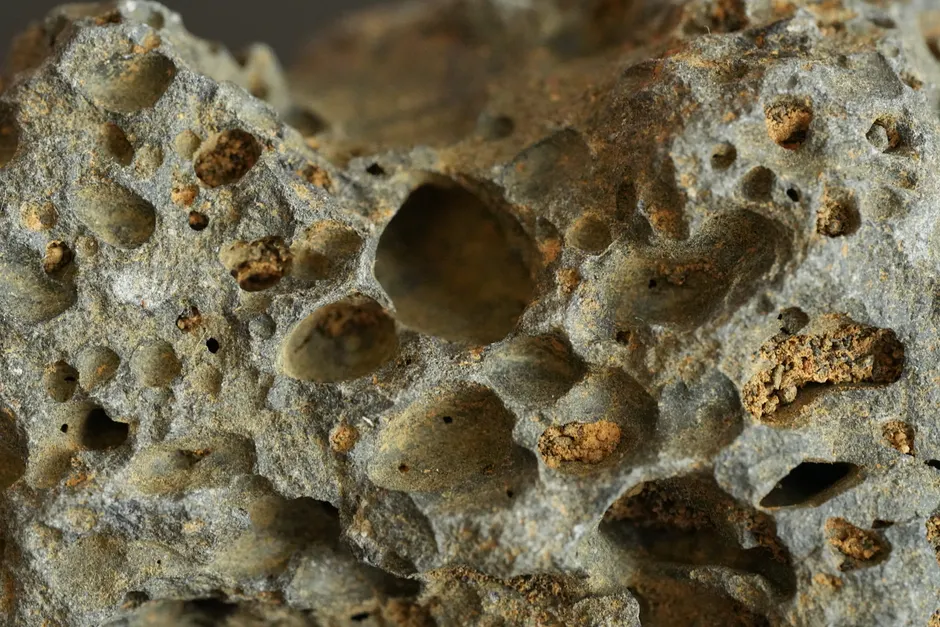
The company is building a heat pump that replaces gas refrigerants with solids. According to TechCrunch, the device compresses carbon dioxide gas into a cartridge filled with a proprietary, sponge-like porous material. Gas molecules colliding with the pore walls heat or cool that material, and the thermal effect is what the system uses to move heat. The approach is a solid-state refrigerant in the literal sense: the working medium is the porous solid, not a circulating fluid cycling through a compressor and condenser loop.
The founders say they found the underlying effect while researching solid-state refrigerants at Harvard University. Measurements in a high-pressure instrument behaved differently than expected after the team switched gases, and the group pursued the anomaly from there. Pascal now operates a lab in Massachusetts and is listed as a resident company of The Engine, a non-profit incubator and accelerator in Boston. The company describes its goal as developing a novel class of solid refrigerants intended to transform the heating, ventilation, and air conditioning (HVAC) industry.
On performance, Pascal claims that a refrigerator or heat pump using its material will be around 20% more efficient than existing models, per TechCrunch's October reporting. Slavney made a related comparison earlier this year, saying in a July 2026 industry report that the Pascal system is potentially about 20% more efficient than an equivalent R290 system. The two figures use different baselines, one against existing models generally and one against a specific R290 configuration, and neither has been tested in a shipping product.
The commercial path has several defined milestones. Pascal has signed a contract with a multinational beverage company for a pilot of its technology. The startup plans to deliver its first prototype in early 2027 and a batch of more polished refrigerators in 2028. Its website says it received a grant of about $240k from MassCEC's InnovateMass program to deploy its solid refrigerant-based refrigerator. In 2024, Pascal said it had raised $8M to productize its low-pressure, solid refrigerant-based system so it conforms to commercial HVAC specifications, a goal the current round is meant to carry forward.
In my view, the most useful questions for an HVAC engineer are not about the headline figure but about the conditions behind it. A solid working medium that relies on gas adsorption and desorption kinetics raises practical issues around cycle time, heat transfer into and out of the porous bed, pressure management, and durability of the material over repeated cycles. Those are the things a prototype in early 2027 will either answer or fail to answer, and the beverage pilot will test them in a real duty cycle. Until the prototype exists, the 20% number is a design target stated by the company.
The broader context here is the HVAC sector's need for refrigerants that are both lower in global warming impact and compatible with existing equipment standards. Pascal's pitch is that a solid medium could sidestep some of the trade-offs of gas-based vapor compression. If the efficiency gains hold at commercial scale, the payoff would be lower electricity consumption per unit of heating or cooling, which matters most in the buildings where heat pumps are already being deployed. If they do not, the company will have spent several years and considerable capital establishing that a materials-driven route to heat pumping is technically viable but not yet economical.
For now, the verifiable record is a funded startup, a Harvard-originated effect, a lab in Massachusetts, a pilot agreement with a large beverage company, and a dated plan running through 2028. Whether that plan produces a refrigerator that outperforms a well-tuned vapor-compression unit is a question the next two prototype cycles will begin to answer.