Tesla Starts Optimus Production at Fremont as Q3 Net Income Falls 43%

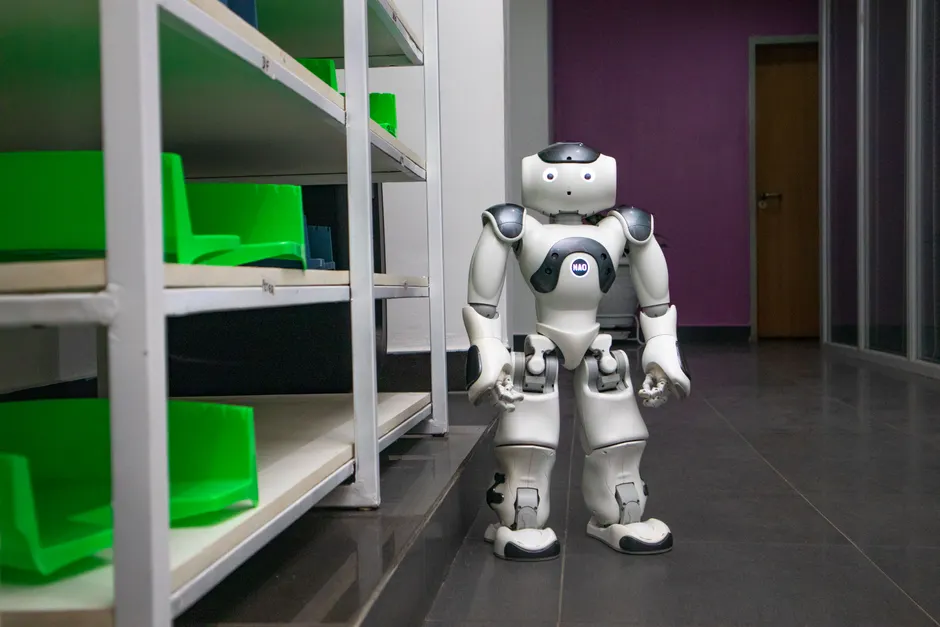
Tesla announced on Wednesday, October 21, 2026, that it had started production of its Optimus humanoid robot at its Fremont, California factory, a plant that previously built electric vehicles. The announcement came alongside third-quarter results in which revenue held roughly flat and net income fell sharply.
According to the company's third-quarter 2026 shareholder letter, the Optimus units coming off the Fremont line are the first production-quality bots Tesla has manufactured (Tesla Q3 2026 Update). The Q2 2026 update, in its robotics section, described the decommissioning of the Model S and X manufacturing lines at Fremont and the installation of first-generation equipment there. Tesla's July 22 earnings report had said it would "start production soon" of Optimus and that the initial robots would be used for training data collection (CNBC).
Total third-quarter revenue was $28.04 billion. That is roughly flat against $28.09 billion a year earlier and about $200 million below the prior quarter's $28.23 billion. Net income was $787 million, down 43% from $1.37 billion in the third quarter of 2025. Tesla's profit was pressured by lower regulatory credit sales and by rising spending on AI projects and the Optimus robot, while overall expenses increased (TechCrunch).
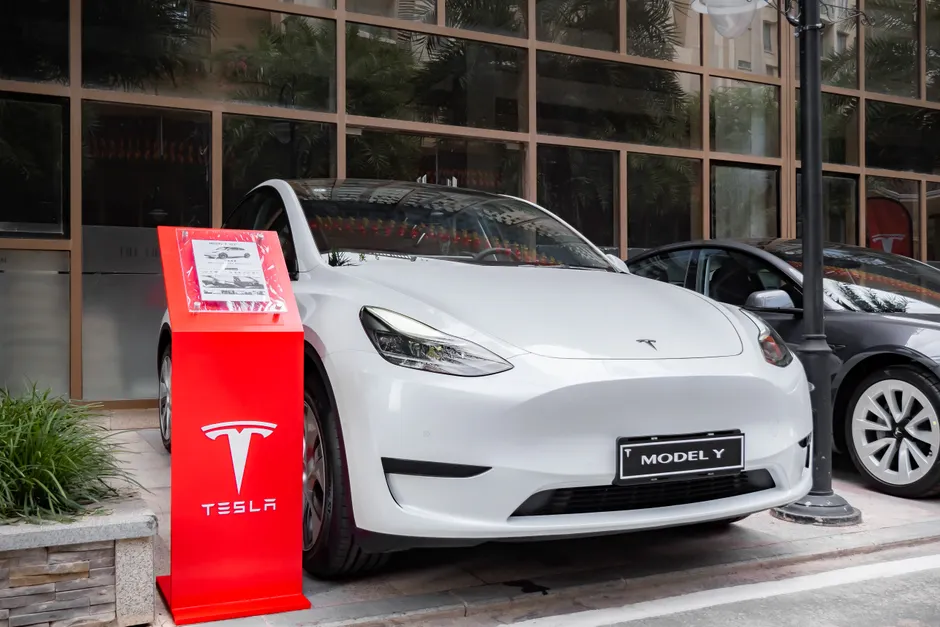
The segment picture was mixed. EV sales revenue was flat year over year at about $20 billion. Services grew 33% to $4.6 billion, and the services and other segment posted a record $734 million in gross profit. Solar and energy storage revenue fell 16% to $2.8 billion, which Tesla attributed to tariff-related customer refunds.
Vehicle volumes were steady at the margin. Tesla delivered 486,532 vehicles in the quarter, about 6,000 more than in the second quarter but fewer than in the third quarter of 2025. The October 2 production and deliveries release had put output at over 464,000 vehicles and deliveries at over 486,000 (Tesla IR). On the energy side, Tesla deployed 13.7 GWh of storage products in the quarter, up from 13.5 GWh in the second quarter.
Capital intensity is the thread running through the quarter. In April, CFO Vaibhav Taneja raised Tesla's 2026 capital expenditure forecast to $25 billion, from $9 billion in 2025 (New York Post). Tesla's Investor Relations site lists the third-quarter earnings event for October 21, 2026, with a press release, Q&A and webcast.
The broader context here is the mix of the numbers. Spending commitments have risen far faster than the automotive revenue line, and the quarter's growth came from services rather than from vehicles. The Fremont announcement is therefore best read as a cost-side and capacity-side event for now. Tesla's own description of the early robots, which are slated for training data collection, points to internal use before any external revenue.
In my view, the metrics to watch over the next few quarters are unit yield, repeatability of the build, and cost per robot at the Fremont line, rather than the production announcement itself. Those figures will determine whether Optimus becomes a revenue line or remains an expense the letter has to justify. Tesla has also not yet attached a specific output rate to the Fremont start, which makes the early ramp the more informative signal.
There is a constructive reading as well. A high-volume automotive plant that has been retooled to build a different class of machine is a concrete example of manufacturing capacity being repurposed, and that is the kind of step that determines how quickly a humanoid robot can move from demonstration to production. Whether the Fremont line achieves that will take more than one quarter to show.