Amazon Unveils Echo Time Smart Alarm Clock in Fall 2026 Device Lineup

Amazon revealed the Echo Time on October 28, 2026, a smart alarm clock with a circular 3.2-inch touchscreen that can be customized with different clockfaces and layouts. It is one of several Echo and Alexa hardware announcements in the company's fall 2026 lineup, which also covers a rebuilt Echo Dot, a 16-inch Echo Show, a camera-equipped Echo Studio, and a 10-inch Alexa Photo Frame.
The Echo Time is priced at $199.99 in black, white, and pink. A Kids Echo Time starts at $209.99, and an adjustable stand is available for $39.99. The device's optional smart alarm can wake the user 10 to 60 minutes before the set time when the sleeper is in a lighter stage of sleep. Amazon's Omnisense technology determines the wake timing from temperature and presence readings.
The upgraded Echo Dot adds a built-in smart home hub, an AZ3 chip, four microphones, and a built-in Eero Wi-Fi extender. It carries a new full-range driver that Amazon says delivers 50% more bass than the previous generation. The Echo Dot is priced at $99.99 in black, white, green, and pink.
The Echo Show 16 has a 16-inch display in an anodized aluminum frame that Amazon describes as nearly 40% thinner than its predecessor. It includes a wide-angle 13-megapixel camera and 20% more computing power. The unit is available for preorder at $499.99, and a Nanomatte display option costs $569.99.
The Echo Studio with Home Camera adds a built-in camera that supports room livestreaming and visual queries to Alexa. It is priced at $249.99 in black, with an optional stand at $39.99.
The Alexa Photo Frame pairs a semi-matte 10-inch touchscreen with Amazon Photos synchronization. The black frame costs $199.99, and birch and walnut frames cost $229.
On the software side, Amazon introduced Alexa Home Map, which builds an interactive 3D map of a home's interior and exterior. From that map, users can display and control Echo devices, Ring and Blink cameras, Fire TV, lights, locks, and thermostats. Amazon also said Alexa+ received smarter Fire TV recommendations at its fall hardware event, according to Observer.
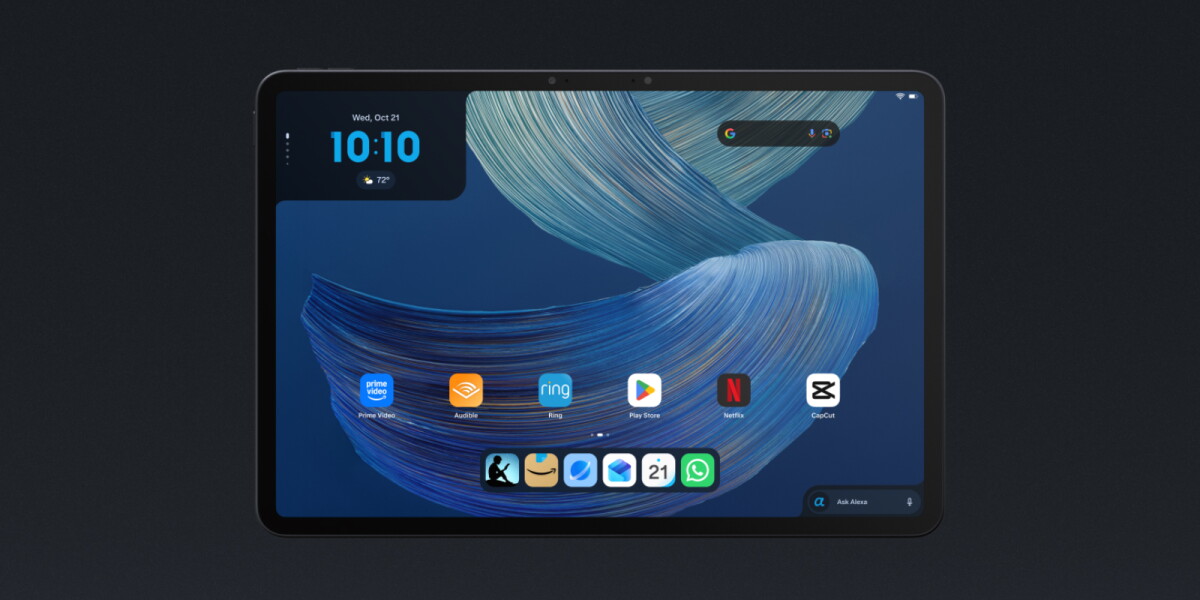
The tablet line has been on a separate track. Reuters reported on October 8, 2026 that Amazon launched Android tablets incorporating Alexa, priced from $230 to $550 depending on model. Reuters reported the following day that Amazon had shuffled Alexa leadership after the high-end tablet release. Amazon's devices newsroom also lists all-new Alexa Tablets with Alexa+ built in, a family of tablets designed for kids, Blink's 4K, spotlight, and pan-tilt cameras, and two AI products from Bee, Bee Frontier and Bee Eclipse.
The price spread across this lineup is wide. A $99.99 Echo Dot and a $199.99 Echo Time sit at the entry end, while the Echo Show 16 with its matte option tops out at $569.99 and the Alexa Tablets reach $550. For buyers, the decision is less about a single device than about where Alexa's screens and sensors should sit in the home.
In my view, the Echo Time is the more instructive product of the set. An alarm clock that reads temperature and presence to pick a wake point is a small, concrete use of ambient sensing, and it moves the assistant into a bedroom fixture rather than a kitchen counter. The Home Map is a second, quieter bet. Consolidating cameras, locks, thermostats, and media devices into one spatial interface gives Alexa a control surface that does not depend on voice alone.
The broader context here is the device category itself. Amazon is putting Alexa+ across speakers, displays, a photo frame, and tablets at once, and the question for the industry is whether a shared assistant layer can make these devices more useful in daily routines. Used well, presence-aware scheduling and spatial home control could reduce the number of apps a household juggles. Used carelessly, a home that is mapped, camera-covered, and voice-enabled raises questions about data handling that the buyer will have to weigh.