SK Hynix's Nasdaq Debut Raises $26.5B, Sets Foreign-Listing Record
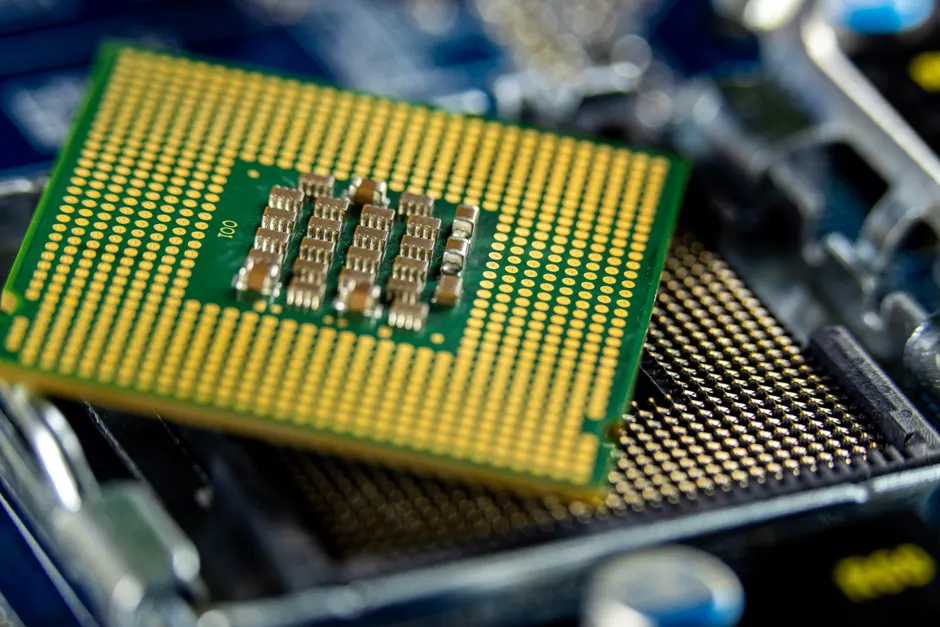
SK Hynix began trading on Nasdaq on July 10, 2026, opening at $170 per share and raising $26.5 billion in what became the largest US listing by a foreign company, surpassing the record previously held by Alibaba The Verge. The offering is also the largest secondary listing in US history Reuters.
The listing is structured as a secondary offering on the Nasdaq, meaning SK Hynix's primary listing remains on the Korea Exchange in Seoul, with the US shares functioning as an additional capital-raising vehicle rather than a relocation of its corporate listing Reuters. The company had initially guided toward raising up to $29 billion through the offering when it filed in late June, and shares were indicated to jump roughly 20% ahead of Thursday's debut Reuters.
The debut caps a run of milestones for the memory maker. SK Hynix crossed a $1 trillion valuation in May 2026, driven by demand tied to AI accelerator buildouts, and briefly overtook Samsung Electronics as South Korea's most valuable company in June Fortune. As of June 2026, SK Hynix held 29% of the global DRAM market, versus Samsung's 38% and Micron's 22%, according to Counterpoint Research data cited alongside the listing The Verge.
The company's ascent is inseparable from the high-bandwidth memory (HBM) market that supplies Nvidia's GPU platforms. SK Hynix has been Nvidia's principal HBM supplier through successive generations of its AI accelerators, and that relationship — more than any single product cycle — is what pulled its valuation and now its US listing into the same gravitational field as the broader AI infrastructure trade.
SK Group chairman Chey Tae-won said in June that the company plans to ramp up memory chip capacity over the next five years, targeting a supply shortage industry watchers expect to persist until 2030 The Verge. That capacity commitment is the practical subtext of the Nasdaq listing: raising dollar-denominated capital directly from US investors gives SK Hynix a funding channel sized to match the capital intensity of DRAM and HBM fab expansion, which runs into the tens of billions of dollars per node generation.
Listing in the US rather than relying solely on Korean won-denominated capital markets also puts SK Hynix's stock in closer proximity to the Nvidia ecosystem's investor base, and to the dollar liquidity that has driven valuations for AI infrastructure names over the past two years. A foreign chipmaker choosing a marquee Nasdaq debut, rather than staying purely on its home exchange, is itself a data point about where the capital for the current memory buildout is concentrated.
The scale of the raise and the record it broke deserve some skepticism about how durable current DRAM and HBM pricing power will prove. Memory has historically been a brutally cyclical business — oversupply has punished DRAM margins in prior cycles even during periods of strong end-demand — and a listing priced at the peak of an AI-driven capacity crunch carries a different risk profile than one priced mid-cycle. Chey's own framing of the shortage lasting "until 2030" is itself a forecast, not a settled fact, and the five-year capacity ramp he described will need to land at a moment when AI accelerator demand is still absorbing supply at current rates.
Worth flagging: the comparison to Alibaba's IPO record is useful shorthand for scale but obscures a structural difference. Alibaba's 2014 listing was a primary IPO introducing a new investor class to a company with no prior US-listed equity. SK Hynix's Nasdaq shares layer onto decades of trading history on the Korea Exchange, and existing KRX shareholders are not diluted out of an existing capital structure so much as a new pool of capital is being added alongside it. The headline dollar figures are comparable; the mechanics underneath are not.
For enterprise buyers of DRAM and HBM — hyperscalers, GPU system integrators, server OEMs — the more consequential number in this story may not be the $26.5 billion raised but the capacity commitment behind it. A five-year ramp aimed at closing a shortage through 2030 speaks directly to lead times and allocation negotiations that companies like Nvidia, AMD, and the major cloud providers are already having with SK Hynix, Samsung, and Micron. Whether that capacity materializes on schedule, and at what cost basis, will matter more to the AI hardware supply chain than the opening print of a Nasdaq ticker.
The broader arc here is one this author has watched play out before in different silicon: a component maker once treated as a commodity supplier gains outsized market power because a single downstream application — in this case, generative AI training and inference — becomes bottlenecked on its output. DRAM has been a cyclical, largely undifferentiated business for most of its history. HBM's role in AI accelerators has, for the moment, changed that calculus, and SK Hynix's Wall Street debut is as much a bet on that continuing as it is a straightforward capital raise.


