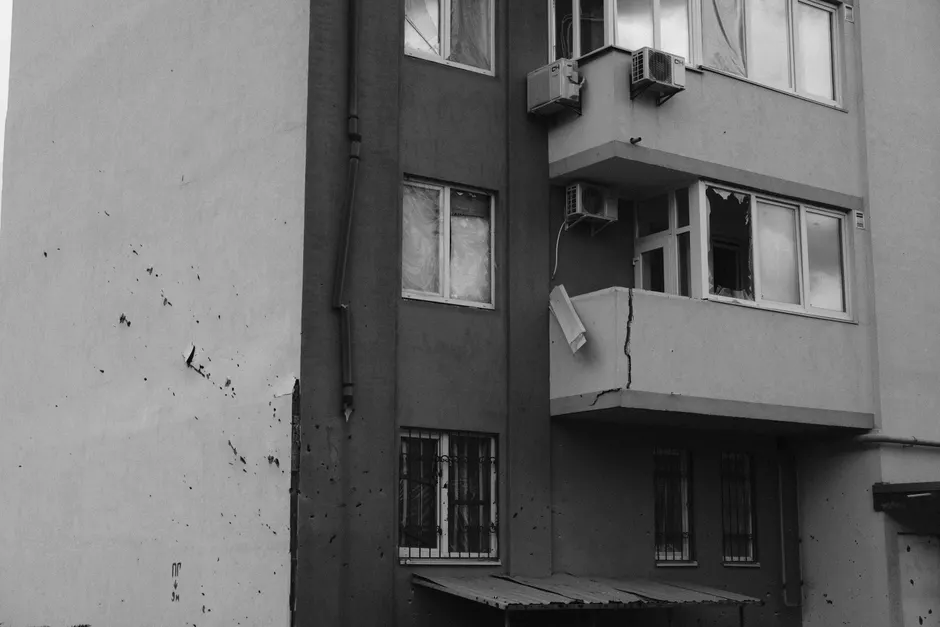
Drone Strike Wounds Six Near Kamal Adwan Hospital in Israeli-Controlled Gaza Zone

An Israeli drone attack wounded at least six people in and around Kamal Adwan Hospital on July 10, 2026, according to medical sources cited by Al Jazeera. Three people were hurt in the hospital courtyard and three others nearby, the outlet reported Al Jazeera. WAFA, the Palestinian news agency, identified the courtyard casualties as civilians and the other three as maintenance workers struck in the hospital's vicinity.
Notably, this account contains no reported deaths — a distinction from earlier incidents at the same facility. The Al Jazeera report covering the July 10 strike describes only wounded and injured victims, with no fatalities attributed to this specific attack.
The strike occurred inside what has become known as the Green Zone, a designation for territory Gaza's population and humanitarian actors use to describe areas under Israeli military control. That a drone strike landed there, on hospital grounds no less, is itself the news: attacks within zones nominally secured by the occupying force carry different implications than strikes in contested or Hamas-held areas, since they undercut assumptions about where safety can be expected under the current arrangement.
The Palestinian Ministry of Health characterized the strike as part of a pattern it calls Israel's systematic targeting of health facilities, and called on the United Nations and humanitarian organizations to publicly condemn attacks on Gaza's healthcare infrastructure, per Al Jazeera. That characterization is the Ministry's own framing, not an independently verified pattern-finding, and it should be read as such — a party to the conflict advancing an interpretation, however consistent it may be with the hospital's documented history.
That history is substantial. WAFA reported in December 2023 that an Israeli drone fired a missile at Kamal Adwan's northern gate, killing at least four people and wounding nine WAFA. In January 2026, WAFA reported that a separate drone strike near the hospital killed two children WAFA. On the Israeli side, the IDF has repeatedly asserted a military rationale for operations at or near the site: a July 10, 2025 press release — a year to the day before this latest incident, though a different year — stated the IDF and Israel Security Agency had completed a "targeted operation" against what it described as a Hamas command center located inside Kamal Adwan Hospital IDF. A December 27, 2024 release similarly asserted the presence of terrorist infrastructure and operatives in the hospital area IDF.
Notably absent, however, is any IDF statement addressing the July 10, 2026 incident specifically. A site-restricted search of idf.il for references to Kamal Adwan on that date returned nothing — no operational claim, no denial, no acknowledgment. That silence doesn't resolve the dispute over what happened; it simply means the record for this strike currently rests entirely on Palestinian and medical sources, with the usual caveat that battlefield claims from any single party warrant independent corroboration where it becomes available.
WAFA additionally reported that at least a dozen people were wounded in Israeli attacks across Gaza on July 10, suggesting the Kamal Adwan incident was not isolated to that day. Al Jazeera's broader casualty accounting places the war's cumulative toll at at least 73,110 Palestinians killed since Israel's assault began on October 7, 2023, and at least 1,084 killed since the ceasefire took effect in October 2025 Al Jazeera.
The 1,084 post-ceasefire figure is the detail worth sitting with. A ceasefire, in the conventional sense, denotes a cessation of hostilities pending negotiated terms — it is not meant to coexist with four-figure death tolls nine months into its implementation. Whether that number reflects sporadic violations, a contested interpretation of what the ceasefire actually restricts, or something closer to continued low-intensity warfare under a different name is a question the public record, as it stands from this reporting, does not settle. What is clear is that repeated strikes at a single hospital, across more than two years and multiple Israeli and Palestinian accounts, have made Kamal Adwan a recurring flashpoint in arguments over whether medical facilities retain protected status once armed actors — real or alleged — are said to operate near them. That argument predates this ceasefire and will likely outlast it.