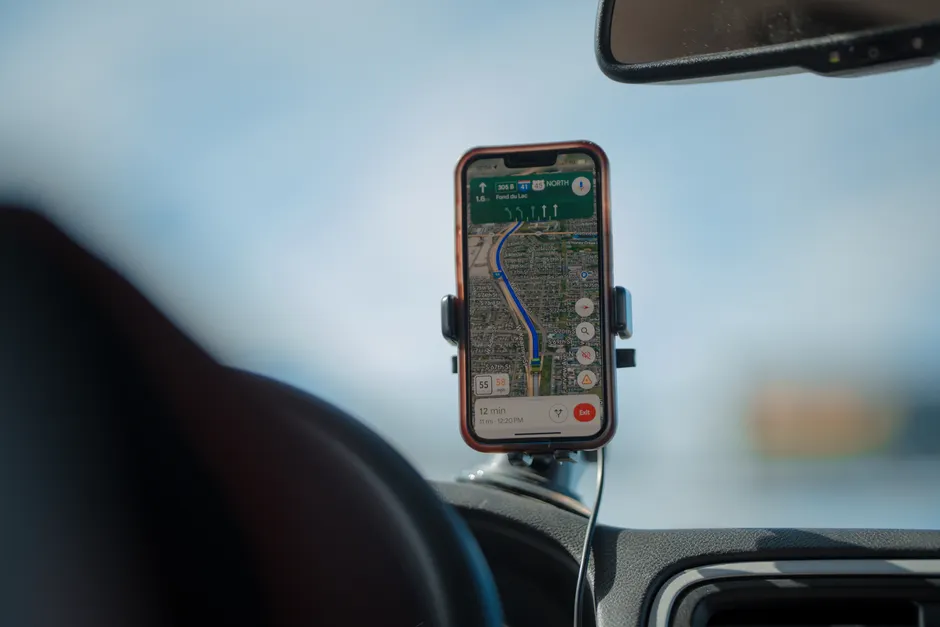
Waze Rolls Out Gemini-Powered Search, Personalized Routing and a Dedicated Motorcycle Mode
Google's Waze added a batch of AI-driven navigation features on July 13, 2026, including conversational destination search built on Gemini, personalized route suggestions, a purpose-built motorcycle mode, and a "less chatty" voice-guidance option TechCrunch.
The centerpiece of the update is Gemini-powered search. Users can tap the search voice icon and issue natural-language queries — "find me a coffee shop that's open right now" is the example Waze itself uses — rather than typing an exact business name or address TechCrunch. That capability is rolling out to the Waze beta community globally on both Android and iOS, per Google's Waze blog, rather than to the general release population outright.
Personalized navigation, by contrast, is going straight to global general availability on both platforms. The feature suggests routes based on a given user's trip history combined with Waze's modeling of city-level traffic patterns, and it can be switched off entirely from within settings TechCrunch. The opt-out control matters here: personalization that draws on historical trip data invites the obvious question of what's retained and for how long, and Google's decision to surface an explicit toggle rather than bury the setting suggests some anticipation of that scrutiny.
Motorcycle mode is the most geographically targeted piece of this release. It uses AI to route around or account for two-wheeler-specific constraints — legal lane-splitting corridors, shortcuts unavailable to cars, road restrictions that apply only to motorcycles — with the stated goal of producing better routes and more accurate ETAs than Waze's car-oriented default TechCrunch. The mode also surfaces hazard categories that matter disproportionately to riders on two wheels: potholes, speed bumps, raised crosswalks, shoulder endings, and narrow bridges Google Waze Blog. It is launching in Argentina, Brazil, Colombia, Malaysia, Mexico, Peru, and the Philippines, on Android and iOS. That list is not arbitrary — all seven markets have motorcycle ownership rates and commuting patterns that differ substantially from Waze's traditional car-navigation core markets in North America and Western Europe, and the selection reads as a direct response to where two-wheeler ridership and revenue opportunity actually concentrate.
Two smaller but practically significant changes round out the release. Waze now lets users report road updates — closures, outdated addresses, and similar edits — conversationally, with those reports routed to local map editors for verification TechCrunch. That's a meaningful shift from the tap-based reporting UI Waze has used since its crowdsourced-mapping days; natural-language input lowers the friction for casual contributors who might not bother navigating a structured reporting menu while driving. Separately, "less chatty" mode trims voice-guidance volume and interruption frequency while preserving alerts for hazards and turns, and it too is rolling out globally on both platforms.
Functionally, this update sits at the intersection of three trends Google has been pursuing across its consumer AI portfolio: pushing Gemini into task-specific conversational interfaces rather than a single chat surface, using historical user data to personalize consumer software by default with an opt-out rather than opt-in posture, and fragmenting product experience by vehicle type and locale instead of shipping one undifferentiated global build. Waze has long differentiated itself from Google Maps through crowdsourced, community-driven data; this release extends that differentiation into AI-assisted contribution rather than replacing it.
The motorcycle-specific rollout is worth dwelling on because it runs counter to the flattening tendency common in large consumer software organizations, where a single global feature set typically ships to reduce engineering and QA overhead. Building and shipping a hazard taxonomy specific to two-wheelers — raised crosswalks and shoulder endings are not concerns most car-navigation teams have historically modeled — implies dedicated data collection and validation work in each of the seven launch markets. Whether Waze extends motorcycle mode to markets like India, Indonesia, or Vietnam, where two-wheeler density is even higher, will be a reasonable signal of how much continued investment this vertical gets internally.
None of the individual features here is conceptually novel in isolation; conversational search and personalized routing based on trip history have analogues elsewhere in consumer mapping and ride-hailing software. What's more notable is the pace at which Gemini is being wired into task-specific product surfaces across Google's app portfolio rather than being confined to a general-purpose assistant. Waze, acquired by Google in 2013, has generally lagged Google Maps in receiving new AI capabilities first; this release puts the two products closer to feature parity on generative AI, at least for search and reporting.