UK Battles 19 Wildfires as 'Firewave' Forces Evacuations in Wales
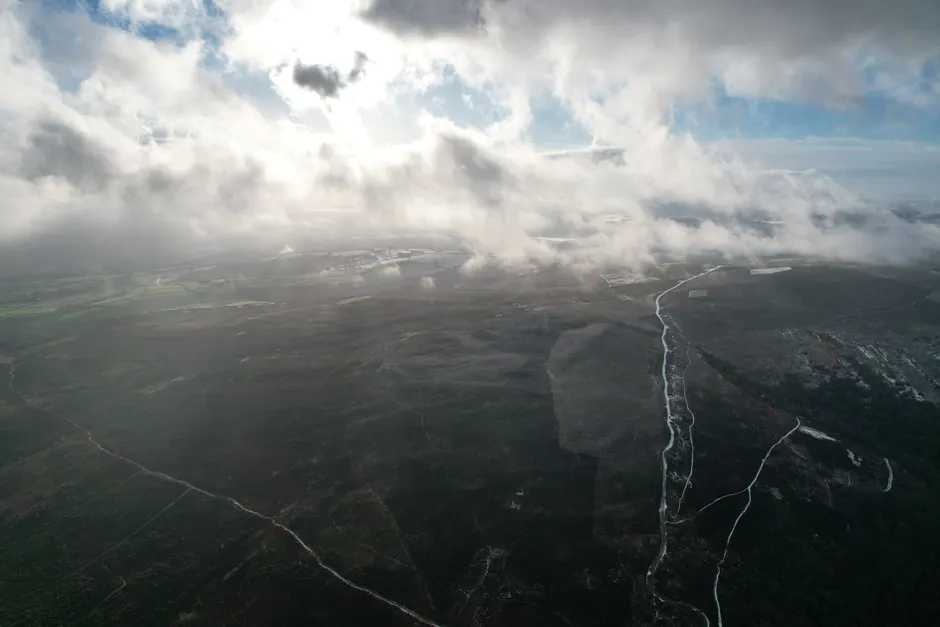
Emergency services across the UK were tackling 19 wildfires as of the afternoon of July 13, 2026, according to the National Fire Chiefs Council (NFCC), with residents in Conwy county, north Wales, evacuated as flames swept the Carneddau uplands The Guardian.
Two fire services declared major incidents in response. North Wales Fire and Rescue Service stood its incident down at 5pm, telling evacuated residents it was safe to return home. Derbyshire's fire chiefs declared the second, with that response still active as of publication The Guardian.
Local councillor Cathy Augustine described the Carneddau terrain — one of the largest continuous areas of mountain land in Wales and England — as "very special" and "really difficult terrain for firefighters," language that points to the operational challenge of fighting fire across steep, trackless moorland rather than the more familiar structural or urban interface fires. Some evacuated residents near the mountainside were initially taken in at a local pub, the Gladstone, before longer-term arrangements were made.
Claire Belcher, director of the wildFIRE Lab at the University of Exeter, characterized the current spread as a "firewave," calling it "the most widespread that the UK has seen." She attributed the conditions to a compounding climate signal: wetter winters driving denser vegetation growth, followed by prolonged heatwaves that desiccate that fuel load ahead of ignition season. Maria Barbosa, a wildfire scientist at the UK Centre for Ecology & Hydrology, framed the shift in similar terms, saying climate change is "actively rewriting the vulnerability of the British landscape" The Guardian.
Vikki Thompson, a postdoctoral researcher in impact attribution from extreme weather events at the University of Edinburgh, said parts of the UK were experiencing "perfect weather conditions for wildfires: hot, dry, and windy" — the classic fire-weather triangle that fire behavior analysts use to forecast rate of spread and intensity, distinct from fuel availability itself.
Natural England's current risk assessment describes an "exceptional fire risk" in pockets of southern Britain, with a "very high" rating across much of England and Wales more broadly The Guardian. In the days preceding July 13, fires were recorded in North Yorkshire, County Durham, Greater Manchester, East Sussex, West Sussex, Devon, Somerset, and London, indicating a geographically dispersed pattern rather than a single regional event. The St Albans Review reported shrubbery fires along rail corridors around July 10, consistent with the lineside ignition risk that heatwave conditions pose to rail infrastructure through braking sparks and desiccated trackside vegetation St Albans Review.
The NFCC's own communications this summer track an escalating cadence of warnings rather than a single discrete alert. On July 13, the council published "It only takes one spark: Fire Chiefs warn of wildfire risk amid multiple significant wildfires." That followed an item flagging the UK's third heatwave of the season as a wildfire risk multiplier, and a June 22 warning issued as parts of the UK faced a rare red heat alert NFCC. Surrey Fire and Rescue Service separately described the wildfire risk as "catastrophic" on July 6, noting that UK national parks had joined the NFCC in issuing public warnings Surrey Fire and Rescue Service.
The recurrence of red-flag heat events across a single season, rather than as an isolated anomaly, is what scientists like Belcher and Barbosa are pointing to when they describe a structural shift in landscape vulnerability. A single hot, dry summer is weather; a pattern of wet-winter fuel buildup followed by repeated summer desiccation is closer to a climate signal, and it changes how fire services have to plan resourcing — not just for peak-day surge capacity, but for a longer active season overall.
That planning question sits behind some of the NFCC's other summer activity. The council has an open consultation on a Wildfires Prevention toolkit closing July 31, 2026, timed awkwardly close to the current outbreak given that any toolkit recommendations arriving from it will land after this season's fires are already extinguished NFCC. The NFCC's FIRE Conference, scheduled for September 24–25 as a hybrid event, will likely take up wildfire resourcing as a live agenda item rather than a retrospective case study NFCC.
The wildfire response has also unfolded against a backdrop of stretched international commitments for UK fire services. On June 26, UK Fire and Rescue Services deployed to Venezuela following an earthquake there, with the International Search and Rescue Team returning home on July 7 and personnel continuing life-saving work into late June. Separately, UK fire and rescue services marked delivery of support to Ukraine on July 3 NFCC. None of these deployments have been cited by the NFCC as constraining the domestic wildfire response, but they illustrate the range of concurrent demands on a workforce whose structure — including reliance on on-call firefighters, the subject of an NFCC national review published May 8 — is itself under scrutiny.
For now, the immediate picture is one of partial stand-down: north Wales residents cleared to return, Derbyshire still under major incident status, and a "very high" to "exceptional" fire risk rating persisting across much of England and Wales. Whether this summer's firewave proves an outlier or an early data point in a longer trend is the question scientists like Thompson and Belcher are already trying to answer.


