Netflix Discloses Generative AI Use Across Roughly 300 Titles in 2026
Netflix disclosed in its Q2 2026 shareholder letter that generative AI workflows were applied across roughly 300 of its titles this year, with the heaviest concentration in post-production. The disclosure accompanied the company's second-quarter financial results and named three specific projects — Glory (India), Brasil 70: A Saga do Tri (Brazil), and The American Experiment (US) — where generative AI was used to create what the letter described as highly complex sequences. Engadget
The letter positioned the AI tooling as an efficiency measure. Netflix stated it is increasingly leveraging generative AI to deliver higher-quality output more quickly and at a lower cost than traditional methods. The shareholder letter itself is the primary source for the claims; Engadget reported on the disclosure on July 16, 2026. Q2 2026 Shareholder Letter
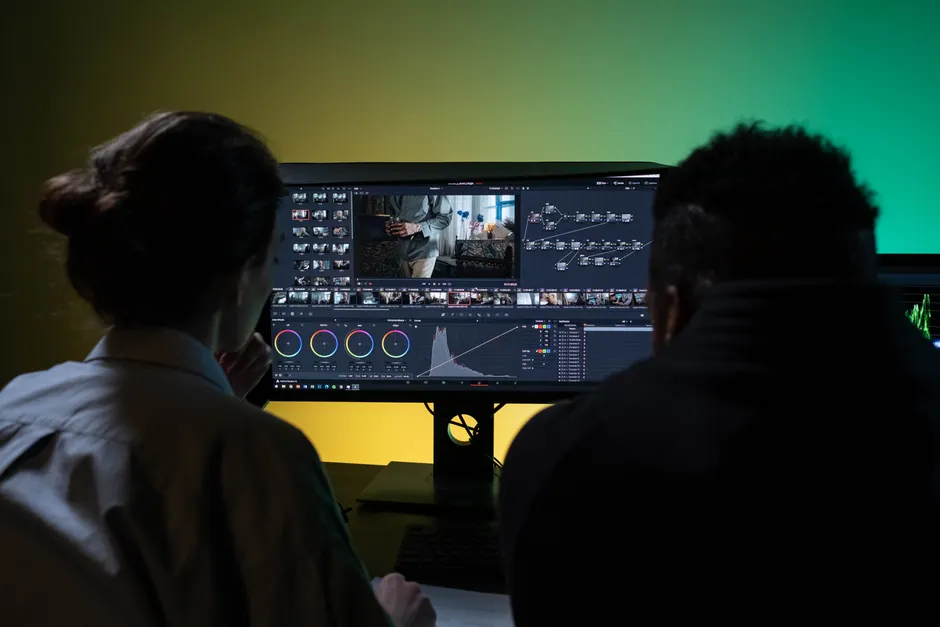
The scope is worth noting. Three hundred titles is not a pilot program. Netflix releases hundreds of original titles annually across scripted series, films, documentaries, and unscripted content, and the figure suggests that generative AI has already been woven into a substantial share of the production pipeline for 2026. The fact that the largest concentration sits in post-production is consistent with where the technology is most mature: tasks like rotoscoping, upscaling, audio cleanup, visual effects compositing, and shot-to-shot consistency work are areas where diffusion models and related tooling have demonstrable utility today. These are also tasks that have historically been labor-intensive and time-sensitive, making them natural candidates for AI-assisted workflows.
The three named projects span three countries and three production contexts, which suggests Netflix is applying these tools across its global production footprint rather than restricting them to a single region or genre. Glory is an Indian production; Brasil 70: A Saga do Tri is Brazilian; The American Experiment is a US-based title. The common thread the letter draws is not genre or market but complexity — specifically, sequences that would be difficult, expensive, or slow to produce through conventional means.
What the shareholder letter does not detail is equally important. Netflix did not break down which generative AI tools or vendors it uses, whether the work is performed in-house or through third-party studios, or what specific post-production tasks were automated or augmented. The letter also does not address labor implications — a notable omission given that post-production artists and VFX houses have been among the most vocal groups raising concerns about AI's impact on creative work. The disclosure is framed in operational and financial terms: faster, cheaper, higher quality. It is not framed as a creative or artistic decision.
The decision to include this disclosure in a shareholder letter is itself informative. Netflix is addressing investors, not press or creative partners, and the framing — quality, speed, cost — maps directly to the metrics that matter to that audience. A production company mentioning AI in a creative context might emphasize artistic possibilities or creative expansion. Netflix chose efficiency language. That choice signals how the company's leadership views the technology's near-term value proposition: a cost and throughput lever, not a creative paradigm shift.
For technology professionals watching the media industry's AI adoption, the relevant signal is the scale and the location of deployment. Generative AI in media production has moved beyond experimentation and into regular use across a meaningful share of a major streamer's annual output, concentrated in the post-production stack where it intersects with established pipeline tools and workflows. The three hundred titles figure provides a concrete data point where most prior industry discussion has been aspirational or anecdotal.
The absence of detail on tooling, vendor relationships, and labor impact leaves significant questions open. But the baseline fact — that one of the world's largest content producers is using generative AI across hundreds of titles, primarily in post-production, and is telling investors about it — is itself the headline.