Iran Strikes Shipping in Hormuz and Targets US Allies as Houthis Declare Saudi Blockade

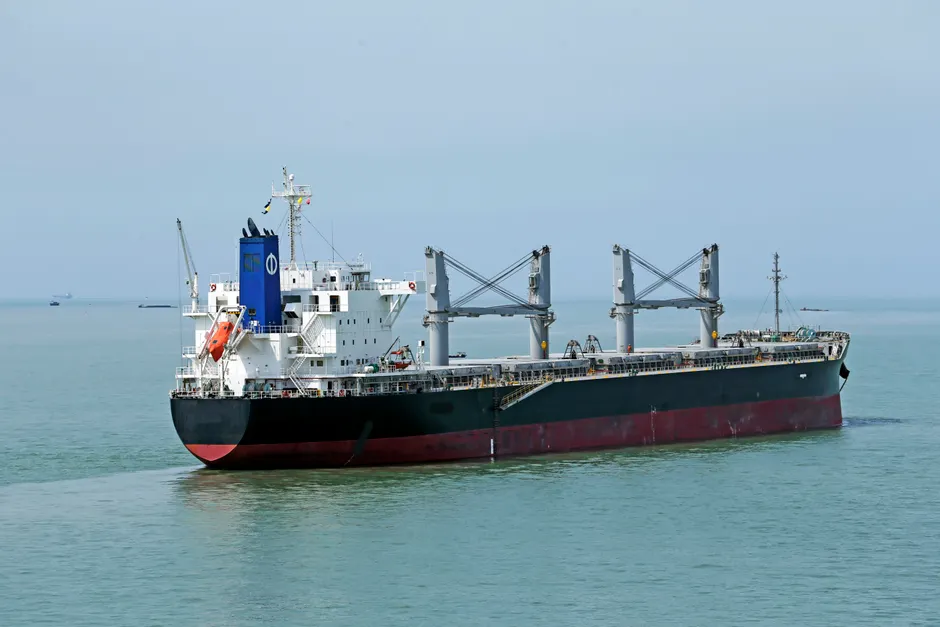
Iran's Revolutionary Guards claimed responsibility for an attack on a tanker in the Strait of Hormuz early on July 21, 2026, forcing its crew to abandon the vessel, according to The Guardian. The British military's United Kingdom Maritime Trade Operations centre independently reported the same incident off the coast of Oman. The Guard also claimed two additional attacks on ships in the strait on July 20.
These maritime strikes come as the US-Iran conflict has escalated sharply. US Central Command stated its latest airstrikes aimed to "degrade" Iran's ability to attack commercial shipping, hitting military command centres and missile and drone launch sites. Iranian media reported US strikes in Bandar Abbas, Tabriz, and Bushehr, the latter being home to Iran's only operational civilian nuclear power plant. Iran's president declared the country had returned to "full-scale war."
The immediate trigger for the escalation appears to be the deaths of three US service members killed in Iranian strikes over the weekend preceding July 21. President Donald Trump stated Iran would pay "many times over" for killing US soldiers. Congressional Democrats have urged Trump to reverse his resumption of the war with Iran following the troop deaths.
Iran responded to the US strikes by launching attacks against Bahrain, Kuwait, and Jordan. The Revolutionary Guard claimed it struck a US military site in Jordan. Jordanian state TV reported that three missiles launched from Iran overnight had been intercepted, citing the Jordanian armed forces, and that sirens sounded in Amman on the evening of July 20.
Iranian state messaging on the Strait of Hormuz has been emphatic. IRNA, Iran's official state news agency, published a report on July 21 headlined "Iran to steadfastly maintain control over Strait of Hormuz: IRGC." Fars News Agency reported the IRGC Navy as describing two tankers that exploded on the night of July 19 as "deviant ships, instigated and forced by the United States," claiming they were attempting to use an "unsafe route." Fars also reported that following US attacks on Iran, vessels navigating the strait were using only the Iranian shipping lane.
On a separate but related front, Yemen's Iran-backed Houthis announced an immediate maritime blockade of Saudi Arabia in the Red Sea on July 21. Houthi military spokesperson Yahya Saree delivered the announcement via a televised video statement, stating the Bab al-Mandeb strait would be closed to Saudi vessels. The declaration was reported by Reuters on July 20 and confirmed by the Associated Press on July 21. Saree framed the blockade as a response to the kingdom's "unjust blockade on Yemenis for over 10 years" and what he termed a "continued Saudi siege" on Yemen. Saudi Arabia responded by stating it would take "all necessary measures to protect its vessels in accordance with international law."
The New York Times reported on July 20 that a Houthi maritime blockade on Saudi Arabia in the Red Sea could affect more than 3 percent of the global oil market. Al Jazeera noted the same day that it was not immediately clear how the Houthis would implement the blockade or whether it could signal a return to attacks.
Oil markets showed measured reactions. By 0052 GMT on July 21, Brent crude futures eased 0.4% to $88.87 a barrel, while US West Texas Intermediate crude for September delivery held steady at $82.47.
On the diplomatic track, Iran's interior minister travelled to Pakistan for talks. Pakistan has been described as a key mediator in the conflict.
The broader context here involves multiple chokepoints under simultaneous pressure. The Strait of Hormuz, through which roughly a fifth of global oil consumption transits, is now the site of repeated IRGC attacks on commercial shipping. The Bab al-Mandeb strait, another critical maritime artery, faces a Houthi blockade declaration targeting Saudi vessels specifically. The coordinated nature of these actions across two waterways, combined with Iran's direct strikes on three Gulf and Levantine states hosting US forces, suggests a deliberate strategy of layered escalation rather than isolated retaliation.
The targeting of Bushehr in US strikes adds a nuclear dimension that regional and international actors will be watching closely. Strikes near or on operational nuclear infrastructure carry escalation risks that extend beyond the immediate military theater.
Meanwhile, in a separate development that touches the broader regional architecture, the Lebanese army began taking charge of security in three southern villages under a deal for Israeli withdrawal from southern Lebanon and Hezbollah disarmament. That process, while distinct from the US-Iran escalation, proceeds against the same backdrop of Iran-aligned actors under pressure across multiple fronts.
Several questions remain unresolved. The Houthis have not detailed the enforcement mechanism for their declared Saudi blockade. Iran's stated position on maintaining "full-scale war" status has not been paired with specific ceasefire conditions or exit ramps. And the trajectory of US strikes, which according to Central Command are aimed at degrading Iran's capacity to threaten shipping, has not been paired with an articulated endgame. With Pakistan engaged as a mediator and oil markets holding below panic thresholds, the immediate question is whether the current tempo of escalation represents a peak or a plateau.