Alphabet's $84.75B Equity Raise Meets $44.9B Q2 CapEx as AI Infrastructure Buildout Accelerates

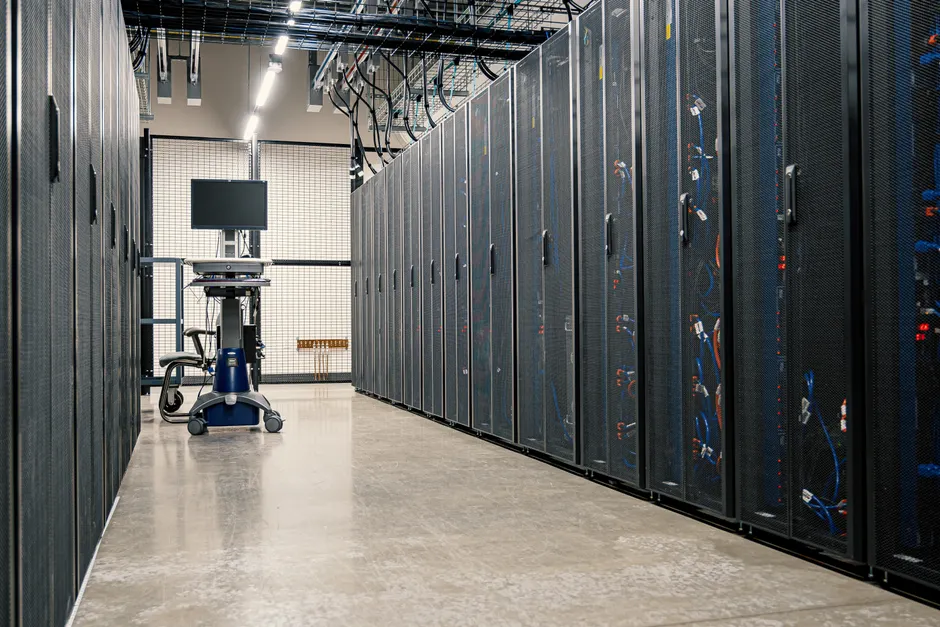
Alphabet reported $44.9 billion in capital expenditures for the second quarter of 2026, with the vast majority directed toward technical infrastructure to support AI investments, according to the company's Q2 2026 earnings call held July 22, 2026 (Alphabet Investor Relations). The quarterly figure lands against a full-year 2026 CapEx guidance range of $175 billion to $185 billion, which Alphabet first issued in early February and which sits well above the analyst consensus estimate of approximately $119.5 billion at the time (Bloomberg; Reuters; CNBC).
The spending is being funded in part by an equity capital raise that Alphabet announced on June 1, 2026, initially proposed at $80 billion and intended to expand AI infrastructure and compute. Two days later, on June 3, the company announced the upsize and pricing of the raise at $84.75 billion. Berkshire Hathaway contributed $10 billion to the offering, as disclosed in Alphabet's investor presentation dated June 3, 2026 (Alphabet Investor Relations; Alphabet Investor Relations; Google/Alphabet Blog).
At $44.9 billion for the quarter, Alphabet's Q2 CapEx run rate annualizes to roughly $180 billion, squarely in the middle of its guided range. The first-half figure implies a back-half spend trajectory that, if the midpoint of guidance holds, would require sustained quarterly outlays in the same neighborhood. The company characterized the spend as predominantly technical infrastructure, a category that in Alphabet's reporting typically encompasses servers, data center construction, and networking equipment.
The broader context here is the scale of AI-related capital deployment across US hyperscalers. Four major US tech companies together forecast approximately $650 billion in combined capital expenditures for 2026, per Bloomberg's February 6 tally (Bloomberg). Alphabet's guided range of $175-185 billion accounts for roughly 27-28% of that aggregate figure. The gap between the analyst consensus of $119.5 billion and Alphabet's actual guidance, a delta of roughly $55-65 billion, reflects the degree to which Street models had underestimated the pace of AI infrastructure commitments as of early February.
The equity raise itself is notable for its structure and participants. Alphabet, a company that historically has relied on internally generated cash flow rather than external equity issuance, tapped public markets for $84.75 billion, upsized from an already substantial $80 billion proposal. The $4.75 billion upsize between announcement and pricing indicates demand exceeded the initial target. Berkshire Hathaway's $10 billion participation, disclosed the same day as pricing, anchors the raise with a single cornerstone investor of considerable weight.
Alphabet's choice to issue equity rather than fund CapEx entirely from operating cash flow or debt signals that the magnitude of the AI infrastructure buildout exceeds what the company expects to generate internally, or at minimum that management preferred to preserve balance sheet flexibility for a multi-year spending cycle. The dilution from an $84.75 billion raise against Alphabet's market capitalization is a trade-off against the alternative of levering up or constraining the pace of investment.
The macro backdrop for this capital deployment has been anything but stable. Oil markets have been whipsawed by US-Iran hostilities throughout 2026. Brent crude settled at $112.19 per barrel and US crude at $98.84 on March 20, 2026 (Reuters). A ceasefire agreed on or around April 7, 2026, between the United States and Iran briefly drove oil futures below $100 a barrel (Reuters). That calm broke on July 8, 2026, when the US launched fresh strikes against Iran, and by July 13 oil had surged 9% on the renewed hostilities (Reuters; Reuters). Equities slipped and bond yields rose the same day as the Gulf conflict flared again.
For Alphabet, the energy cost component of data center operations is a direct input to the ROI calculus on AI infrastructure. Elevated and volatile oil prices feed into electricity costs, particularly in regions where grid power is gas-fired. The company's $175-185 billion CapEx commitment was set when Brent was trading above $112; the subsequent ceasefire dip and then the July spike back up create a range of energy cost scenarios that could materially affect operating leverage on the deployed capital.
What remains firmly in the "priced in" column versus "uncertain" is worth separating. Alphabet's guidance, the raise size, Berkshire's participation, and the Q2 CapEx figure are all reported facts. Whether $175-185 billion proves sufficient, whether the AI revenue model scales to justify the spend, and whether energy costs erode returns on the deployed infrastructure are all forward-looking questions that neither Alphabet's disclosures nor current market prices can resolve. The gap between the original analyst consensus of $119.5 billion and the actual guidance, however, is a concrete reminder that the pace of this buildout has consistently surprised to the upside.