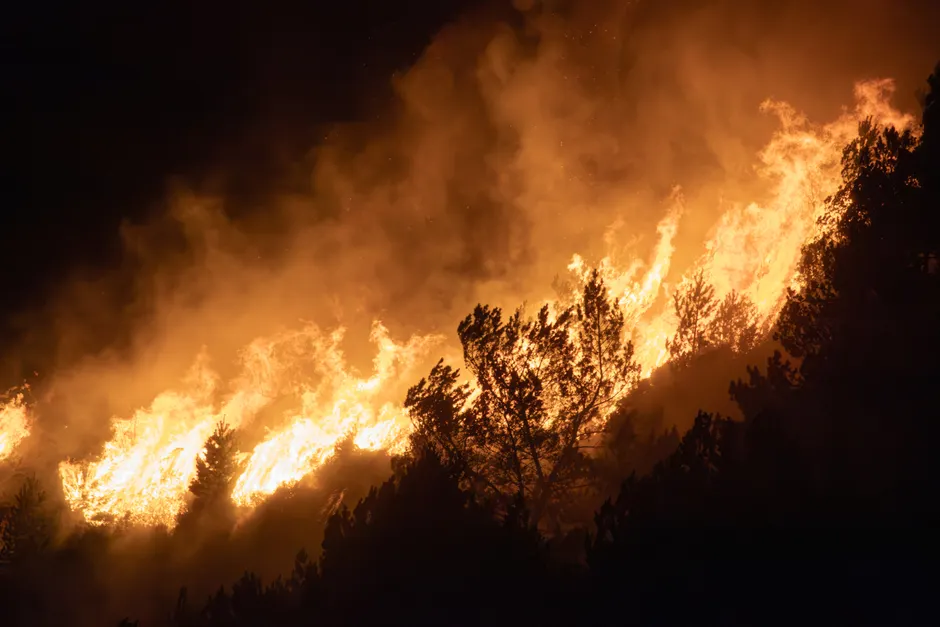
France and Spain Confront Simultaneous Wildfire Crises as Mass Evacuations Spread Across Both Countries
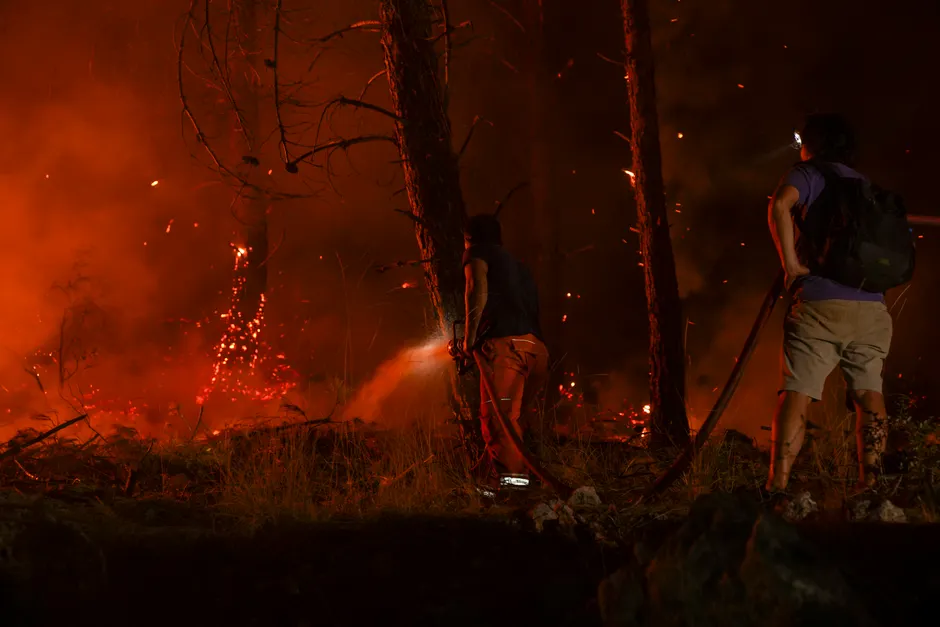
France and Spain are simultaneously battling major wildfire emergencies that have forced tens of thousands of evacuations across both countries, with Spain's Interior Ministry declaring a national emergency on July 23, 2026, and French authorities ordering the evacuation of the Cap Ferret peninsula on the southwest coast the following day.
In Spain, the national emergency covers wildfires burning in the Madrid region and Ávila province, according to Bloomberg and France 24 reporting. The declaration came after weeks of escalating fire activity across multiple regions. Nearly 125,000 hectares had burned in Spain by July 24, 2026, compared with 393,000 hectares for the entirety of 2025, according to Arab News. Prime Minister Pedro Sánchez has visited two fire zones in recent days, traveling to La Mierla in Guadalajara province on July 22 and to Los Gallardos in Almería province on July 13, where he announced that the government would mobilize public resources for reconstruction of affected areas. More than 1,200 people were evacuated due to the Guadalajara wildfire as of July 21, Reuters reported.
The wildfires in Spain have not been confined to a single event or region. The Spanish Council of Ministers took note on July 7 of an emergency declaration addressing a wildfire that began on May 31, 2026, indicating that the fire season has been underway for weeks before the national emergency declaration.
In France, the Gironde region has been the focal point of the most recent and most disruptive fire activity. A wildfire that began in Saumos on July 22 progressed toward the commune of Le Porge and then toward Lège-Cap-Ferret, prompting preventive evacuation orders covering Le Porge, Saumos, Le Temple, and Lège-Cap-Ferret. On July 24, the French government activated the FR-Alert emergency alert system due to the rapid progression of the forest fire in Gironde. Hundreds of people escaped the Cap Ferret peninsula by boat during the evacuation, and tens of thousands of people were evacuated from a tourism destination west of Bordeaux, according to BBC News. About 20,000 people were evacuated from towns and vacation resorts along the French Atlantic coast on July 23, U.S. News reported.
The Gironde fires are the latest in a series of wildfires that have struck France throughout July. A wildfire in the Var region of southern France erupted on July 21 and consumed 2,550 hectares, leading to the evacuation of about 400 people. Earlier in the month, a wildfire in southwest France scorched more than 11,000 acres and forced more than 10,000 people to evacuate from nearly 30 villages as of July 6. On July 2, nearly 3,000 people were evacuated in southern France, with half of those evacuees coming from three campsites. At least 12,000 people were evacuated from 27 municipalities across the Pyrénées-Orientales department as of July 8, though 12 of those communes had been reopened to residents by the same date. A large wildfire also ravaged the Fontainebleau forest in Seine-et-Marne, starting on July 12.
The human cost of the French fires has been severe. Two firefighters died during the July 2026 wildfires, Reuters reported. The fires have also caused significant economic and environmental damage beyond France and Spain: wildfires destroyed olive groves in Sicily, Italy, in July.
The scale of simultaneous wildfire emergencies across multiple European countries places considerable strain on firefighting resources and cross-border coordination mechanisms. France has sought EU assistance as the fires rage, France 24 reported, a step that invokes the Union Civil Protection Mechanism for pooled firefighting assets. Spain's national emergency declaration, meanwhile, mobilizes federal resources under a formal legal framework that supersedes regional autonomy in emergency management, a significant step for a country where wildfire response typically devolves to autonomous communities.
The broader context here is one of a fire season that began early and has intensified steadily. The May 31 wildfire referenced by the Spanish Council of Ministers on July 7 suggests that vegetation conditions were already conducive to large-scale fires well before the peak summer months. The progression of the Saumos fire from its origin through multiple communes toward Lège-Cap-Ferret illustrates the difficulty of containment in terrain where coastal pine forests meet populated tourist areas during peak season. The Cap Ferret peninsula, a narrow spit of land with limited road egress, presents particular evacuation challenges that likely explain the use of boats to extract residents and visitors.
The confluence of national emergency declarations, mass evacuations across multiple French regions, and cross-border EU assistance requests marks this as one of the most significant European wildfire episodes of 2026. The 125,000 hectares already burned in Spain by July 24, while below the 393,000-hectare total for all of 2025, reflects a rate of burning concentrated in a far shorter window. Whether the current pace of burning sustains or accelerates through August will determine how the 2026 season compares historically, but the simultaneous activation of emergency frameworks in two major European states is itself a defining feature of the crisis.