Twelve South Shrinks the Valet, Cranks Qi2 to 25W
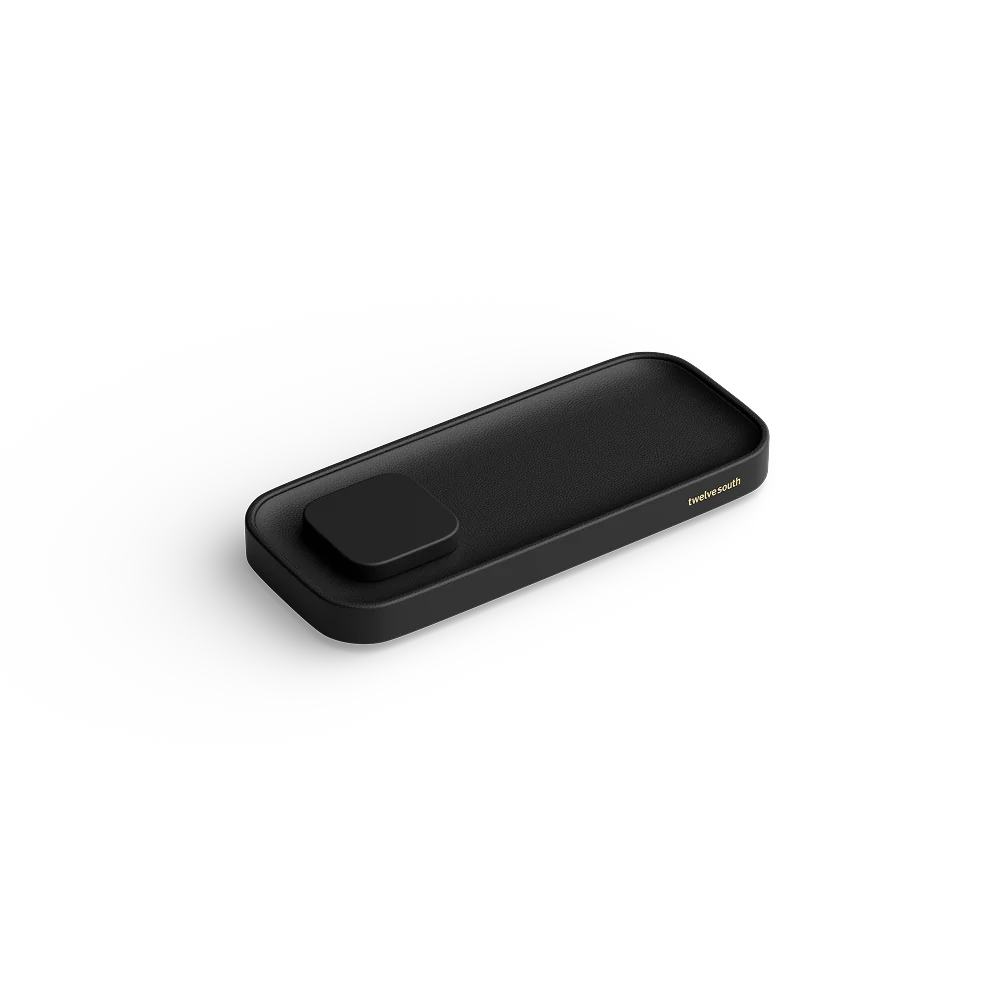
Twelve South has released a redesigned version of its Valet wireless charging tray, cutting the depth from 7.5 inches to 4.5 inches while raising Qi2 output from 15W to 25W. The new Valet is priced at $129.99, fifty dollars below the original, which remains available at $179.99. (The Verge)
The original Valet debuted at CES earlier in 2026 and began shipping on January 15, 2026 (AppleInsider). It used Qi2 magnetic wireless charging at 15W and included a USB-C port on the side capable of charging a second device at 15W. The new model retains the USB-C port but limits it to 10W while the Qi2 pad is active, a tradeoff that comes with the smaller footprint and higher wireless output.
The 25W Qi2 figure is notable because Twelve South's own support documentation previously characterized 15W as the maximum wattage allowed by the Qi2 standard for compatible phones (Twelve South Support). The company has since introduced a PowerBug 25W variant that supports Qi2.2 wireless charging (Twelve South Support), and the new Valet's 25W output aligns with that same Qi2.2 capability. Qi2.2, as the designation implies, is a revision of the Qi2 standard that permits higher power delivery than the 15W cap of the earlier spec.
The new Valet's build mirrors the original's premium positioning. A weighted zinc alloy base anchors the unit, and the tray is wrapped in Nappa leather in black, brown, or taupe. The upper section is surrounded by a removable metal frame that attaches magnetically and can be swapped for alternate colors sold separately by Twelve South. The frames are constructed with a polycarbonate core finished in leather and maintain full MagSafe compatibility (Twelve South).
The frame-swap mechanism and the magnetic attachment point to Twelve South's broader accessory strategy. The company also sells the ButterFly SE, a foldable 2-in-1 Qi2 charger for iPhone and Apple Watch available in five colors (Twelve South), and the PowerBug, a magnetic wireless charger that plugs directly into a wall outlet with a Qi2 pad and USB-C port (Twelve South). The PowerBug line now spans both 15W and 25W variants, and the Valet's adoption of 25W places it at the top of that product matrix alongside the PowerBug 25W.
Founded in 2009, Twelve South has built its catalog around Apple-ecosystem accessories, including the BookBook iPhone wallet case, the BookArc vertical MacBook stand, and the AirFly Bluetooth transmitter for AirPods (Twelve South). The Valet line fits the same pattern: a desk accessory designed for Apple device owners who want charging hardware that doesn't look like a charging pad.
The redesign's core calculation is straightforward. The original 7.5-inch Valet required significant desk real estate, enough that placement became a consideration in smaller workspaces. At 4.5 inches, the new model occupies roughly half that depth. The cost is USB-C passthrough power, which drops from 15W to 10W when the Qi2 pad is in use. For users charging a phone wirelessly and an AirPods case or Apple Watch via USB-C simultaneously, that means slower wired charging than the original offered.
The 25W Qi2 output is the more consequential change. Qi2 at 15W already matched Apple's MagSafe charging speed, and the jump to 25W, assuming compatible handsets can accept that rate, narrows the gap between wireless and wired charging in a way that has been a long time coming for the desk-accessory category. Whether phone manufacturers will expose the full 25W through Qi2.2 remains a hardware-level question that will play out device by device over the coming product cycles.
At $129.99, the new Valet sits in a price band that assumes the buyer values the materials and design enough to pay a premium over a bare charging puck. The original at $179.99 was a steeper ask, and keeping both in the lineup gives Twelve South two price points targeting different desk configurations and budgets. The removable frames, sold separately, add a recurring revenue angle that is modest but consistent with the accessory maker playbook.