FCC Bans Foreign-Made Advanced Robots and Power Inverters, Citing National Security

The FCC announced on July 28, 2026, an import ban on foreign-made advanced robotic devices and power inverters, citing "unacceptable risks to the national security of the United States or the safety and security of United States persons" (The Verge). The ban adds both product categories to the FCC's Section 2 "Covered List" of restricted equipment, with the relevant entry dated July 28, 2026 (FCC Covered List).
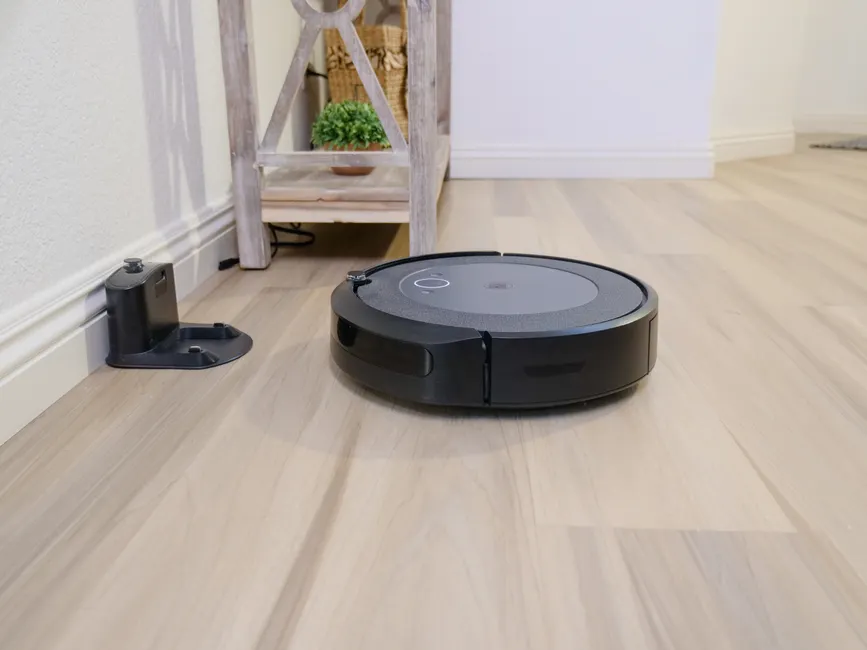
The scope is broader than the headline suggests. The ban covers mobile robots including humanoid and quadruped models but is not limited to robots that walk. Under the FCC's definition, an "advanced robotic device" is any machine capable of locomotion, obstacle avoidance, navigation, or ground movement; equipped with an environmental sensor; containing a chip for network connectivity; and weighing more than 4.4 pounds including its docking station if present (The Verge; FCC FAQ). By that definition, foreign-made robot vacuums would automatically be banned going forward unless manufacturers obtain a waiver.
Reuters first reported the ban. Sources told Reuters that the FCC is expected to exempt many non-Chinese suppliers from the restrictions (The Verge). China is home to leading power inverter producers including Sungrow and Huawei, the latter already on U.S. blacklist. The dual inclusion of robots and inverters is notable: power inverters are critical infrastructure components in solar installations and grid-scale energy systems, tying the ban directly to the energy backbone of the AI buildout.
The National Security Determination justifying the ban explicitly references The Verge's reporting on security vulnerabilities in DJI's Romo robot vacuum (The Verge; FCC NSD document). That a consumer-press investigation surfaced in an official national security determination is unusual and signals that consumer-grade networked robotics are now being evaluated through an infrastructure-security lens.
Existing products already in the United States are not subject to the ban and can continue to be used (The Verge). The FCC also issued a blanket waiver allowing all covered robots and inverters to continue receiving security and compatibility updates through January 1, 2029, addressing the practical risk that a ban on imports could also cut off patches for devices already deployed in the field.
For new imports, companies can request a waiver. The waiver application, however, does not require any improvements to the security of the robots or inverters themselves. Instead, every applicant must provide a detailed plan to begin manufacturing the devices in the United States (The Verge). That is an industrial-policy mechanism dressed in national-security clothing: the bar for continued import is not demonstrably better security but a commitment to domestic production.
The FCC published an FAQ page addressing the Covered List updates, including whether new models of foreign-produced robots or inverters can be imported solely for product development or testing purposes (FCC FAQ). The Covered List also notes that advanced robotic devices granted a "Conditional Approval by DoW" are excepted from the restrictions (FCC Covered List).
The waiver structure is the part worth paying close attention to. A security-motivated ban whose remedy is reshoring rather than security hardening creates a clear incentive structure: foreign manufacturers who build U.S. plants can continue shipping, while those who don't cannot, regardless of whether their products are actually more or less secure than a domestic alternative. That is a legitimate policy choice if the goal is supply-chain resilience, but it is a different goal than the one the FCC's stated rationale addresses. Engineers and procurement teams evaluating robotics and inverter vendors should understand that the operative question is not "is this device secure?" but "does the manufacturer have a credible U.S. production plan or an applicable exemption?"
The January 2029 update window gives affected organizations roughly two and a half years of patch support for existing fleets. After that, devices that cannot be imported or domestically substituted will face a genuine end-of-life scenario with no security updates. For anyone running foreign-made robots or inverters in production environments, that deadline is the one to plan around.
This is not the first time the FCC has used its Supply Chain framework to restrict equipment from national-security adversaries; the Covered List already includes Huawei, ZTE, and other Chinese telecommunications equipment. What is new is the extension beyond networking gear into consumer robotics and energy infrastructure, categories that sit much closer to the general-purpose technology market. The precedent set here, where a vacuum cleaner vulnerability contributes to a national security determination, suggests the regulatory perimeter for "covered equipment" will keep expanding.