Fed Holds Rates at 3.50–3.75% as Three FOMC Members Dissent for a Hike; Warsh Signals Less Forward Guidance

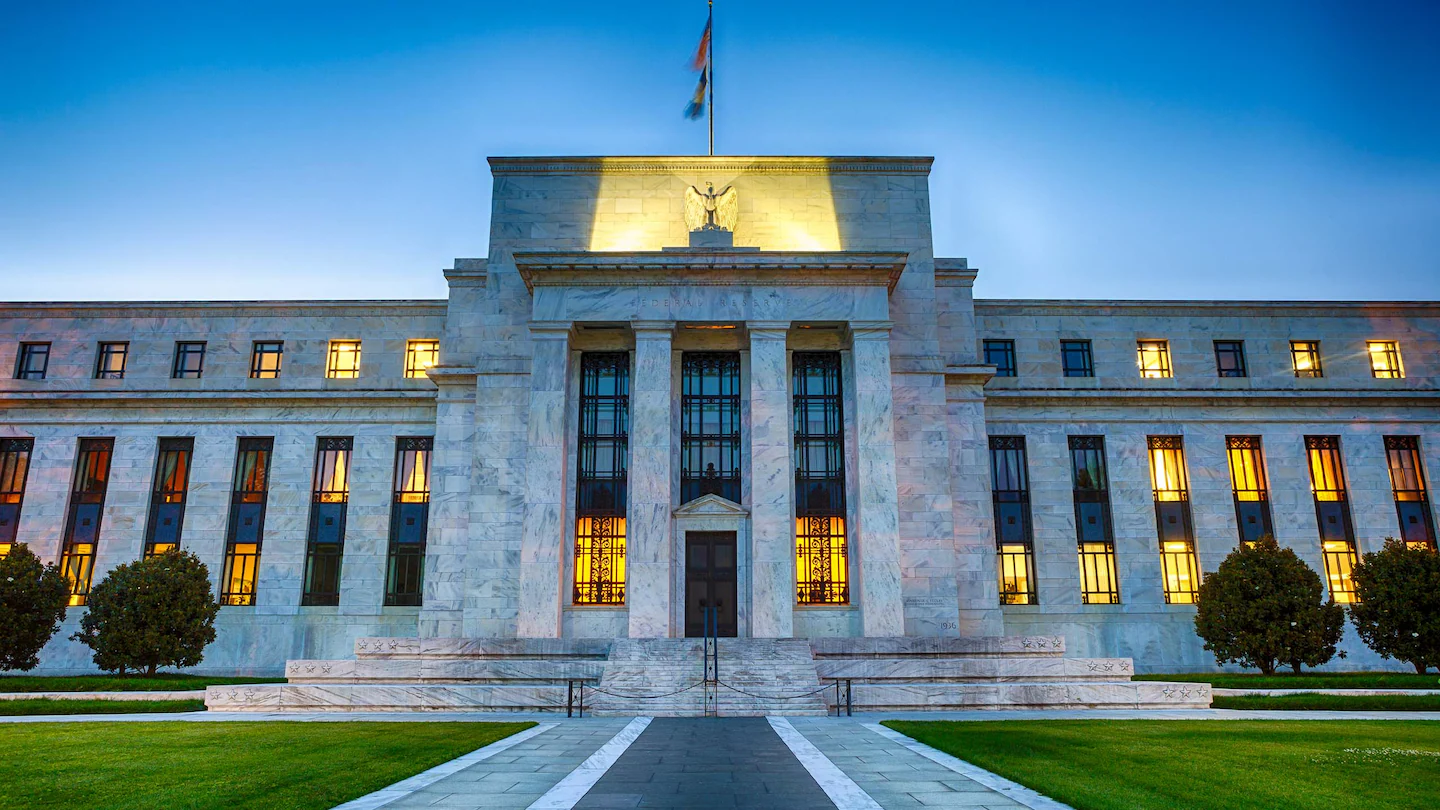
The Federal Open Market Committee voted on July 29, 2026 to maintain the target range for the federal funds rate at 3-1/2 to 3-3/4 percent, keeping the benchmark unchanged for the entirety of 2026 so far (Federal Reserve). The decision was not unanimous: three of twelve policymakers dissented, voting for a rate hike (Reuters).
The hold had been broadly expected. A Reuters poll of economists conducted July 21, 2026 found consensus that the Fed would keep its key rate steady for the remainder of 2026 (Reuters). Heading into the decision, markets had priced roughly a one-in-three chance of a quarter-point move (Reuters). The U.S. dollar index sat at 101.38, down 0.04%, as traders awaited the announcement (Reuters).
This was Kevin Warsh's second meeting as Fed Chair (Reuters). At his post-decision press conference, Warsh argued the Fed did not need to raise rates in part because financial markets had already tightened conditions on their own (New York Times). "Rates are higher today than they were 42 days ago," he said (WSJ).
Warsh also indicated the central bank was giving less forward guidance about its intentions (WSJ). That marks a departure from the granular rate-path signaling that characterized the Powell era. The FOMC's post-meeting statement hinted at a possible future rate hike unless the committee saw more substantial progress on inflation (CNBC).
The triple dissent is the most consequential detail. At the June 17 meeting, all members had agreed to maintain the same target range (Federal Reserve). The shift from unanimity to three hawkish dissents in the space of one meeting signals that a meaningful bloc on the committee views the current policy stance as insufficiently restrictive given the inflation backdrop. Reuters has described the U.S. as grappling with a five-year-long inflation problem (Reuters), and the June 2026 Summary of Economic Projections showed only one policymaker expecting lower rates by end of 2026 (Reuters).
Warsh's argument that market-implied tightening substitutes for policy action is worth examining closely. The logic holds only if financial conditions remain restrictive enough to suppress demand without a policy-rate move. If credit spreads narrow or equity markets rally on the back of a hold, that tightening evaporates, and the committee would face pressure to deliver the hike the dissenters wanted. The statement's explicit hiking bias is consistent with that risk.
The reduction in forward guidance cuts both ways. Less signaling gives the committee maximum optionality, but it also forces markets to extract the policy path from incoming data rather than from Fed communication. That raises the volatility of rate expectations around each data print. With three members already voting to hike and the statement conditioning any pause on "more substantial progress" on inflation, the burden of proof now sits squarely on the inflation data. Anything short of a clear disinflationary trend in the next several CPI and PCE releases makes a September hike the base case the committee's own statement has implied.
Warsh is early in his tenure, and a three-vote dissent at only his second meeting establishes an unusually transparent internal fracture from the outset. Whether that fracture widens or narrows will depend on the inflation prints between now and the next FOMC meeting.