Commonwealth Fusion Systems Raises $1 Billion, Bringing Total Capital to $4 Billion
Commonwealth Fusion Systems has raised $1 billion in a new funding round announced on July 30, 2026, bringing the company's total capital raised to $4 billion TechCrunch. The round included pension funds, sovereign wealth funds, and infrastructure and industrial corporate partners, though CFS declined to name specific investors TechCrunch.
CFS's own press release, distributed via PR Newswire at 00:01 ET on July 30, states the round is the largest single funding round among private fusion energy companies since CFS's own $1.8 billion Series B in 2021 CFS Press Release. That 2021 raise stood as the company's largest round until now. The previous round before today's announcement was $863 million in August 2025, which included Nvidia, Google, Khosla Ventures, and Breakthrough Energy Ventures TechCrunch. As of that August 2025 round, CFS's then-nearly $3 billion in total funding represented roughly one-third of all private capital invested in fusion companies worldwide PR Newswire.
CEO Bob Mumgaard has indicated that CFS will continue raising additional capital beyond this round TechCrunch. The new funding is directed toward commercializing fusion energy.
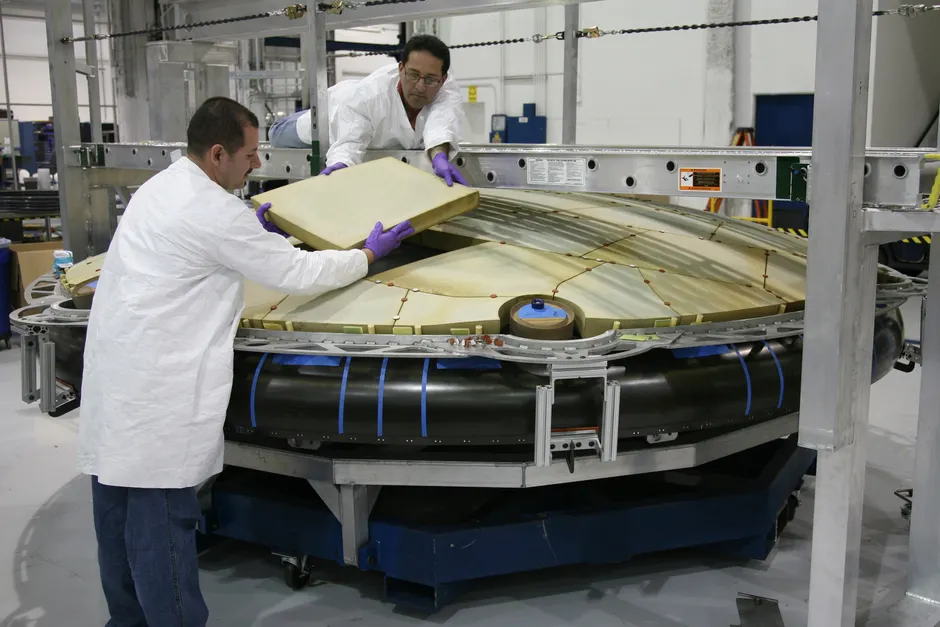
CFS is pursuing magnetic confinement fusion, using powerful magnetic fields to confine plasma inside the reactor TechCrunch. The company is currently building Sparc, its demonstration reactor, and finalizing the design of Arc, its first commercial power plant TechCrunch. Sparc is expected to achieve scientific breakeven in 2027. To date, only one fusion device has reached that milestone: the National Ignition Facility at Lawrence Livermore National Laboratory TechCrunch.
The Arc commercial power plant is planned for Virginia. Former Virginia Governor Glenn Youngkin said in 2024 that Arc would be a multi-billion-dollar fusion power plant TechCrunch. CFS has signed two power purchase agreements for Arc's output within a three-month span CFS Blog. Eni, which is a strategic investor in CFS CFS Press Release, committed to buy more than $1 billion worth of electricity from Arc TechCrunch. Google committed to purchasing 200 megawatts from Arc, half of the plant's total planned output TechCrunch.
Several things stand out in this announcement worth flagging. The investor composition has shifted. CFS's August 2025 round drew technology companies and venture firms, while this round's participants are pension funds, sovereign wealth funds, and infrastructure corporates. That is a different risk profile and a different time horizon. Infrastructure investors typically underwrite assets with decades-long operating lives and regulated or contracted revenue streams. Their participation suggests an assessment that fusion is moving closer to utility-scale generation than to venture-backed science experimentation.
The offtake agreements reinforce that read. Eni's commitment exceeds $1 billion in electricity purchases. Google's 200 MW commitment represents half of Arc's planned output. Having both an oil major and a hyperscaler signed on as anchor customers before the demonstration reactor has achieved breakeven is notable. Whether Sparc hits its 2027 breakeven target remains the gating technical question. Scientific breakeven, net energy gain from the fusion reaction itself, is necessary but not sufficient for a commercial power plant. Arc must also achieve engineering breakeven, producing more electricity to the grid than the entire facility consumes in operation, and it must do so at a cost per megawatt-hour that competes with other baseload sources.
The capital trajectory tells its own story. CFS raised $1.8 billion in 2021, $863 million in 2025, and $1 billion now. That $4 billion cumulative total, against roughly $9 billion in total private fusion investment as of mid-2025, places CFS in a category of its own within the private fusion landscape. Mumgaard's signal that more capital is coming indicates the company is not treating $4 billion as sufficient to reach commercial operation.
Worth noting: the distance between building a demonstration tokamak and operating a commercial power plant is measured in years and billions of dollars. The last decade of private fusion investment has been characterized by ambitious timelines and steady capital inflows. CFS's combination of a near-term breakeven milestone, signed offtake agreements, and infrastructure-grade investors gives it the most credible commercialization pathway in the private fusion sector as of mid-2026. But the pathway still runs through Sparc demonstrating net energy gain, and that result is a year away.