HP's HyperX Omen 15 Replaces the Victus 15, but at $1,200 It's No Budget Gaming Laptop
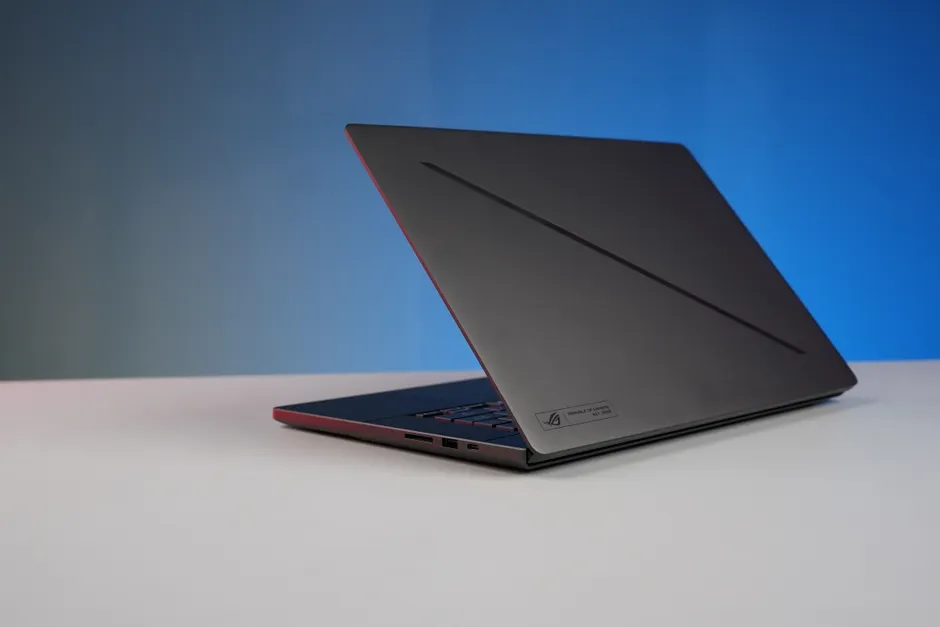
HP has replaced the Victus 15, its longtime bestselling budget gaming laptop, with the HyperX Omen 15, a repositioned successor that starts at $1,199. The Victus 15 cost $800, sometimes less on sale. The $400 gap reflects both upgraded specifications and a component pricing environment that has not been kind to entry-level gaming hardware The Verge.
The reviewed Omen 15 configuration, sold through Walmart, pairs an eight-core Intel Core 5 210H Raptor Lake CPU with an Nvidia RTX 5050 Laptop GPU, 16GB of DDR5 RAM, and a 512GB SSD. The display is a 1920 x 1200 panel at 16:10 aspect ratio with a 165Hz refresh rate, a 1080p webcam, and notably higher brightness than the Victus 15 it replaces. HP announced the Omen 15 line at CES in January 2026, confirming the RTX 5050 base GPU and two user-accessible RAM slots. Higher configurations are available with RTX 5070 GPUs and OLED panels at 2.5K resolution The Verge.
In gaming benchmarks, the RTX 5050 proves capable but constrained. Control ran at 70 to 80fps on High preset with DLSS enabled. Cyberpunk 2077 managed 60 to 70fps on Ultra preset without ray tracing using DLSS Quality, with standard frame generation pushing that to 95 to 105fps. More demanding titles fared worse: Helldivers 2 held just above 60fps on Medium with DLSS Quality, and Battlefield 6 ran in the 50fps range on Medium with DLSS set to Performance The Verge.
The takeaway: the Omen 15 plays 2026's latest games, but on low-ish settings for the more demanding titles, and it leans heavily on DLSS and frame generation to get there.
Port selection is adequate but not generous. The right side has an ethernet jack and one USB-A port. The left adds a 3.5mm audio jack, another USB-A, and the power connector. The rear has HDMI 2.1 and a single USB-C port. That USB-C port is not Thunderbolt, and there is no biometric unlocking, no face or fingerprint. Internally, the Omen 15 offers upgradeable DDR5 RAM and NVMe SSD storage with two slots for each, giving owners a clear path to expand beyond the base configuration The Verge.
HP still sells a Victus 15 configuration with an RTX 5050 for $900, but it ships with only 8GB of RAM, which is a meaningful constraint for modern gaming. The Victus line's older RTX 4050 configurations remain listed on HP's site at $1,399.99, though street pricing has historically been well below that The Verge.
The price increase from the Victus 15 to the Omen 15 is partly attributable to what the industry has been calling "RAMageddon," a memory shortage pricing spike that has pushed DDR5 costs up across the board. The base Omen 15 ships with 8GB of DDR5 by default at its entry price point, with the reviewed Walmart configuration doubling that to 16GB. HP's broader Omen 15 lineup supports up to 32GB of DDR5-5600 and up to an RTX 5070 Laptop GPU at 170W TGP, with processor options ranging from the Intel Core 5 210H in the review unit to AMD Ryzen 9 8945HX and Intel Core Ultra 7 chips in higher trims The Verge.
What the Omen 15 gains over the Victus 15 is a meaningfully better display, upgradeability, and a chassis that justifies the Omen branding. What it loses is the price point that made the Victus 15 a default recommendation for budget-conscious buyers. At $1,199, the reviewed configuration competes against midrange laptops that offer more port selection, Thunderbolt connectivity, and biometric security. The RTX 5050 is an entry-level GPU, and the benchmark results confirm that.
Looking at what this means for the sub-$1,000 gaming laptop segment, the Omen 15's pricing leaves a gap. HP has not filled the Victus 15's old price bracket with a true successor at $800. The remaining Victus 15 with RTX 5050 at $900 and 8GB of RAM is a compromised alternative, insufficient for 2026's memory-hungry titles without an immediate RAM upgrade. Buyers who previously defaulted to the Victus 15 as a safe, affordable pick now face a choice between an under-specced holdover and a $1,200 machine that performs better but costs 50 percent more.
Worth flagging: the lack of Thunderbolt on the sole USB-C port is a notable omission for a 2026 laptop at this price. Thunderbolt has been standard on competing midrange gaming laptops for several generations, and its absence limits dock connectivity and external GPU options. For a machine positioned as an entry point into PC gaming, that constraint narrows the upgrade path to internal RAM and SSD swaps only.
The Omen 15 is a competent gaming laptop with real upgradeability and a strong display for the price. Whether it fills the role the Victus 15 played, as the obvious budget pick, is less clear. The market it served has shifted, and the pricing has shifted with it.