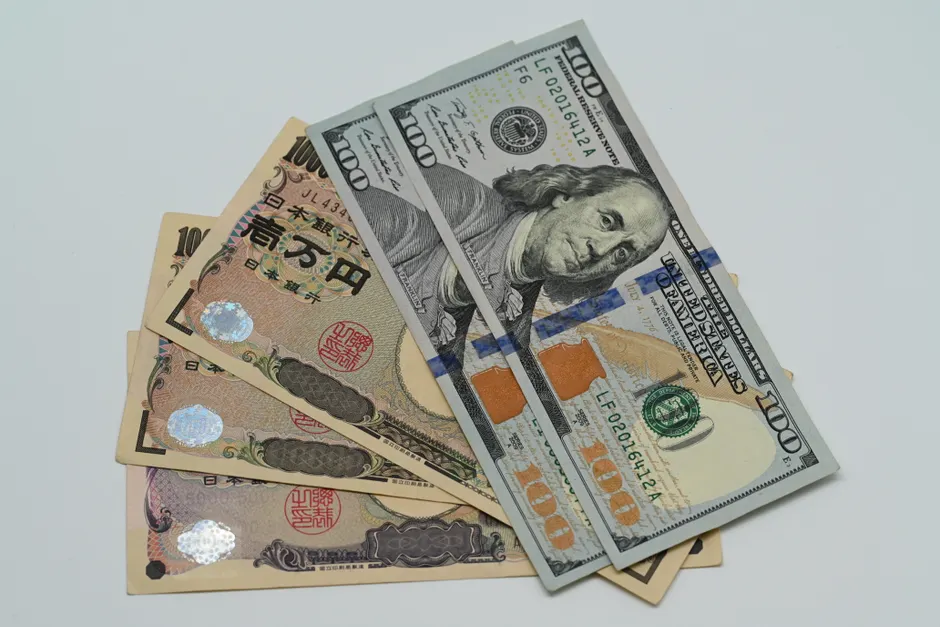
Japan and U.S. Launch Joint Yen-Buying Intervention as Currency Hits 40-Year Lows

Japan's Ministry of Finance confirmed it conducted a joint yen-buying foreign exchange intervention with the U.S. Treasury Department on Friday, August 1, 2026, at a cost of as much as $58.97 billion, as the yen languished near 40-year lows against the dollar (Reuters).
The announcement followed an initial Reuters report citing two Japanese government officials that Tokyo and Washington took joint action in the currency market to arrest the yen's slide to 40-year lows (Reuters). The yen had hit 159.22 per dollar on the Thursday before Japanese authorities intervened, according to an earlier Reuters report published July 31 (Reuters).
In July 2026, Japan spent a record 11.7 trillion yen (approximately $73 billion) on yen-buying intervention, Reuters reported (Reuters). The $58.97 billion joint operation with the U.S. Treasury on August 1 falls within that broader monthly total, suggesting the bilateral action constituted a significant portion of July's record deployment.
U.S. Treasury Secretary Bessent said the joint US-Japan action countered disorderly yen movements (Business Times). The U.S. Treasury's intervention was intended as a warning against speculative bets that had pressured the yen, with the aim of stabilizing the currency (Reuters). Washington's participation marked the first time the U.S. Treasury engaged in yen-buying intervention alongside Tokyo in more than a decade (CNBC).
The backdrop to this coordination included earlier tensions in 2026, when volatility in Japanese government bonds jolted U.S. Treasuries and drew the ire of Secretary Bessent (Business Times). That prior friction makes the bilateral cooperation on August 1 notable: the two Treasuries aligned on currency policy despite earlier cross-border bond-market spillover concerns.
Japan has stated it will not hesitate to take further action on the yen following the joint intervention (Reuters; Investing.com). This forward guidance on intervention willingness, combined with the U.S. participation, signals that both capitals view the yen's weakness as a joint concern rather than a unilateral Japanese problem.
Separately, Japan's official foreign exchange reserves stood at 1,287,476 million U.S. dollars at the end of June 2026, a decrease of 18,398 million dollars from the end of May, according to Ministry of Finance data published July 7 (MOF). These reserve assets, held by the Foreign Exchange Fund Special Account and the Bank of Japan, serve as resources for foreign exchange intervention to stabilize the foreign exchange market (MOF). The June reserve drawdown predated the August 1 joint intervention and likely reflects earlier unilateral yen-buying operations during the month.
Japan's Ministry of Finance also publishes statistics on the implementation status of foreign exchange balance operations, with scheduled publication dates for relevant periods. August 2026 dates are set for April-June 2026 daily data (MOF), which should provide granular detail on intervention timing and magnitude during the period preceding the joint action.
The broader context here is a convergence of factors that pushed the yen to multi-decade extremes and ultimately drew the U.S. into a coordinated response. JGB volatility spilling into U.S. Treasury markets earlier in 2026 created a cross-border transmission channel that likely elevated the political stakes for Washington. When Bessent characterizes yen moves as "disorderly," that label carries a specific IMF Article IV connotation, suggesting the U.S. Treasury judged the price action to exceed what fundamentals would justify and to pose systemic risk.
The scale of intervention, at roughly $73 billion for July, is substantial but not unprecedented in Japan's history of currency operations. What is without recent precedent is U.S. participation. A decade-long gap since the last bilateral yen-buying operation means market participants have no recent template for how sustained coordination might look or how the Bank of Japan's reserve deployment trajectory will evolve in coming months. The reserve base at roughly $1.29 trillion provides ample capacity for continued intervention, but each deployment reduces the war chest available for future operations and sends a signal about the diminishing patience of both Treasuries with speculative yen positioning.
For fixed-income and FX desks, the key variable to monitor is whether the Ministry of Finance's April-June daily intervention data, when published in August, reveals the tempo and trigger levels that preceded the bilateral action. That granularity will help calibrate expectations for where authorities may draw subsequent lines in the sand.