Base Power Raises $1 Billion Series D, Launches U.S.-Built Base Core Home Battery
Base Power announced a $1 billion Series D financing on August 3, 2026, its second billion-dollar round in ten months, paired with the launch of Base Core, a home battery manufactured at the company's Austin, Texas factory Business Wire.
The round was led by Ribbit, Addition, Valor Equity Partners, and JPMorganChase's Strategic Investment Group, with participation from Altimeter, D1 Capital Partners, Sands Capital, Coatue, Layer Global, Energy Impact Partners, Thrive Capital, a16z, Lightspeed, Trust Ventures, CapitalG, and others. The investor roster overlaps substantially with Base Power's $1 billion Series C, announced October 8, 2025, which was led by Addition and brought back prior backers including Andreessen Horowitz and Valor Equity Partners, alongside new investors such as Ribbit, CapitalG, Spark, BOND, Lowercarbon, Avenir, Glade Brook, Positive Sum, and 1789 TechCrunch, Energy Storage News.
Base Power was co-founded by Zach Dell, who serves as CEO. Michael Dell did not participate in the new round TechCrunch.
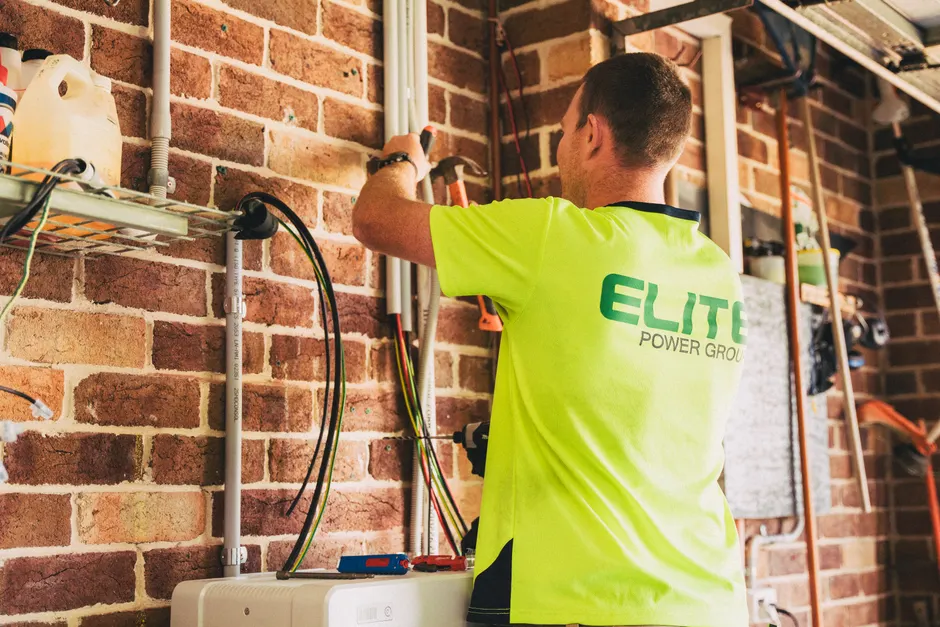
The Base Core unit stores 39.2 kilowatt-hours of electricity and is installed at residential properties, where customers can choose either one or two batteries. Base Power operates in Texas and Illinois. The company has installed more than 500 megawatt-hours of storage to date and is currently deploying about 100 batteries per day, with plans to double that rate by the end of 2026 TechCrunch.
Base Power's commercial model differs from the conventional residential storage purchase. Rather than charging customers thousands of dollars up front, the company retains ownership of the battery, offers it on a subscription basis, and sells stored electricity back to the grid during periods of high demand. In the Houston area, pricing is structured as $695 for installation of a single battery, $19 per month, and 13.1 cents per kilowatt-hour for electricity consumed TechCrunch.
The subscription-plus-grid-services approach lets Base Power aggregate distributed storage capacity and act as a virtual power plant, monetizing dispatch during peak pricing intervals while keeping the customer's capital expenditure low. The company manufactures the Base Core unit domestically at its Austin facility, a detail that aligns with current U.S. energy policy incentives for domestic clean-energy manufacturing.
The capital intensity of this model is considerable. Each installation requires hardware, labor, and ongoing software orchestration across a fleet that is growing by roughly 3,000 units per month at current rates. Two consecutive billion-dollar rounds in under a year signal that investors are pricing in rapid scaling of both manufacturing throughput and grid-service revenue, rather than near-term profitability.
The investor list itself is notable for its breadth. Ribbit, which was a new entrant in the Series C, stepped into a co-lead position for Series D alongside Addition, which led the Series C. The participation of JPMorganChase's Strategic Investment Group introduces a strategic financial-services angle that prior rounds lacked. The return of CapitalG, Thrive Capital, a16z, Lightspeed, and Coatue across both rounds indicates sustained conviction from crossover and growth-stage funds.
Worth flagging is the pace question. Base Power aims to reach 200 installations per day by year-end, which would require roughly doubling its current deployment rate in under five months. That kind of operational scaling, in a business involving electrical permitting, utility interconnection approvals, and physical installation labor, presents execution risk that capital alone does not resolve. The company's footprint is also still limited to two states, and expanding into additional deregulated electricity markets will require navigating varied regulatory and utility-interconnection regimes.
The broader context is that residential distributed storage is converging with grid-scale economics. A fleet of 39.2 kWh batteries deployed at 200 per day would add nearly 8 MWh of capacity daily. At the 500 MWh already installed, Base Power's aggregate storage pool is approaching the scale of mid-sized utility battery projects, but distributed across homes rather than concentrated at substations. The virtual-power-plant model effectively converts that distribution from a liability into a dispatchable asset, provided the software layer can coordinate charge and discharge cycles across thousands of nodes in response to grid conditions.
Base Power's bet is that vertically integrating manufacturing, installation, and grid services under a subscription umbrella will let it scale faster than competitors reliant on third-party hardware or upfront purchase models. The $2 billion raised across two rounds in under a year provides the runway. Whether the execution matches the ambition will depend on factors that capital addresses only partially: installation logistics, utility cooperation, and the durability of grid-service revenue streams across market conditions.