PSB iQ2 Review: Wireless Stereo Speakers That Bet on Sound Over Smart
PSB's iQ2 wireless stereo speakers are priced at $1,399 and have received an 8-out-of-10 score from Engadget's review, published August 7, 2026. The speakers pair wirelessly to form a stereo setup, integrate amplification, a high-resolution DAC, and BluOS streaming into an all-in-one enclosure, and are positioned explicitly around audio quality rather than voice-assistant features.
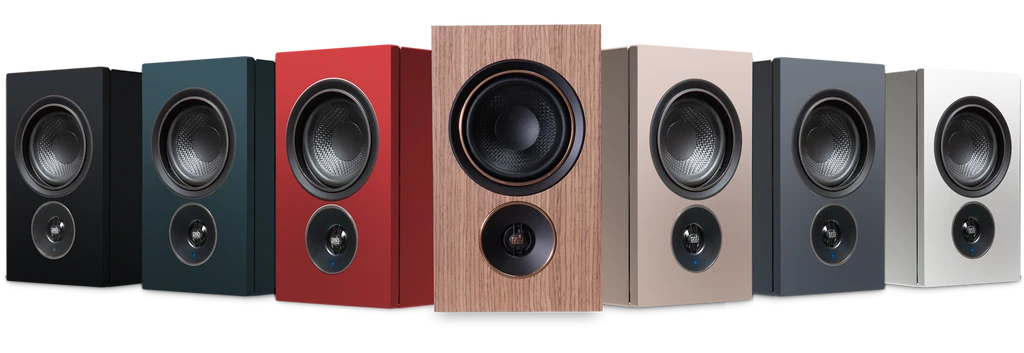
The iQ2 uses a 19mm aluminum dome tweeter paired with a 100mm mid/bass driver, according to TechRadar's review published July 10, 2026. Each speaker measures approximately 9 x 6 inches and is designed to sit on a TV stand or desk. The two units form a wireless stereo pair with no cable between them, though each requires its own wall outlet for power. PSB describes the wireless link between left and right speakers as low-latency, designed to avoid audio delays or interruptions, and notes that it provides greater placement flexibility than a wired configuration. One speaker functions as the primary unit, carrying all input ports and touch-sensitive media and volume controls on top.
Connectivity spans both wired and wireless. Physical inputs include HDMI with eARC, phono/line, optical, and two USB ports — one Type-A and one Type-C. Wireless audio comes via Bluetooth with aptX Adaptive. The HDMI eARC input and phono stage are notable for a product in this category; most wireless bookshelf speakers treat TV integration and turntable connectivity as afterthoughts rather than first-class inputs.
Pricing varies by region. In the UK, the iQ2 costs £1,199; in Australia, approximately A$2,299. The iQ2 sits $300 above PSB's iQ1 model, a premium GearPatrol attributed in its June 23 coverage to the wireless stereo link and the broader range of color options — seven in total. PSB has applied a new paint finish to the iQ2 that the company says is more resistant to fingerprints and more durable than finishes on previous-generation speakers.
Engadget's review cited confident, spacious stereo sound, HDMI eARC and phono connectivity, wireless stereo setup, and a polished app experience as strengths. Weaknesses centered on the premium price and underwhelming phono performance — an interesting tension, given that PSB is a 50-year-old loudspeaker company that describes its sound signature as "True to Nature" and lists musicality, value, and aesthetic appeal as product priorities.
The phono stage result is worth dwelling on. A speaker system that advertises a phono/line input is implicitly courting vinyl listeners, and those listeners tend to be sensitive to what a built-in phono preamp actually delivers. If the phono input underperforms relative to the system's other sources, the practical question for buyers is whether they treat it as a convenience feature or a serious input. For someone running a turntable through an external phono preamp into the line input, the distinction may be moot. For someone expecting the iQ2's phono stage to replace a dedicated preamp, the review's finding is a flag worth heeding.
PSB's decision to position the absence of voice assistants as a feature rather than a gap is the more strategically interesting signal. The smart-speaker category has been dominated by Amazon Echo and Google Nest products that prioritize voice interaction and ecosystem integration, with audio quality as a secondary concern. The iQ2 inverts that hierarchy. BluOS handles the streaming layer, aptX Adaptive handles Bluetooth, and HDMI eARC handles TV audio, but there is no microphone, no wake word, and no cloud-dependent assistant. For buyers who already have a voice assistant elsewhere in the home — a common scenario in 2026 — a speaker that does not add another listening node to the network may read as a feature, not an omission.
The broader context here is a quiet fragmentation of the "smart speaker" category. The original premise — a single device that handles voice, music, and smart-home control — is giving way to products optimized for specific use cases: TV audio, music listening, multi-room streaming, or voice control, rather than all of the above. The iQ2 is firmly in the music-and-TV camp, with BluOS multi-room as the connective tissue and voice control deliberately excluded.
For a technologist evaluating the iQ2, the value calculation comes down to three things: whether the wireless stereo pair delivers latency-free performance that holds up under real-world placement conditions, whether the HDMI eARC input produces a genuinely usable TV audio upgrade, and whether the $1,399 entry price is justified given the underwhelming phono stage. Engadget's 8-out-of-10 score suggests the first two answers are broadly positive and the third is a judgment call that depends on how much weight a buyer places on the phono input specifically. Seven color options and a durable new finish round out a package that is clearly aimed at the design-conscious listener who wants active speakers without the visual compromise of separates.