Amazon Backs 7.65 GW Gas-Fired Power Plant in West Texas for AI Data Center
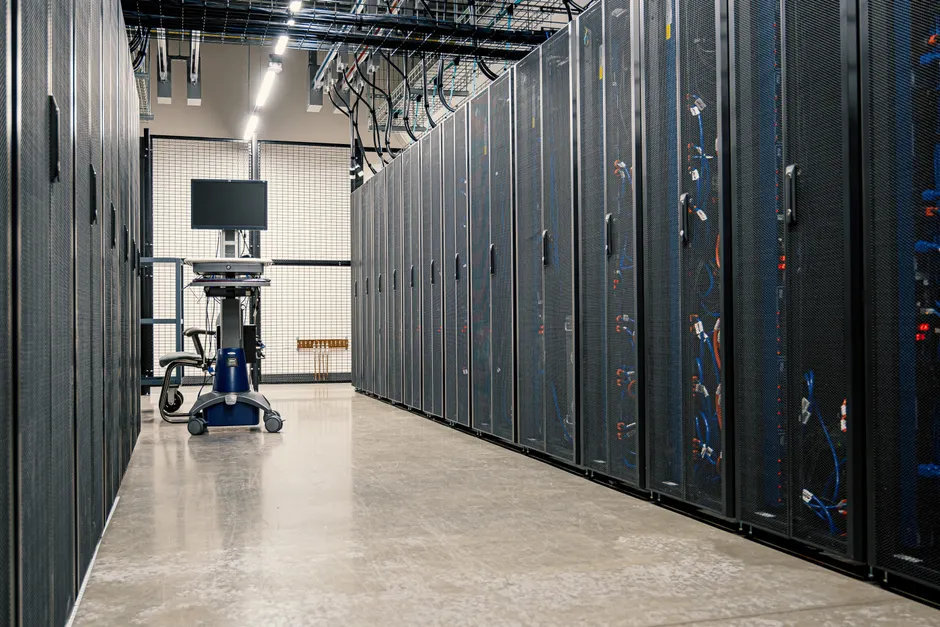
Amazon confirmed on August 7, 2026, that it is investing in a large-scale natural-gas-burning power plant as part of its data center complex in West Texas. The company purchased the GW Ranch site in Pecos County and plans to purchase power from the project, according to both the New York Times and The Verge (New York Times; The Verge).
The plant would deploy 35 natural-gas turbines to deliver 7.65 gigawatts of electricity, primarily to the new Amazon data center. At least initially, the facility would not be connected to the Texas power grid, operating instead as a dedicated behind-the-meter generation source for the data center campus.
The GW Ranch project received a Texas permit allowing emission of up to 33 million tons of CO2, a cap that exceeds the emissions of the largest coal plant in the United States (The Verge). By that measure, the facility could become one of the largest single producers of greenhouse gases in the country.
Amazon's corporate emissions have climbed for several consecutive years, driven by the compute demands of AI workloads (The Verge). The Pecos County plant, if built to the permitted scale, would push that trajectory further. Jeff Bezos pledged in 2019 to make Amazon carbon neutral by 2040 through the Climate Pledge, a commitment Amazon co-founded.
Amazon spokeswoman Margaret Callahan told the New York Times that "the world looks different now than when we co-founded the climate pledge," but said that Amazon's commitment has not changed (New York Times; The Verge).
The scale of the GW Ranch facility bears examination. A 7.65 GW dedicated gas-turbine installation ranks among the largest single-site generation projects of any type in the United States, and its decision to operate off-grid places it outside the regulatory and planning oversight of ERCOT. Off-grid operation gives the data center operator predictable, uncontested power delivery, which is the core constraint for hyperscale AI training and inference. It also means the plant's emissions, grid interconnection planning, and eventual decommissioning fall into a narrower regulatory channel, governed primarily by Texas air-permitting rather than integrated resource planning.
The 33-million-ton CO2 permit ceiling is a peak allowance, not a forecast of actual emissions. Turbine utilization, partial-load efficiency curves, and any future integration of carbon capture or renewable offsets will determine the plant's real-world output. Still, the permitted ceiling itself signals that the project is designed for sustained, high-capacity-factor operation, not peaking duty.
For the AI infrastructure sector more broadly, the Pecos County project crystallizes a trade-off that has been building since the current AI investment cycle accelerated. Hyperscalers that spent the last decade building renewable-heavy power portfolios, backed by PPAs for wind and solar, are now confronting the reality that new gigawatt-scale loads cannot wait for grid interconnection queues that, in many regions, stretch past the end of the decade. Gas turbines can be sited, permitted, and fired in a fraction of that timeline. The cost is measured in carbon.
In this author's view, the tension between Amazon's Climate Pledge and the GW Ranch plant is real but not necessarily contradictory on the company's own accounting terms. Amazon's path to carbon neutrality by 2040 has always relied on a combination of operational reductions, renewable procurement, and carbon removal mechanisms. A new gas plant opening in the late 2020s would need to be offset, retired, or decarbonized within roughly a decade to remain consistent with that target. Whether that is feasible at 7.65 GW of dedicated fossil generation is an open question, and one that Amazon has not yet addressed in specific technical terms.
The grid-islanded design of the facility also raises a separate set of considerations. Behind-the-meter generation at this scale effectively removes a major load from grid planning conversations, which can ease near-term transmission constraints but also forecloses the efficiency gains that grid-connected dispatch and market-based resource sharing can provide. If other hyperscalers follow the same model, the cumulative effect would be a parallel, private generation infrastructure operating alongside the public grid, with its own fuel supply chains, emissions profiles, and reliability dynamics.
The New York Times published its reporting on the project on August 8, 2026. Amazon's confirmation came the preceding day.


